Tinubu’s Energy Team Flags Off 2MW Solar Mini-Grid, Commissions 200 Street Lights at ADUSTECH, Kano

To mark a significant step in expanding renewable energy deployment across Nigeria’s tertiary institutions, Nigeria’s Minister of Innovation, Science and Technology, Dr. Kingsley Tochukwu Udeh, alongside the Director-General and Chief Executive Officer of the Energy Commission of Nigeria (ECN), Dr. Abdullahi Mustapha, flagged off a 2-megawatt solar mini-grid project and commissioned 200 solar-powered streetlights at Aliko Dangote University of Science and Technology (ADUSTECH), Wudil, Kano State.

The intervention, implemented under ECN’s renewable energy and sustainable power programme, is aimed at improving electricity supply on campus, enhancing security through solar-powered lighting, and strengthening research and innovation in clean energy technologies.

Speaking at the event, the Minister commended ECN’s technical leadership, noting that, “The Energy Commission of Nigeria has done exemplary technical work to bring us to this point, following rigorous energy audits, demand assessments, and validated system specifications.”

He further stressed accountability and timely delivery, stating that, “The contractor has a clear, firm mandate: to deliver within three months, to specification, with no tolerance for variation, and my ministry will hold them to that mandate.”

The highlight of the event was the formal renaming of the Engineering Faculty Complex as the Dr. Abdullahi Mustapha Complex, in recognition of his contributions to national energy development, institutional collaboration, and the advancement of renewable energy solutions in Nigeria.

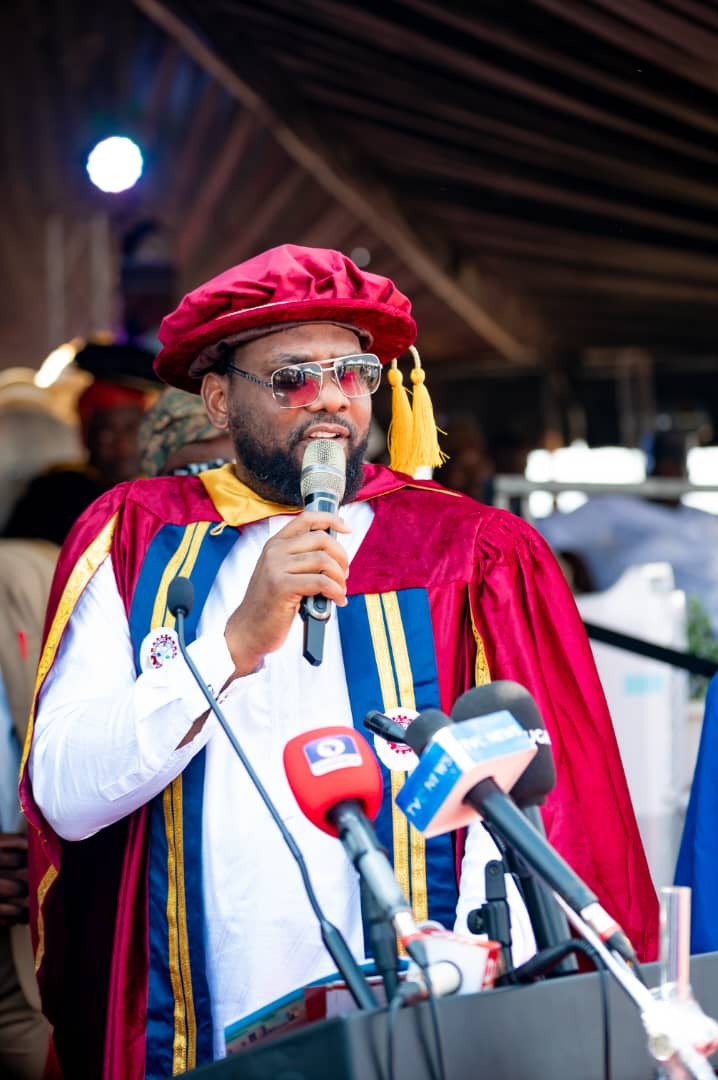
The Vice-Chancellor, Professor Musa Tukur Yakasai, also honoured the Director-General, Dr. Abdullahi Mustapha, with an Outstanding Award, noting that the recognition reflects his exceptional achievements and enduring impact in the energy sector.

Dr. Mustapha, who was among the 2009 graduating class of the university’s Faculty of Engineering, described the moment as both significant and symbolic, reflecting a full-circle journey from student to national energy leader.

The ceremony was attended by the Emir of Gaya, Alhaji Aliyu Abdulkadir; the Vice-Chancellor, Professor Musa Tukur Yakasai; and the Director-General of the Sheda Science and Technology Complex (SHESTCO), Dr. Magaji Da’u Aliyu.

Speaking, Dr. Mustapha reaffirmed ECN’s commitment to accelerating Nigeria’s energy transition through practical, impact-driven projects that expand access to clean and reliable electricity, particularly within educational institutions.

He noted that the 2MW solar mini-grid represents a scalable model for decentralized energy solutions, while the 200 solar-powered streetlights will significantly improve safety and extend academic and social activities within the university environment.

The Director-General sincerely appreciated His Excellency, President Bola Ahmed Tinubu, for this laudable initiative, which continues to drive sustainable energy development and expand access to clean power across the nation.

Kyari’s Exit: How Transparency, Reforms Defined NNPCL’s Golden Era – Group

By: Grace Buba

The Arewa Youth Assembly for Good Leadership (AYAGL) has praised the former Group Chief Executive Officer of the Nigerian National Petroleum Company Limited, (NNPCL) Mele Kolo Kyari, describing his tenure as a defining period marked by reforms, transparency and humanitarian impact.

In a press statement issued and signed by its President, Ambassador Abdul Danbature, the group said Kyari’s leadership from 2019 to 2025 repositioned the national oil company and restored public confidence in the petroleum sector.

AYAGL noted that Kyari introduced the Transparency, Accountability and Performance (TAPE) agenda, which it said transformed operational standards within NNPCL. It highlighted the consistent publication of audited financial statements as a major shift from decades of opacity in the sector.

The group also credited him with driving the commercialization of NNPCL in line with the Petroleum Industry Act, alongside improvements in operational efficiency through digitisation and stronger governance structures.

On fuel pricing, AYAGL said Kyari demonstrated strategic leadership during Nigeria’s transition to deregulation. It noted that his approach helped maintain relative stability in fuel supply and pricing despite global market volatility, including during the COVID-19 pandemic.

The statement further acknowledged investments in critical infrastructure under his leadership, including the rehabilitation of refineries in Port Harcourt, Warri and Kaduna, as well as progress on the Ajaokuta–Kaduna–Kano Gas Pipeline Project. It added that enhanced pipeline surveillance contributed to efforts to curb crude oil theft.

AYAGL said Kyari’s “Decade of Gas” initiative laid a foundation for cleaner energy development and industrial growth, while also strengthening Nigeria’s position in global energy diplomacy.

Beyond policy and infrastructure, the group emphasised Kyari’s humanitarian contributions. It cited NNPCL’s expanded healthcare interventions, educational support programmes, and community development projects, including water supply, school rehabilitation and rural electrification.

It also noted his support for internally displaced persons in the North-East and his commitment to youth empowerment and mentorship within the oil and gas industry.

“Many of his personal philanthropic efforts were carried out quietly, reflecting humility and a genuine desire to impact lives,” the statement said.

AYAGL further commended Kyari for ensuring energy supply stability during election periods and maintaining institutional neutrality, which it said contributed to national stability and democratic continuity.

The group concluded that Kyari’s tenure represents “a legacy of reform, resilience and compassion,” urging future leaders to emulate his commitment to integrity, service and inclusive development.

ENDS

How a Banquet Hall United Kaduna State

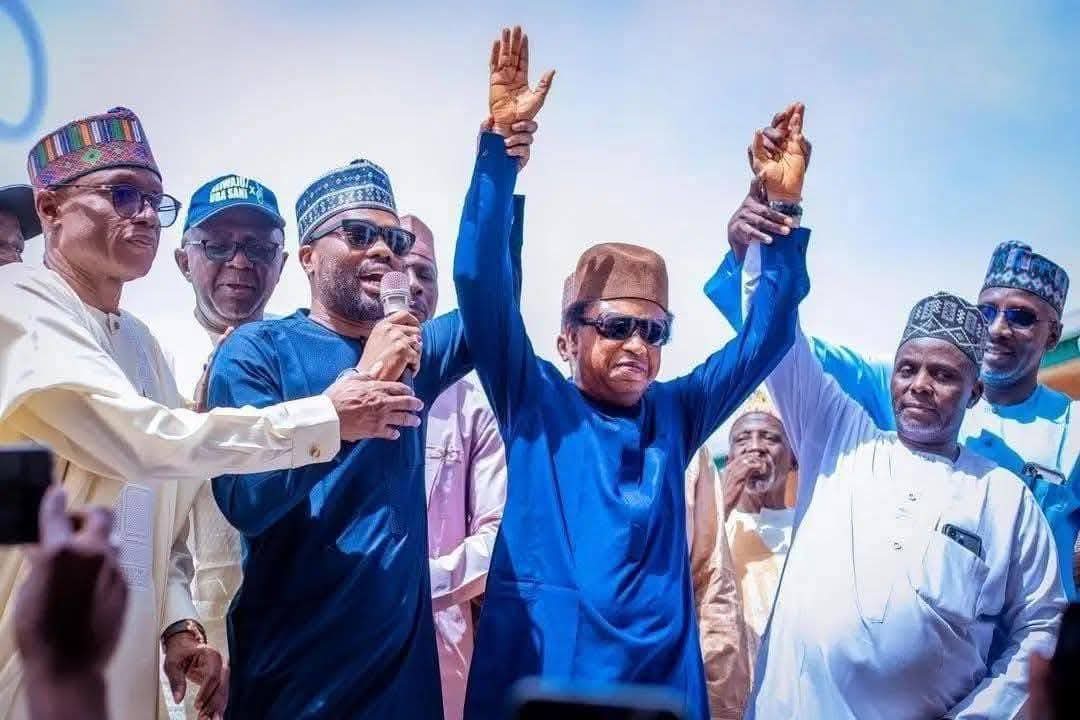
On April 22, dignitaries from across Nigeria’s political, traditional, and socio-economic spectrum converged on Kaduna for an event that was as symbolic as it was historic the commissioning of the state’s newly constructed Banquet Hall.

For the first time since Kaduna State’s creation in 1967, former governors including Ahmed Mohammed Makarfi, Namadi Sambo, and Mukhtar Ramalan Yero,gathered under one roof alongside an array of political leaders, traditional rulers, and stakeholders. The moment was more than ceremonial; it was deeply symbolic of reconciliation and unity.

At the heart of this convergence is a vision championed by Governor Uba Sani to create a space deliberately designed to foster dialogue, partnerships, and investment.

Beyond Steel and Glass
By all appearances, the Banquet Hall is an architectural statement,an imposing structure of steel and glass built with ambition. Yet beyond its physical presence, it represents something far more profound: a renewed civic identity for a state long shaped by diversity and complexity.

The facility, inaugurated by Vice President Kashim Shettima at Sir Kashim Ibrahim House, was not merely unveiled as another public building. It was introduced as a strategic instrument for governance,one designed to bring people together under a shared roof.

Named after Abba Kyari, the state-of-the-art hall boasts a seating capacity of about 1,300 and spans approximately 2.7 hectares. It fills a long-standing infrastructural gap in Kaduna, providing a venue capable of hosting high-level engagements,from diplomatic meetings to cultural exhibitions and investment summits.

A Space for Dialogue in a Complex State
Kaduna has historically held a central role in Nigeria’s political and socio-economic landscape. However, like many states in northern Nigeria, it has also faced challenges, ethno-religious tensions, security concerns, and political divisions.

Against this backdrop, the Banquet Hall emerges as more than a venue; it is a deliberate attempt to create a shared civic space.

Governor Sani emphasized during the commissioning that the project is not just about infrastructure, but about strengthening governance and encouraging meaningful engagement.

“This is a strategic investment in institutional capacity,” he said, underscoring its role in fostering policy dialogue and partnerships.

By hosting events such as the Nigerian Institute of Public Relations Week, intergovernmental forums, and stakeholder engagements, the hall provides a neutral ground where individuals from diverse backgrounds can interact constructively.
Repositioning Kaduna on the Global Stage
Central to Governor Sani’s broader vision is repositioning Kaduna as a hub for national and international engagement. The Banquet Hall is a cornerstone of that ambition.

Designed to meet global standards, the facility is expected to attract conferences, diplomatic missions, and investors,activities that can stimulate economic growth while reshaping perceptions about the state.

Vice President Shettima described the project as a reflection of “purposeful leadership,” noting its potential to strengthen institutions and deepen national cohesion.

Unity Through Shared Experience
Unity is rarely achieved through rhetoric alone,it is built through shared experiences. The Banquet Hall provides precisely that opportunity.

Each event hosted within its walls, whether a policy dialogue, cultural showcase, or regional summit,adds to a growing narrative: that Kaduna is not merely defined by its challenges, but by its capacity to serve as a meeting point of ideas and opportunities.

Stakeholders present at the commissioning described the project as a “magnificent achievement” and a “strategic investment in governance,” highlighting its potential to redefine public engagement in the state.

A Political Statement in Concrete Form
Infrastructure often carries political meaning, and this project is no exception. For Governor Sani, the Banquet Hall signals a shift toward inclusive governance, one rooted in openness, communication, and institutional strength.
It also reflects a deliberate effort to rebuild trust. By investing in a space designed for interaction and accessibility, the administration is making a clear statement: governance must be participatory and visible.

The Road Ahead
While a single structure cannot resolve all of Kaduna’s challenges, it can set a tone. The true measure of the Banquet Hall’s impact will lie in how it is utilized, how often it hosts meaningful dialogue, how inclusive those conversations are, and how effectively they translate into tangible outcomes for citizens.

If fully leveraged, the facility could become a cornerstone of Kaduna’s transformation, a place where differences are negotiated, partnerships are forged, and unity is actively practiced.

In a region often defined by its divisions, the Kaduna Banquet Hall offers a different narrative, one of convergence, possibility, and shared purpose.
Sometimes, unity begins with something as simple and as powerful as bringing people together in the same room.

By Uba Sani Continuity Project

2027: Ex-Jaba LG Boss Dr. Nita Byack George Joins Race for Zangon-Kataf/Jaba Federal Constituency

By our correspondent

A former Administrator of Jaba Local Government Area of Kaduna State, Hon. (Dr.) Nita Byack George, has formally declared her intention to contest for the House of Representatives seat for Zangon-Kataf/Jaba Federal Constituency in the 2027 general elections. She will be running under the platform of the All Progressives Congress (APC).

Speaking during her declaration at the APC Party Office in Zonkwa, George said her decision to join the race was driven by a strong sense of duty, years of grassroots engagement, and the urgent need to deliver practical governance to the people.

“I have not come merely to declare an ambition; I have come to answer a call—one rooted in my record of service, the urgency of our times, and the political moment before us,” she said.


A Record of Service and Grassroots Engagement

George, who highlighted nearly two decades of community engagement, pointed to her track record in peacebuilding, women empowerment, and infrastructure development as evidence of her readiness for higher responsibility.

She referenced several key initiatives:

· Farmers/Herders Peace Treaty: Promoted dialogue and reduced communal tensions.
· Sha’ruwa Lafia Project: Improved access to clean drinking water.
· Taimakon Jarin Mata: A programme focused on empowering women economically.

According to her, her experience as a local government administrator demonstrated that governance could be “disciplined, accountable, and close to the people.”


An Opportunity for Tested Leadership

The aspirant described her declaration as one focused on “execution, not just aspiration,” noting that the decision of the incumbent lawmaker to contest for a Senate seat has created an opportunity for tested leadership to emerge.

While reaffirming support for the Reserved Seats Bill aimed at improving women’s representation, she stressed that inclusion must begin immediately through capable candidates who can win elections and deliver results.


Agenda Anchored on Three Priorities

George identified key challenges facing the constituency, including deficits in infrastructure, education, healthcare, youth empowerment, and economic growth, pledging to address them through legislation and effective representation.

Outlining her agenda, she said her candidacy was anchored on three priorities:

  1. Supporting existing leadership to succeed.
  2. Translating policies into tangible projects.
  3. Strengthening democratic representation.

She aligned her vision with the “Renewed Hope Agenda” of President Bola Ahmed Tinubu and Kaduna State Governor Uba Sani, particularly in advancing gender and youth inclusion.

“If entrusted with this mandate, I will ensure our voices are heard at the national level and that governance is brought closer to our people,” she said.

She further pledged to champion laws that would enhance security, expand economic opportunities, and provide structured support for youth and women.


A Call for Unity and Inclusion

Appealing to party stakeholders and constituents, George called for unity and collective action to secure victory for the APC. She urged women to mobilise as partners in governance and encouraged men to embrace inclusion as a strategic necessity.

She also addressed young people and persons with disabilities, assuring them that her campaign would prioritise their needs through policies and budgetary provisions that create real opportunities.


Campaign Structure Inaugurated

The declaration event followed the commissioning of her campaign office in Kwoi and the inauguration of her campaign structure, including the Team Nita Network (TNN).

George called on the people of Zangon-Kataf/Jaba to support her candidacy, promising responsive and impactful representation.

“I am ready to serve, and with your support, we will achieve greater things together,” she said.

2027 Politics: Atiku Abubakar Holds Closed-Door Talks with Senator Abdulaziz Yari in Abuja

Former Vice President of Nigeria, Atiku Abubakar, held a private meeting with former Governor of Zamfara State and Senator representing Zamfara West, Abdulaziz Yari, in Abuja.

The newspaper Daily Trust reported that the meeting took place at Atiku Abubakar’s residence in Abuja and was conducted behind closed doors without the presence of journalists.

After the meeting, neither of them spoke to the press, and as of the time of filing the report, no official statement had been released explaining the purpose of the meeting.

However, the meeting might not be unconnected with the political calculations surrounding the 2027 presidential elections.

Marginalised and Ignored: Petrol Station Workers Accuse NUPENG of Exclusion Amid Union Reforms

Hannah Abu

Petrol Station Workers across Nigeria have formally accused the Nigeria Union of Petroleum and Natural Gas Workers (NUPENG) of systematic marginalisation, demanding immediate inclusion in the union’s ongoing reform processes.

In a press statement issued on Monday under the banner of Concerned Petrol Station Workers (CPSW), the group acknowledged that NUPENG has embarked on visible restructuring efforts—including zonal elections and preparations for a national conference—but argued that these processes have largely sidelined the interests of frontline retail workers.

The workers noted that despite constituting a significant and highly visible segment of the downstream petroleum workforce, they remain “largely unstructured, insufficiently protected, and inadequately represented” within the union’s decision-making framework.

According to the statement signed by Comrade Ibrahim Zango, this exclusion is particularly troubling given that NUPENG’s statutory jurisdiction explicitly extends across the entire downstream value chain—petrol filling stations inclusive.

“Despite being one of the most visible and numerous categories of workers in the sector, PSWs continue to face poor welfare conditions, weak organisational structures, and limited voice within the union framework,” the statement read.

The group further highlighted the acute vulnerability of Petrol Station Workers, citing widespread exploitation, poor remuneration, lack of social protection, and unsafe working conditions as persistent challenges that union representation should ordinarily address.

The workers stressed that their ongoing exclusion fundamentally undermines the core principles of unionisation and collective bargaining—principles NUPENG claims to champion—especially at a time when the union is undertaking reforms explicitly aimed at improving inclusivity and representation.


Specific Demands

The Concerned Petrol Station Workers have issued a clear set of demands to NUPENG leadership:

· Formal recognition and integration of Petrol Station Workers into the union’s structure nationwide
· Creation of a defined PSW structure across all zonal formations
· Inclusion of PSW representatives in ongoing zonal elections and national conference processes
· Development of specific policies addressing the welfare, safety, and remuneration of station workers
· Establishment of a clear framework for the organisation, registration, and protection of Petrol Station Workers across the country


A Historic Opportunity

“The ongoing reforms present a historic opportunity to correct longstanding imbalances and ensure that no segment of the workforce is left behind,” the statement added.

The workers reaffirmed their commitment to industrial harmony while expressing readiness to engage constructively with union leadership to secure better representation within the sector.

As NUPENG continues its restructuring drive, the petrol station workers’ protest raises fundamental questions about who the union truly represents—and whether Nigeria’s most visible petroleum workers will continue to operate as the industry’s forgotten majority.

Dr. Mustapha Abdullahi: A Driving Force in the Renewed Hope Ambassadors Team

In Nigeria’s dynamic political landscape, technocrats who can bridge governance and grassroots mobilization are increasingly valuable.

Dr. Mustapha Abdullahi, Director-General of the Energy Commission of Nigeria (ECN), has emerged as one of such figures—leveraging his administrative influence and policy visibility to support the political momentum behind Bola Ahmed Tinubu and the broader Renewed Hope agenda.

While Dr. Abdullahi’s primary mandate lies within the energy sector, his role has evolved beyond technical administration into strategic political engagement.

⁰As a member of the Renewed Hope Ambassadors Team, he contributes to shaping narratives around governance performance, particularly in areas tied to energy reform and infrastructure development—key pillars of President Tinubu’s administration.

His ability to communicate policy outcomes in relatable terms has positioned him as an effective advocate for continuity in leadership.

A central element of his political relevance is the alignment between energy sector progress and electoral confidence. Under his stewardship, initiatives tied to renewable energy expansion, rural electrification, and energy policy coordination have become part of the administration’s broader performance story.

These efforts, whether directly political or not, serve as tangible indicators that can influence public perception ahead of future elections.

Dr. Abdullahi’s approach reflects a calculated understanding of Nigeria’s political environment, where development outcomes often shape voter sentiment.

By highlighting improvements in energy access and sustainability, he indirectly strengthens the case for a second term for President Tinubu. His engagements—ranging from policy forums to stakeholder meetings—often reinforce the narrative that continuity is essential for consolidating ongoing reforms.

Within the Renewed Hope Ambassadors Team, his role extends to mobilization among professional and policy-oriented audiences. Unlike traditional political actors, Dr. Abdullahi brings a technocratic voice that appeals to intellectuals, industry stakeholders, and young professionals.

This expands the administration’s support base beyond conventional political structures, adding credibility to its reform agenda.

Moreover, his visibility in national discourse contributes to shaping elite opinion—an often overlooked but critical component of electoral success. By maintaining a consistent message around progress, innovation, and long-term planning, Dr. Abdullahi helps anchor the administration’s image as forward-looking and results-driven. This is particularly important in a political climate where public trust must be continuously earned.

Dr. Mustapha Abdullahi stands out as more than a policy administrator; he is a strategic contributor to the political ecosystem surrounding Bola Ahmed Tinubu. Through his role in the Renewed Hope Ambassadors Team, he helps translate governance achievements into political capital, reinforcing the case for continuity and a potential second term.

His influence underscores the growing importance of technocrats in shaping not just policy, but also the narratives that drive electoral success in Nigeria.

Dr. Mustapha Abdullahi contributes to youth and sports development through mentorship, talent identification, and infrastructure development.

He supports grassroots sports, advocates for youth sports policies, and promotes physical activity for health.

His work emphasizes gender inclusivity, community engagement, and collaboration with government and private sectors.

All these has endeared him to the youths and makes convincing the youths to embrace the policies and re-election of President Ahmed Tinubu easy for him, as he has already set the pace for a beautiful relationship with the youths.

APC Group Accuses Former Speaker Zailani of Anti-Party Activities in Kaduna State

…He lost his ward and local Government to PDP in 2023 Elections.

Fresh political tensions are emerging within the All Progressives Congress (APC) in Kaduna State following allegations that a former Speaker of the State House of Assembly, Yusuf Ibrahim Zailani, is working against the party’s interests ahead of the 2027 general elections.

The claims were made by the Kaduna Progressives Forum (KPF) in a statement signed by its Coordinator, Malam Bala Ibrahim Igabi, who expressed concern over what the group described as Zailani’s “desperate bid” for the Kaduna Central Senatorial seat.

According to the statement, the former Speaker’s political influence has declined significantly, with the group alleging that he failed to deliver his ward and local government area to the APC during the 2023 general elections. The forum argued that this development reflects weakening grassroots support in his political base.

“In several constituencies across Kaduna State, the opposition Peoples Democratic Party (PDP) made notable gains, pointing to an increasingly competitive political environment,” the statement noted.

The group also accused Zailani of engaging in actions perceived as detrimental to the unity and electoral strength of the APC in parts of the state. The accusations come amid lingering grievances within the party following the outcome of the 2023 polls.

The 2023 governorship election in Kaduna highlighted the intensity of the contest between the APC and the PDP, with the APC candidate securing victory by a narrow margin of less than one percentage point an outcome widely seen as evidence of a fragile political balance in the state.

Although Zailani won his seat in the State House of Assembly election, concerns persist among party members over internal divisions and the ability of key political figures to effectively mobilise support at the grassroots level.

The KPF further alleged that Zailani recorded minimal achievements during his over two decades in public office and accused him of failing to actively participate in, or support, the party during the Chikun/Kajuru by-election.

Some APC members warned that unresolved internal disputes and alleged anti-party activities could undermine the party’s chances in the 2027 elections.

They called on the party leadership in Kaduna State to investigate the allegations and enforce discipline where necessary to maintain cohesion and strengthen its electoral prospects.

A CLARION CALL: LET AVM ADAMU LEAD THE MILITARY PENSIONS BOARD TO RENEWED HOPE FOR VETERANS

Abuja, FCT The Governance and Leadership Reforms Network (GLRN) makes this heartfelt appeal to His Excellency, President Bola Ahmed Tinubu, GCFR, to graciously instruct for the immediate implementation of the appointment of Air Vice Marshal Abubakar Idris Adamu (Rtd) as Chairman, Military Pensions Board (MPB).

A Leader Prepared by Service
AVM Adamu (Rtd) is not a stranger to discipline, integrity, or institutional reform. A distinguished senior officer of the Nigerian Air Force, his career reflects decades of meritorious service marked by operational excellence, financial prudence, and uncommon empathy for personnel welfare. In every command he held, he left behind systems that worked and people who were better. That is the pedigree the Military Pensions Board needs today.

The Value He Brings: Competence Meets Compassion
The MPB is more than an administrative office. It is the last bridge between the nation and the men and women who gave it their youth, their strength, and sometimes their health. Under AVM Adamu’s leadership, we are confident the Board will witness a new era defined by:

  1. Prudent Management: Deployment of digital audit trails, transparent payment schedules, and strict adherence to the Standing Operating Procedure to eliminate delays and leakages.
  2. Welfare-Centered Innovation: Introduction of a Veterans Welfare Desk, quarterly town-halls with retirees, and a simplified verification process that respects age and dignity.
  3. Institutional Renovation: Modernization of MPB directorates for the Army, Navy, and Air Force to ensure seamless, data-driven pension administration and rapid response to veterans’ needs.
  4. Trust Restoration: Open-door policy and published service charters to rebuild confidence among retired military personnel and their families.

Why the Delay Hurts Those Who Served
For five months since presidential approval was granted effective December 1, 2025, our veterans have waited. Every day of delay is a day a widow waits for her entitlement, a day an amputee struggles without support, a day the nation appears to forget. AVM Adamu’s appointment was not just an administrative act; it was a promise to those who defended us. That promise must be kept.

Our Clarion Call
We respectfully urge President Bola Ahmed Tinubu, GCFR, whose Renewed Hope Agenda rests on Security and Welfare, to direct the immediate resumption of AVM Abubakar Idris Adamu (Rtd) as Chairman, MPB.

Let this competent, compassionate officer bring his renovations to life. Let the Board become a model of prudent management and good welfare. Let our veterans see that Nigeria remembers, Nigeria cares, and Nigeria rewards sacrifice.

When a nation honors its veterans, it strengthens its future. When it delays their dignity, it weakens its soul.

Signed:
Comrade Ayuba Garba

National Convener
Governance and Leadership Reforms Network (GLRN)

Northern Pro-Tinubu Group Begins Consultations, Mobilisation for 2027 Elections

A northern-based political support group, Talakawa Forum, has announced plans to commence regional consultations and grassroots mobilisation ahead of the 2027 general elections, with the aim of securing a landslide victory for President Bola Ahmed Tinubu.

The group said its decision was driven by what it described as “erroneous propaganda” from some northern elements who, it claimed, have failed to acknowledge ongoing reforms and efforts toward sustainable growth and development across the country.

In a press statement signed by its coordinator, Comrade Bala Isah Mohammed, the forum expressed strong support for President Tinubu’s administration, insisting that he should be allowed to complete a second term in office.
According to the statement, the group believes there is an existing understanding on power rotation between the North and the South, noting that the South should be allowed to complete its turn just as the North did under the late former President Muhammadu Buhari.

“We believe there is a gentleman agreement between the North and South for rotation of power. It is based on this understanding that we have resolved to engage and sensitise the masses, particularly the talakawa, to support and vote massively for President Tinubu in 2027,” the statement read.

The group expressed confidence in Tinubu’s leadership capacity, stating that his administration has the potential to address key challenges in the North, including poverty, insecurity, and educational backwardness.

It further argued that supporting Tinubu’s re-election could pave the way for future northern political opportunities, expressing optimism that he would, in turn, support a northern successor.

The Talakawa Forum outlined its core objectives to include reactivating its support base, mobilising women and grassroots communities, promoting the achievements of the Federal Government since 2023, and encouraging national unity.

The group also pledged to sensitise the public on the need for peaceful, credible, and transparent elections as part of its mobilisation efforts.