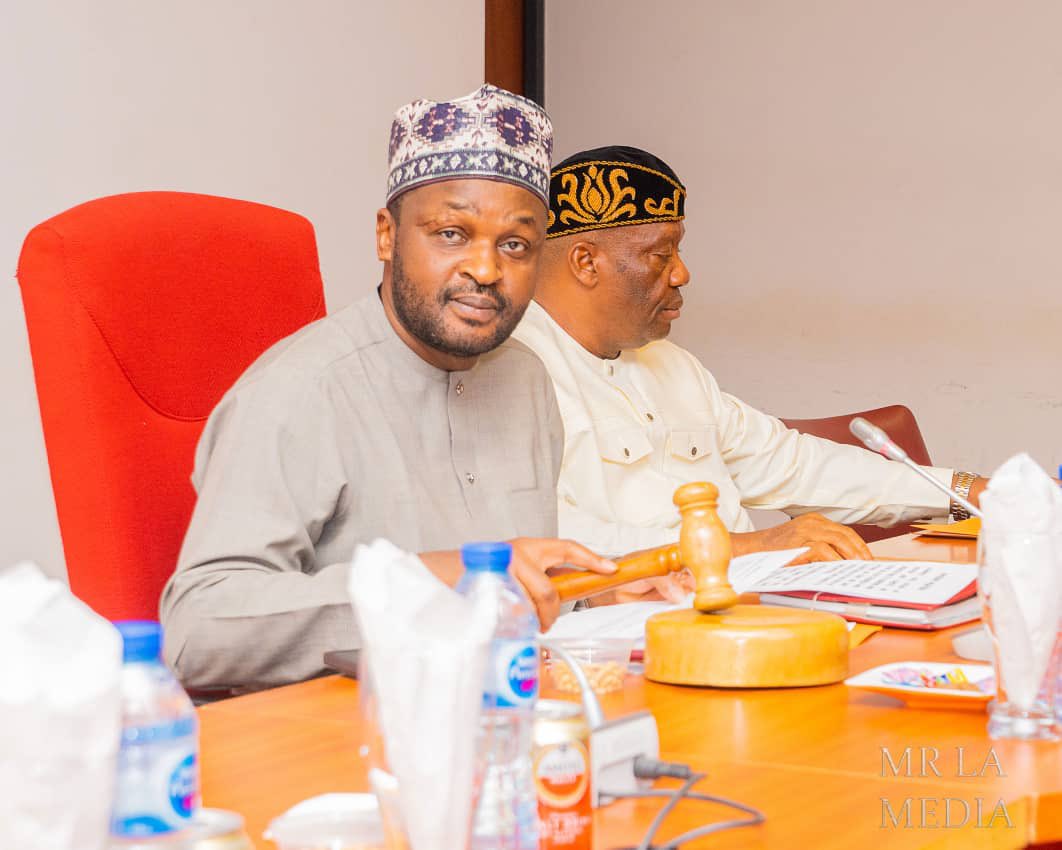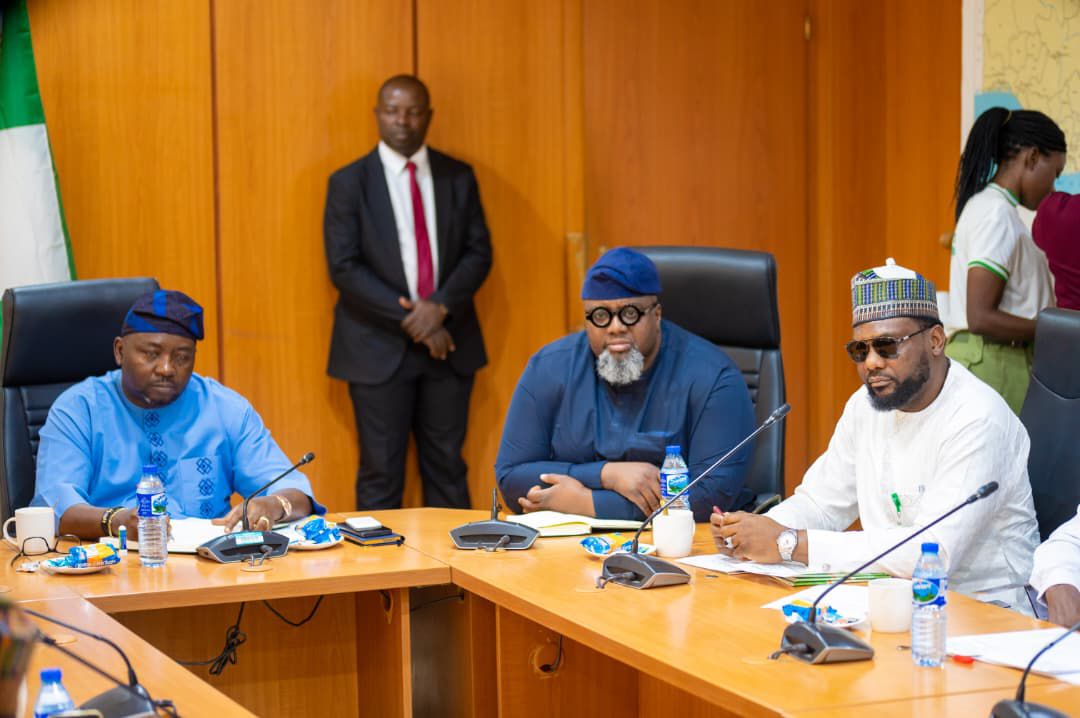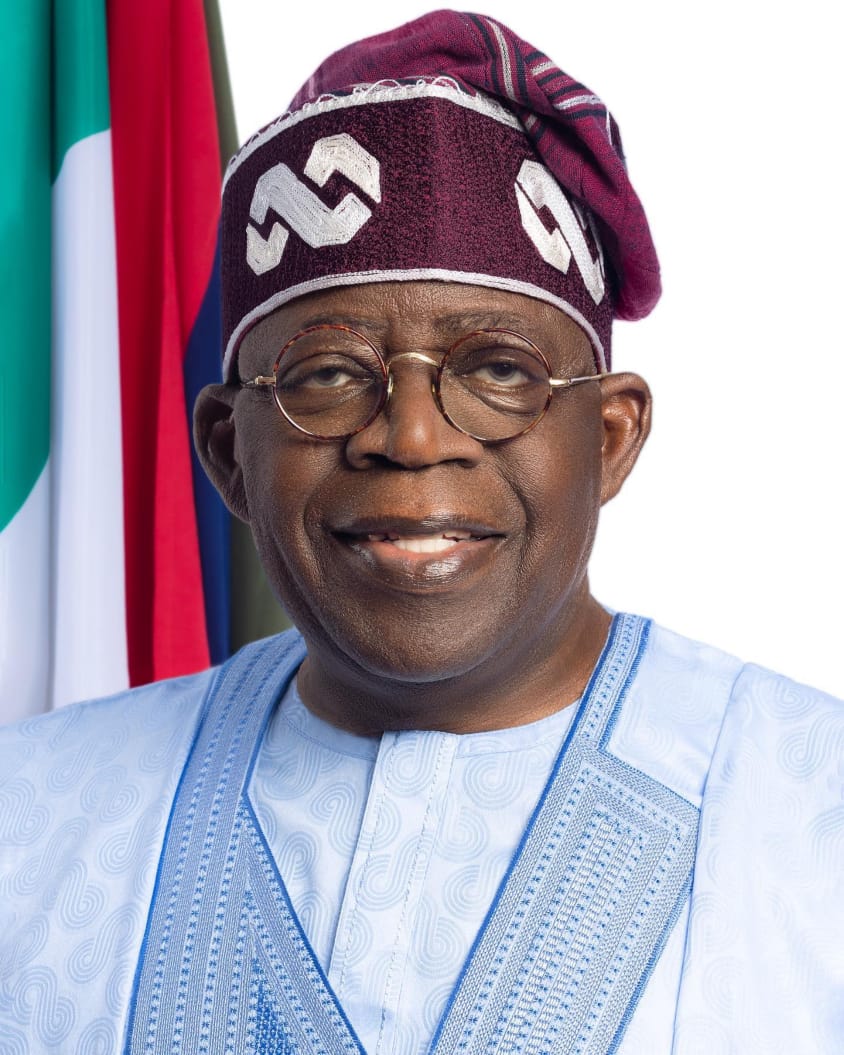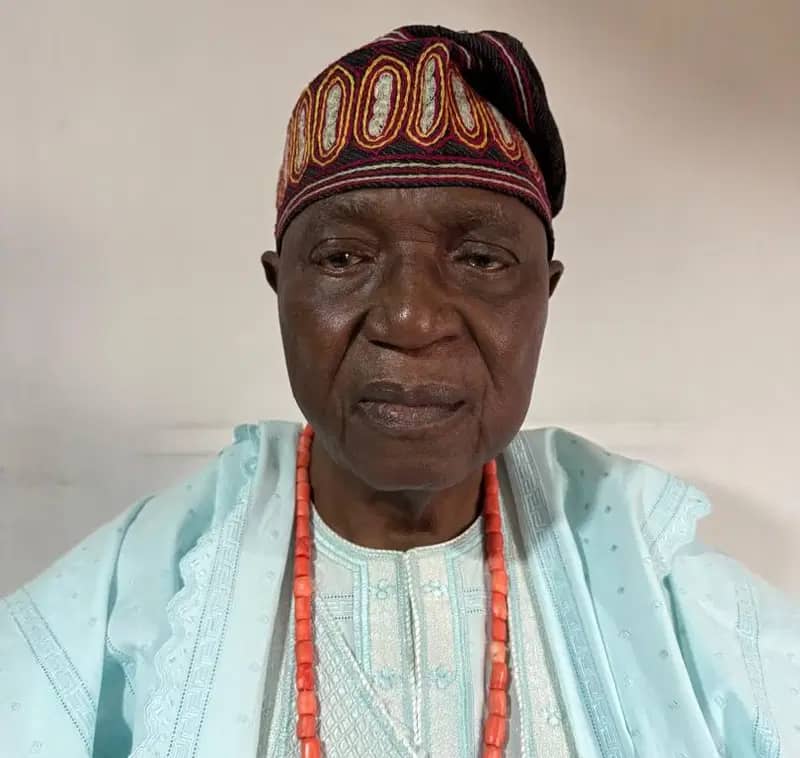
Energy Commission DG Urges Nigerians to Support Tinubu’s Energy Reforms

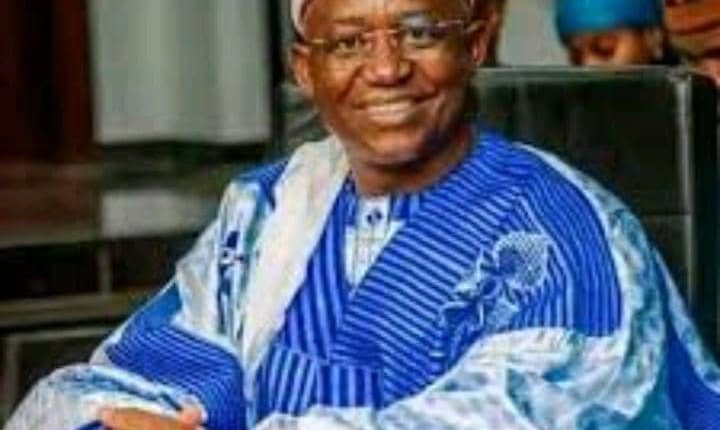
Dr Mustapha Abdullahi, the Director General of Energy Commission of Nigeria (ECN) has applauded President Bola Ahmed Tinubu’s well thought out initiatives in the renewed Hope Agenda.

This initiatives, he said has touched and impacted positively on Nigerians and the nation.

In his New Year message to Nigerians, Dr. Mustapha Abdullahi said, “President Bola Ahmed Tinubu’s visionary Renewed Hope Agenda aims to reposition Nigeria and restore its glory and bring it back to its enviable position as country of destination to both local and international investors and the investment community, is gradually becoming the driving point for Nigerians seeking a better country and society.

“And, for President Tinubu, his well thought out plans to ensure that all Nigerians get access to renewable energy; sustainable energy supply to their homes and offices, birthed the reawakening of the Energy Commission of Nigeria, ECN which had been pushed to a near comatose state.

“His ambitious and unshaken belief in his policies is spearheading the transformative reforms and innovative initiatives to advance the nation’s energy transition. These efforts aim to unlock new opportunities for economic growth, sustainable development, and improved energy access for all Nigerians.

“As Chairman of the ECN, President Tinubu remains deeply committed to driving the Energy Transition Plan; a core component of his Renewed Hope Agenda. His leadership emphasizes the critical role of clean energy and strategic reforms in building resilient energy sector.

“This commitment is a firm exposition to Nigeria’s ambition to become a global leader in sustainable energy solutions while fostering economic progress and environmental stewardship.

“And, for this enviable and laudable project to become complete, Nigerians need to ensure that President Bola Ahmed Tinubu enjoy their total support to see this actualized.

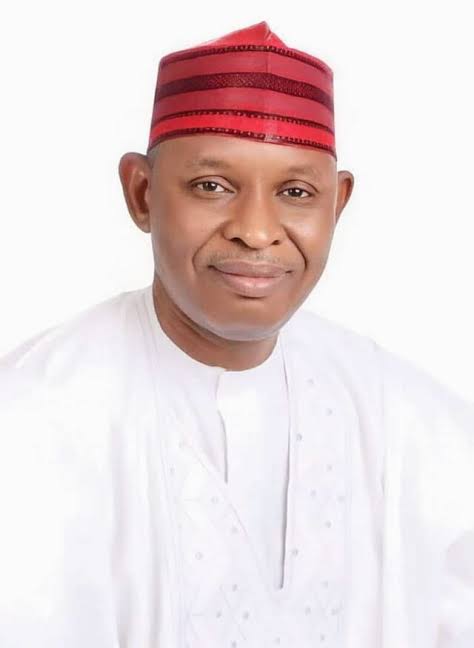
GOVERNOR AKY’S BALANCING ACT: POWER, LOYALTY AND THE POLITICS OF KANO’S FUTURE

By Barrister. Aminu Hussaini

In a move that has redefined the contours of Kano politics, Governor Abba Kabir Yusuf (AKY) might have crossed over to the All Progressives Congress (APC) while deliberately retaining his place within the Kwankwasiyya movement led by his long-time political mentor, Senator Dr. Rabiu Musa Kwankwaso. To casual observers, the decision appears paradoxical. To seasoned students of Kano’s political history, it is a carefully calibrated strategy – bold, pragmatic and deeply rooted in the State’s unique political culture.

Kano politics has never been governed by rigid binaries. From the days of Mallam Aminu Kano to the era of Kwankwaso, political movements in the state have often outlived party labels, functioning more as identities than platforms. AKY’s decision fits squarely within this tradition. By moving to the APC, he aligns Kano State with the party controlling the federal government, a move that promises smoother access to national power, resources and influence. By remaining Kwankwasiyya, he reassures his grassroots base that his political soul has not been traded for convenience.
This is not defiance; it is deference of a higher order. Governor Yusuf has been careful to acknowledge Kwankwaso not merely as a former governor or party leader, but as a father figure and mentor whose political investment in him is both personal and historical. In Kano’s culture, mentors are not discarded lightly. They are respected even when paths diverge.

AKY’s posture reflects a moral obligation deeply understood by the electorate: gratitude is not weakness, and loyalty does not preclude growth.
Crucially, the governor has avoided the trap that has undone many politicians before him-framing political evolution as rebellion. He has not dragged Dr. Kwankwaso into an unwanted defection, nor has he denounced the movement that produced him. Instead, he has separated institutions from individuals and party from philosophy. Kwankwasiyya, in this reading, is a political identity and social movement; APC is a governing vehicle. Kano State – not factional pride, is the destination.

Historically, Kano State Governors who isolated themselves from either the grassroots or the centre paid a heavy price. Those who fought Abuja struggled to deliver. Those who abandoned their base lost legitimacy. AKY appears determined to repeat neither mistake. His strategy is one of balance: consolidate federal cooperation without alienating the red-cap faithful who form the emotional core of Kano’s modern politics.

There is also a maturity in recognising that political mentors are not infallible, nor are they permanent gatekeepers of destiny. By charting his own course-respectfully, cautiously and without public acrimony-AKY signals readiness to lead Kano as governor of all, not as a factional lieutenant. That Dr. Kwankwaso has chosen not to cross over with him only reinforces the autonomy of both men and preserves political peace within the movement.
In the end, this is less about party logos and more about governance. Kano’s challenges-security, infrastructure, education and economic revival-require cooperation, not perpetual opposition. AKY’s manoeuvre, far from being opportunistic, reflects a clear-eyed assessment of power realities and historical lessons.

If politics is the art of the possible, then, Governor Abba Kabir Yusuf has demonstrated rare political intelligence: retaining identity without rigidity, honouring loyalty without captivity, and pursuing Kano’s interest above all else. In a political climate often defined by bitterness and betrayal, this may be his most compelling achievement yet.

Contributed by Barr. Aminu Hussaini, Special Adviser to the Governor of Kano State-AKY on Justice/Constitutional Matters

Forum, Yari Roundtable Laud Appointment of Senator Yari as Geregu Power Board Chairman

The Forum of Development Experts (FDE) and the Yari Roundtable have commended the appointment of former Zamfara State Governor, Senator Abdulaziz Abubakar Yari, as the new Chairman of the Board of Geregu Powe r Plc, describing it as a timely and strategic move for Nigeria’s power sector.

In a joint statement issued on Tuesday in Kaduna, the groups said Senator Yari’s appointment reflects confidence in his leadership capacity, experience in governance and commitment to national development.

According to the statement signed by Dr. Bawa Mohammed and Mr . Philip Darofai , Geregu Power Plc, as a key player in Nigeria’s electricity generation value chain, requires visionary leadership capable of strengthening corporate governance, improving operational efficiency and supporting national efforts to stabilise power supply.

“The appointment of Senator Abdulaziz Yari as Board Chairman of Geregu Power Plc is well deserved and strategically sound. His vast experience in public service, leadership and policy engagement positions him to provide effective oversight and strategic direction to the company,” the statement read.

The Forum of Development Experts noted that Yari’s leadership style, which they said emphasises accountability, inclusiveness and results, would contribute positively to Geregu Power’s growth and long-term sustainability.
Similarly, the Yari Roundtable described the appointment as a recognition of Senator Yari’s track record in leadership and his capacity to bridge public policy objectives with private sector efficiency.

The groups expressed confidence that under his chairmanship, Geregu Power would consolidate its role in boosting electricity generation, attract investment and support economic growth.

They also urged stakeholders in the power sector to give the new board the necessary support to enable it address challenges facing electricity generation in the country.

Geregu Power Plc is one of Nigeria’s leading power generation companies and plays a significant role in supplying electricity to the national grid.
The groups congratulated Senator Yari on the appointment and wished him success in his new role, expressing optimism that his tenure would add value to the company and the Nigerian power sector at large.

DAM FOUNDATION COMMISSIONS HOSTEL, CIVIC CENTRE, EMPOWERMENT PROGRAMMES IN KOGI


It was a beehive of activities recently in Okene, Kogi State, as the DAM Foundation, a non-profit organisation, unveiled three transformative initiatives aimed at strengthening education, community development, and economic empowerment.
The event, which was witnessed by the Executive Governor of Kogi State, Usman Ahmed Ododo, also had in attendance the Director-General of the Energy Commission of Nigeria, Dr. Mustapha Abdullahi.
The unveiling underscored the Foundation’s growing role in driving people-centred development and redefining socio-economic progress in the state.
A major highlight of the occasion was the commissioning of a modern hostel facility—a landmark initiative dedicated to social welfare and dignified living—as well as the DAM Civic Centre, a state-of-the-art facility envisioned to serve as a hub for sports, community engagement, dialogue, and cultural activities.
Beyond infrastructure, the DAM Foundation also launched a comprehensive empowerment programme focused on equipping youths and small-scale entrepreneurs with essential tools, resources, and financial support. According to the Foundation, the projects represent more than physical achievements; they symbolise hope, opportunity, and a long-term commitment to building a resilient and self-reliant future for Kogi State and its surrounding communities.
The event further highlighted the importance of collaboration between government institutions and private philanthropic efforts in achieving sustainable development goals.

Yuletide Cheer: Chibiri Community Receives Food, Clothing from Omalife Rescue Foundation

Zarah Musa

Residents of Chibiri community in Kuje Area Council of the Federal Capital Territory (FCT) received food and clothing items from the Omalife Rescue Foundation, a non-governmental organisation focused on poverty alleviation, child care and emergency relief.

The distribution was part of the foundation’s 2025 Annual Food and Clothes Fiesta, an outreach designed to support vulnerable families and ease the burden of economic hardship. A large turnout of beneficiaries, including women, children and the elderly, collected assorted food items and clothing materials to help meet their basic needs during the yuletide season.

The founder, Dr Mrs Omanibe Sanusi, said the initiative was driven by compassion and a commitment to restoring hope and dignity to the less privileged. She noted that poverty, hunger and inadequate child care remain major challenges, stressing the critical role of individuals and non-governmental organisations in complementing government efforts.

Dr Sanusi explained that Chibiri was selected for the 2025 outreach after an assessment revealed significant needs among residents, particularly widows, orphans and low-income households. She reaffirmed the foundation’s commitment to expanding its programmes in child welfare, skills support and emergency response.

Community leaders expressed appreciation for the timely gesture. The Chief of Chibiri, Chief Alhaji Ishaku Sakokwai, and the Onu of Igala Kuje, Chief Alhaji Hassan Khalid, who were present, commended the foundation and prayed for blessings upon all contributors.

Beneficiaries lauded the organisers, stating the support would help cushion the effects of current economic challenges. The event was conducted orderly by foundation volunteers to ensure fairness and transparency.

Omalife Rescue Foundation stated it would continue partnering with stakeholders to reach more communities in line with its humanitarian objectives.

**ENDS

Apex Body Commends Defence Leadership Over Arrest of Notorious Bandit Kingpin, Bako Wurgi


By Emirnie Adoyi
The Northern

Stakeholders Consultative Initiative (NSCI) has commended the Minister of Defence, Christopher Musa, and the Minister of State for Defence, Bello Matawalle, for what it described as a strategic collaboration that led to the arrest of notorious bandit kingpin and arms dealer, Bako Wurgi.
In a statement issued in Abuja and signed by its Convener, Yerima Shettima, the group described the capture of Wurgi as a major breakthrough in Nigeria’s fight against banditry and terrorism, particularly in the North West region.
NSCI noted that the successful operation reflects the growing effectiveness of intelligence-led and coordinated security efforts under the current defence leadership, stressing that the development has renewed public confidence in the capacity of the armed forces to restore peace and stability.
According to the statement, General Musa’s leadership has strengthened military operations through improved intelligence gathering, enhanced inter-agency cooperation and deeper community engagement, which have collectively weakened criminal networks operating across several affected states.
The group also acknowledged the role of the Minister of State for Defence, Bello Matawalle, noting that his approach to security goes beyond military action to include socio-economic interventions aimed at addressing the root causes of banditry.
“Matawalle’s emphasis on dialogue, alternative livelihoods and community inclusion has complemented kinetic operations, helping to reduce local support for criminal elements,” the statement said.
NSCI described Bako Wurgi as a central figure in the banditry ecosystem, whose arrest is expected to significantly disrupt arms supply chains and criminal coordination within the region. The group further noted that Wurgi’s reported links to other notorious bandit leaders underscore the importance of sustained pressure on criminal networks.
The organisation called on the federal and state governments to continue providing adequate support, logistics and actionable intelligence to security agencies in order to consolidate recent gains. It also urged citizens to cooperate with authorities by promptly reporting suspicious activities.
While celebrating the success, NSCI cautioned that the fight against insecurity remains ongoing, stressing the need for long-term strategies focused on education, economic empowerment and social cohesion to prevent the recruitment of vulnerable youths into criminal groups.
“The capture of Bako Wurgi is a significant milestone, but it must be followed by sustained action and development-driven policies to achieve lasting peace,” the statement added.
NSCI reaffirmed its commitment to supporting government efforts aimed at ending banditry and terrorism, expressing optimism that continued collaboration among security agencies, political leaders and communities would lead Nigeria towards greater peace and stability.
ENDS

KANO AND THE COST OF POLITICAL ISOLATION

Barrister Aminu Hussaini, in this piece, as his personal opinion, examined Kano’s political history, arguing that Kano, as a hub of economic activities in Northern Nigeria, and a Powerful political bloc in the region, must wake up and play politics not only with a passion but with pragmatism, purpose and strategic alignment with the centre that can deliver real results to its people.

Political analysts are of the view that, politics at its core, is not an exercise in sentiment or protest; it is a contest for power, influence and outcomes.

In every democratic system, numbers matter. Coalitions matter. Access matters. Today’s political reality in Nigeria is stark and undeniable: the All Progressives Congress (APC) controls 29 States, while all other parties combined govern just seven.

This imbalance is not cosmetic – it defines the flow of influence, federal attention and development opportunities. Kano State must therefore confront an uncomfortable but necessary truth: strategic alignment with the national majority is no longer optional; it is imperative.

Kano is not a peripheral state. It is Nigeria’s most politically significant Northern State by population, economic activity and historical influence. For decades, Kano has shaped national politics, produced national leaders and acted as a bellwether for political trends in the North. Yet, influence is not sustained by history alone. In modern governance, relevance is maintained by being at the table where decisions are made – not watching from the sidelines.

The federal system rewards cooperation, not isolation. States aligned with the centre enjoy smoother access to federal interventions, accelerated approvals for infrastructure projects, stronger representation in national policymaking and enhanced bargaining power within intergovernmental forums.

This is not a partisan fantasy; it is political reality, observable across administrations and parties since 1999. When a party dominates both the centre and the majority of States, internal party mechanisms-not opposition platforms – become the main arena where national priorities are negotiated.

Those arguing for political “independence” or “romantic opposition” must answer a simple question: what tangible benefits has political isolation delivered to Kano in recent years? Opposition politics may energize rallies and social media debates, but it rarely translates into handout roads, rail, power infrastructure, industrial clusters or sustained federal investments. Development is not awarded for moral positioning; it is negotiated through power structures.

Kano’s past offers sobering lessons about the price of strained federal relations. During the second republic, the state was governed by Muhammad Abubakar Rimi of the People’s Redemption Party (PRP); an ideologically driven but federally isolated administration. At the centre, the National Party of Nigeria (NPN) controlled federal power. The result was an unprecedented intervention: President Shehu Shagari appointed Lawal Kaita as presidential liaison officer in Kano, effectively supervising federal agencies in the state and asserting central authority over federal interests. This arrangement, widely seen as a response to Rimi’s confrontational posture, underscored how political estrangement can weaken a state’s bargaining power and invite federal encroachment rather than cooperation.

The lesson resurfaced decades later under Ibrahim Shekarau’s administration (2003–2011). Governing Kano while the PDP dominated the centre, Shekarau’s government often found itself outside the inner circles where federal priorities were shaped. While Kano did not grind to a halt, it increasingly lost momentum in attracting major federal projects and strategic appointments compared to states aligned with the ruling party. The absence of strong political synergy meant slower access to opportunities that flowed more easily to allied states.

In contemporary times, the pattern remains familiar.
The current Kano State administration has been marked by frequent friction with federal institutions, ranging from disputes with federal security agencies to open political hostilities with influential figures within the ruling establishment. These tensions have created an atmosphere of distrust and chaos, diverting energy from development-driven engagement and weakening Kano’s ability to negotiate effectively for federal investments, institutional support and national influence. These episodes are not coincidences; they reveal a consistent structural reality of Nigerian politics.

It is also important to dispel the myth that alignment equals surrender. Strategic alignment does not mean abandoning Kano’s identity, interests or bargaining power. On the contrary, Kano’s size and electoral weight make it a powerful bloc within any dominant political platform. Aligning with the majority offers Kano the opportunity to shape national policy from within, influence party direction and secure leadership positions that directly benefit the state’s long-term development agenda.

The numbers speak loudly. With 29 APC-governed states, national consensus within the ruling party effectively determines legislative priorities, budgetary focus and policy direction. Remaining outside this consensus does not make Kano principled; it makes Kano peripheral. In a country as competitive and resource-constrained as Nigeria, no serious state can afford such self-marginalization.

Kano’s political elite and stakeholders must therefore ask not what feels emotionally satisfying, but what delivers results. Roads, water projects, education funding, healthcare upgrades, security interventions and economic revitalization require federal-state synergy. That synergy is strongest when political alignment exists.

History favours those who read the moment correctly. Kano has never been a follower state-it has always been a strategic one. The present moment calls for pragmatism over posturing, realism over rhetoric and outcomes over outrage. Aligning with the national majority is not about party colors; it is about securing Kano’s rightful place in Nigeria’s future.

Politics is arithmetic before it is poetry. Today, the arithmetic is clear: 29 versus 7. Kano cannot afford to be sidelined-not in 2026; not in the years leading to the 2027 elections. The State’s political elite, business community, civil society and traditional institutions must prioritize strategic engagement with political majority at the centre. This is not to sacrifice local identity or autonomy-but to secure the tangible dividends of governance: infrastructure, jobs, investment, healthcare, education and security.

History has taught Kano painful lessons about the cost of opposing the centre without sufficient leverage. It is time to play politics not only with passion but with pragmatism, purpose and strategic alignment that delivers real results to the people. Kano must wake up, recalibrate and choose strategic relevance over symbolic resistance.

Barrister Aminu Hussaini Sagagi could be reached on- +234 8033742424, aminuhussaini173@gmail.com

Petrol Station Workers Call on IPMAN to Adopt Health Insurance Scheme


Kaduna

The Independent Petroleum Marketers Association of Nigeria (IPMAN) has been urged to extend health insurance coverage to petrol station workers, following the recent launch of a health insurance scheme by the Nigerian National Petroleum Company Limited (NNPCL).
Petrol station workers are exposed daily to significant health and safety risks and therefore deserve adequate protection, irrespective of whether they are employed by NNPCL retail outlets or by independent petroleum marketers. The NNPCL initiative, according to stakeholders, has set a commendable benchmark that should be replicated across the entire downstream petroleum sector.
Speaking on the issue, Comrade Ibrahim Zango, Convener of Concerned Petrol Station Workers, emphasised that the welfare and wellbeing of workers must be treated as a top priority. He stated that access to health insurance is not a privilege but a basic necessity that every worker is entitled to.
Comrade Zango also clarified that the current leadership of the workers’ platform did not emerge through a formal election but was formed out of necessity due to prevailing circumstances affecting petrol station workers nationwide. He stressed the need for a well-organised leadership structure at the local, state and national levels to ensure better coordination and improved service delivery within the petroleum downstream sector.
He further noted that given the harsh economic conditions and the rising cost of healthcare, workers can no longer afford to wait indefinitely for relief.
Comrade Zango therefore called on independent petroleum marketers to take immediate and concrete steps to provide health insurance coverage for their workers, stressing that proactive action is critical to safeguarding lives and sustaining the workforce that keeps the downstream sector running.

Islamic Coalition Warns Clerics Against Interfering in Technical Tax Reform Debates

A coalition of Islamic groups has cautioned Muslim leaders and clerics across the country against undue interference in ongoing tax reform discussions, warning that such matters are technical, constitutional and should be handled by relevant government institutions.

The groups, under the umbrella of the Coalition of Islamic Organisations for National Development (CIOND), made their position known in a statement issued on Wednesday, stressing that tax reform policies are economic and administrative issues that should not be politicised or religiously coloured.

According to the statement, signed by the coalition’s National Coordinator, Sheikh Abdulrahman Musa, while Islam encourages justice, accountability and fairness in governance, it does not support the distortion of public policy debates through sentiments that could inflame religious tensions.

“The issue of tax reform is a national economic matter that affects all Nigerians, irrespective of faith or ethnicity. It requires expert analysis, stakeholder engagement and constitutional processes, not emotional or sectarian interventions,” the statement read.

The coalition noted that recent comments by some religious figures risk misleading the public and creating unnecessary suspicion about government policies aimed at strengthening revenue generation and economic stability.

CIOND urged Muslim leaders to focus on their primary responsibilities of moral guidance, peacebuilding and social harmony, rather than making pronouncements on technical fiscal policies beyond their competence.

“Islam upholds knowledge and professionalism. Where policies are being debated, those with the requisite expertise should be allowed to lead the conversation, while religious leaders can contribute by advocating fairness, transparency and protection of the poor,” the group added.

The Islamic groups further called on the Federal Government to intensify public enlightenment on the objectives and safeguards of the proposed tax reforms, to address misinformation and build public trust.

They also appealed to Nigerians to resist attempts to frame economic reforms along religious lines, warning that such narratives could undermine national unity and derail well-intentioned policies.

The coalition reaffirmed its commitment to peaceful coexistence and constructive engagement with government on policies that promote economic growth, social justice and national development.

SEPARATING FACT FROM FICTION: CONTEXTUALISING THE ALLEGATIONS AGAINST BELLO MATAWALLE

By: Dr. Lawal Umar Maradun, FNIPR, ARPA

In recent weeks, a surge of allegations and commentary concerning the former Governor of Zamfara State and current Honourable Minister of State for Defence, Dr. Bello Mohammed Matawalle, has dominated sections of the media and social platforms. While public scrutiny of office holders is both legitimate and essential in a democracy, such scrutiny must be anchored in facts, due process, and contextual accuracy—not conjecture, selective narratives, or partisan interpretation.

This intervention is neither an attempt to litigate public opinion nor a call for universal agreement. Rather, it seeks to clarify the record for stakeholders whose judgments are guided by evidence, institutional processes, and long-term national interest.

UNDERSTANDING BELLO MOHAMMED MATAWALLE

Born on February 12, 1969, in Maradun, Zamfara State, Dr. Bello Mohammed Matawalle is a trained educator, administrator, and political technocrat with over three decades of public service experience. He served as the Executive Governor of Zamfara State from 2019 to 2023, a period marked by some of the most complex security challenges in Nigeria’s recent history.

For over a decade prior to his tenure, Zamfara State had been at the epicentre of banditry, mass displacement, and kidnapping for ransom. Upon assuming office, Matawalle adopted a multi-layered strategy that combined security operations with dialogue, community engagement, and intelligence-led interventions. Within his first year, the state recorded a notable reduction in violent incidents—an outcome widely acknowledged at the time as a departure from previous inertia.

POST-TENURE SCRUTINY AND POLITICAL CONTEXT

Following the conclusion of his tenure in 2023, Matawalle became the subject of sustained criticism, much of which relies on retrospective reinterpretations of his policies and actions. During the 2023 general elections, he also served as the North-West Zonal Coordinator for the Tinubu/Shettima presidential campaign, a role widely credited by party stakeholders as instrumental in consolidating electoral support across the region.

His brief absence from public view after the elections was interpreted by some commentators as evasion, particularly amid publicised allegations involving the Economic and Financial Crimes Commission (EFCC). However, Matawalle re-emerged publicly in Abuja ahead of the May 29, 2023 presidential inauguration, attending official state functions without hesitation—conduct inconsistent with claims of a public official “in hiding.”

UNDERSTANDING THE ALLEGATIONS IN PROPER CONTEXT

The allegations currently circulating broadly fall into three categories:

  1. Claims of financial impropriety during his tenure as governor, largely driven by political successors and commentators.
  2. Mischaracterisation of security dialogue initiatives, portrayed by some as complicity rather than conflict-resolution strategies.
  3. Opinion-based conclusions that presume guilt in the absence of judicial determination.

It is critical to distinguish between allegations under review, administrative or investigative processes, and established facts. Much of the prevailing discourse collapses these distinctions, resulting in misleading conclusions and reputational damage unsupported by legal findings.

CLARIFYING THE FACTS

Several facts deserve emphasis:

No court of competent jurisdiction has found Dr. Bello Matawalle guilty of any wrongdoing. Engagements with anti-corruption or oversight institutions where they exist are procedural mechanisms, not verdicts. Financial governance during Matawalle’s administration followed approved budgetary frameworks and was subject to statutory audits and legislative oversight, consistent with constitutional requirements for state governments.

Conflating investigative processes with criminal conviction not only misrepresents reality but also undermines the credibility of accountability institutions themselves.

MEDIA AMPLIFICATION AND POLITICAL INCENTIVES

An examination of how these allegations are amplified reveals a familiar pattern: partisan actors, politically motivated platforms, and commentators who often substitute outrage for verification. In such environments, “media trialism” thrives—where individuals are tried and sentenced in the court of public opinion long before due process is allowed to run its course.

Several respected journalists and policy analysts have warned that this trend erodes public trust, weakens institutions, and distorts democratic accountability.

DUE PROCESS IS A DEMOCRATIC STRENGTH

Dr. Matawalle has consistently affirmed his respect for lawful institutions and due process. In a functioning democracy, the presumption of innocence is not a favour it is a right. Investigations must be allowed to conclude independently, and outcomes must rest on evidence, not volume or virality.

History repeatedly shows that many high-profile allegations lose credibility once subjected to forensic scrutiny. This reality underscores why restraint—not a rush to judgment—defines responsible citizenship and ethical journalism.

A CALL FOR BALANCE, NOT SILENCE

This moment does not call for blind loyalty or uncritical defence. It calls for balance.

Public officials must remain accountable. Institutions must be allowed to work. Citizens must demand accuracy over amplification. Dr. Matawalle’s record, like that of any public servant, should be evaluated holistically—through verified facts and lawful outcomes, not fragmented narratives designed to inflame rather than inform.

CONCLUSION: TRUTH HAS A TIMELINE

Reputations are often tested during moments of political uncertainty. But truth is rarely rushed and never replaced by rumour. Where institutional processes are ongoing, the responsible position is to allow due process to speak, facts to lead, and time to separate allegation from reality.

In the end, credibility is not built by shouting the loudest, but by standing firmly on verifiable truth.

Dr. Lawal Umar Maradun is a journalist and Corporate Affairs Manager, Nigerian Agricultural Insurance Corporation, Abuja.