Dantsoho @57: Maritime Momentum Master

By Abdullahi Sabiu

Fresh from a defining moment on the global stage in Japan, where he secured a prestigious international maritime leadership role, Abubakar Dantsoho clocks 57 with his profile not just rising at home, but commanding recognition across the world’s maritime corridors.

It is a fitting milestone for a man whose steady hand is fast redefining Nigeria’s port ecosystem.

At the helm of the Nigerian Ports Authority (NPA), Dantsoho has emerged as a quiet reformer with global relevance—bridging local execution with international credibility. His recent recognition abroad is more than ceremonial; it is a validation of reforms taking root within Nigeria’s once-troubled port system.

Since assuming office, he has steered the NPA away from chronic inefficiencies toward a culture of discipline, coordination, and forward planning. Congestion is being confronted, processes are being streamlined, and the long-overdue march toward port digitisation is gaining traction. The result is a system gradually shedding its old image and embracing operational clarity.

Dantsoho’s leadership is defined by resolve rather than rhetoric. He understands that ports are not just terminals—they are economic lifelines.

Under his watch, every improvement in cargo clearance, every reduction in turnaround time, and every increase in transparency feeds directly into national productivity and investor confidence.

What sets him apart is his ability to navigate a complex web of stakeholders without losing focus. The maritime sector, long burdened by entrenched interests, is yielding—slowly but surely—to a new order driven by accountability and shared purpose.

Now, with global recognition reinforcing his local reforms, Dantsoho stands at a unique intersection: a technocrat with both domestic impact and international voice.

His growing influence signals that Nigeria is no longer content with being a passive player in global maritime affairs.

At 57, his journey reflects discipline, depth, and direction. Not loud, not flamboyant—but effective, strategic, and increasingly impossible to ignore.

As Nigeria pushes to unlock the vast potential of its blue economy, one thing is becoming clear: the momentum is real—and Dantsoho is firmly at its centre.

Northern Coalition Warns Senate Against ‘Vindictive’ Probe of Ex-NNPCL Boss Kyari


A coalition of northern youth groups has cautioned the Nigerian Senate against what it described as attempts to politically target former Nigerian National Petroleum Company Limited (NNPCL) Group Chief Executive Officer, Mele Kyari, over alleged discrepancies in the company’s audited financial statements.

The groups, led by the Arewa Youth Assembly for Good Leadership (AYAGL), issued the warning in a press statement on Saturday in Abuja in collaboration with the Forum for Youth Development, Unity and Peace Initiative and 21 other civil society organizations.

The statement, signed by the president of the assembly, Amb. Abdul Danbature, expressed concern over the decision by the Senate to summon Kyari in relation to alleged discrepancies amounting to ₦210 trillion in the financial records of the Nigerian National Petroleum Company Limited.

According to the groups, there has been a growing trend of blackmail and politically motivated accusations aimed at discrediting individuals who have served the country.

“We believe it is important to caution against the growing trend of blackmail, politically motivated accusations and deliberate attempts to discredit individuals who have served this country with dedication,” the statement said.

The youth groups insisted that Kyari demonstrated strong commitment to reforming Nigeria’s oil and gas sector during his tenure as head of the national oil company.

They cited several achievements under his leadership, including the transition of the former Nigerian National Petroleum Corporation into a limited liability company in line with the Petroleum Industry Act, the rehabilitation of Nigeria’s refineries, and efforts to improve transparency and monitoring in crude oil production.

The coalition also credited Kyari with expanding gas infrastructure, strengthening energy security and promoting local participation and youth engagement within the oil and gas industry.

The groups described the former NNPCL chief as a patriotic Nigerian who supported the policies of President Bola Ahmed Tinubu, particularly the administration’s Renewed Hope Agenda aimed at repositioning the country for sustainable economic growth.

They further noted that Kyari had consistently encouraged young Nigerians and supported youth leadership opportunities in strategic sectors of the economy.

“It is unfortunate that after years of service to the nation, attempts are now being made to drag his name into unnecessary controversies capable of distracting him from enjoying his well-deserved retirement,” the statement added.

While acknowledging the constitutional oversight powers of the Senate, the groups urged lawmakers to avoid using such powers for what they described as political witch-hunt or character assassination.

They also called on the Senate to concentrate on pressing national challenges, particularly insecurity affecting communities across northern Nigeria and other parts of the country.

The coalition urged Nigerians to treat the allegations against Kyari with caution and resist attempts by individuals or groups seeking to manipulate public opinion for personal or political interests.

The groups further appealed to relevant institutions to allow the former NNPCL chief to enjoy his retirement without harassment or undue distractions.

“Nigeria must always recognize and respect those who have dedicated their time and expertise to national service,” the statement concluded.

Respect Kyari’s Retirement, Stop Political Vendetta, Group Tells Senate

A civic advocacy group, Retirees Dignity Promoters (RDP), has urged the Nigerian Senate to halt what it termed a politically motivated vendetta against the immediate past Group Chief Executive Officer of the Nigerian National Petroleum Company Limited, Mele Kyari.

The group said it was troubling that the Senate committee probing alleged financial issues linked to the national oil company appears determined to overlook the unprecedented openness that characterised Kyari’s tenure.

In a statement signed by its Chairman Moses Epenyoung and issued in Abuja, RDP said Nigerians witnessed a historic shift during Kyari’s leadership when the oil giant began publishing detailed monthly financial and operational reports, openly disclosing revenues, remittances and expenditure — a practice that had never existed before.

“For decades, Nigerians knew virtually nothing about the income, operations and spending of the national oil company. That culture of secrecy changed under Kyari,” the group said.

RDP said it was therefore surprising that lawmakers were now ignoring that transparency legacy while resorting to threats of arrest warrants, a move the group described as politically coloured.

The group also recalled that when the Economic and Financial Crimes Commission invited Kyari last year over industry matters, he voluntarily honoured the invitation shortly after returning from an overseas trip, demonstrating that he had nothing to hide.

According to RDP, the Senate must avoid actions that create the impression of political intimidation, especially as the country gradually approaches another election season.

“Kyari helped open the books of Nigeria’s oil sector. He should be allowed to enjoy his retirement in peace,” the statement added.

Group Hails REA Boss Abba Aliyu As Northern Communities Witness Massive Power Expansion


By Afofia Emeke

The Arewa Youth Assembly for Good Leadership (AYAGL) has declared its solidarity with the Managing Director/Chief Executive Officer of the Rural Electrification Agency (REA), Abba Aliyu, citing what it described as his impactful leadership and significant strides in expanding rural electrification across Nigeria.

In a world press statement issued in Abuja on Monday, the youth group said its decision followed extensive consultations with Northern elders, youth leaders, and key stakeholders across the region.

According to the Assembly, Aliyu has demonstrated “uncommon commitment, transparency, and a results-driven leadership style” since assuming office, accelerating the implementation of renewable energy and rural electrification projects nationwide.

The group particularly commended the REA’s reported expansion of electricity access to underserved communities, noting that several projects under the current leadership have extended beyond rural households to critical public institutions such as hospitals, universities, and other essential facilities.

These interventions, it said, have contributed to improved healthcare delivery, enhanced educational outcomes, and increased economic productivity.

The Assembly further stated that available records and stakeholder observations indicate that Aliyu is the first head of the Agency to oversee electrification projects across all states in Northern Nigeria while simultaneously expanding implementation nationwide.

“These achievements deserve recognition and continued support,” the statement read, adding that the agency’s efforts align with the Renewed Hope Agenda of President Bola Ahmed Tinubu, particularly in the areas of energy access, economic inclusion, and national development.

As a youth-driven movement, the group called on Northern youths and young Nigerians across the country, as well as civil society organisations and community leaders, to support ongoing efforts to deepen rural electrification and sustainable energy development.

The Assembly emphasised that energy access remains a critical driver of economic growth and social transformation, urging stakeholders to prioritise unity and constructive engagement in advancing national development goals.

It also reaffirmed its support for the leadership of the Rural Electrification Agency, encouraging Aliyu to remain focused and committed to expanding electricity access to rural communities, educational institutions, healthcare facilities, and businesses across Nigeria.

The statement which was signed by the President of the Assembly, Ambassador Abdul Danbature concluded by saying,
“Together, we can light up Nigeria and empower our people,” .

ENDS

Arewa Youth Assembly Backs REA Boss Abba Aliyu Over Rural Electrification Drive

Gracy Sule

The Arewa Youth Assembly for Good Leadership (AYAGL) has declared its solidarity with the Managing Director/Chief Executive Officer of the Rural Electrification Agency (REA), Abba Aliyu, citing what it described as his impactful leadership and significant strides in expanding rural electrification across Nigeria.

In a world press statement issued in Abuja on Monday, the youth group said its decision followed extensive consultations with Northern elders, youth leaders, and key stakeholders across the region.

According to the Assembly, Aliyu has demonstrated “uncommon commitment, transparency, and a results-driven leadership style” since assuming office, accelerating the implementation of renewable energy and rural electrification projects nationwide.

The group particularly commended the REA’s reported expansion of electricity access to underserved communities, noting that several projects under the current leadership have extended beyond rural households to critical public institutions such as hospitals, universities, and other essential facilities.

These interventions, it said, have contributed to improved healthcare delivery, enhanced educational outcomes, and increased economic productivity.

The Assembly further stated that available records and stakeholder observations indicate that Aliyu is the first head of the Agency to oversee electrification projects across all states in Northern Nigeria while simultaneously expanding implementation nationwide.

“These achievements deserve recognition and continued support,” the statement read, adding that the agency’s efforts align with the Renewed Hope Agenda of President Bola Ahmed Tinubu, particularly in the areas of energy access, economic inclusion, and national development.

As a youth-driven movement, the group called on Northern youths and young Nigerians across the country, as well as civil society organisations and community leaders, to support ongoing efforts to deepen rural electrification and sustainable energy development.

The Assembly emphasised that energy access remains a critical driver of economic growth and social transformation, urging stakeholders to prioritise unity and constructive engagement in advancing national development goals.

It also reaffirmed its support for the leadership of the Rural Electrification Agency, encouraging Aliyu to remain focused and committed to expanding electricity access to rural communities, educational institutions, healthcare facilities, and businesses across Nigeria.

The statement which was signed by the President of the Assembly, Ambassador Abdul Danbature concluded by saying,
“Together, we can light up Nigeria and empower our people,” .

ENDS

INEC’s Timetable Shift: Northern Youths Hail Move, Urge National Unity

By Musa Luka

A coalition of 21 Northern Nigeria youth organisations under the aegis of the Arewa Youth Assembly for Good Leadership (AYAGL) has commended the Independent National Electoral Commission (INEC) for adjusting the timetable for the 2027 General Elections from February to January 2027.

In a press statement issued on Thursday and signed by its President, Amb. Abdul Garba Danbature, the group described the decision as a “statesmanlike gesture” that strengthens democratic inclusion and national cohesion.

The youths said the adjustment, reportedly made in consideration of the proximity of the earlier February date to the Muslim holy month of Ramadan, demonstrates administrative foresight and sensitivity to Nigeria’s religious diversity.

According to the statement, the initial schedule could have posed logistical and participatory challenges for Muslim faithful observing the fasting period. “By revising the timetable, INEC has shown commitment to inclusivity and ensured that no segment of the population is inadvertently disadvantaged in exercising its constitutional rights,” the group stated.

The coalition noted that the decision followed appeals by several stakeholders, including the Sultan of Sokoto and the leadership of the Supreme Council for Sharia in Nigeria, as well as civic organisations across the country. It said the Commission’s responsiveness underscores the importance of constructive public engagement in a democratic system.

The group also defended the leadership of INEC Chairman, Professor Joash Ojo Amupitan, saying the timetable adjustment reflects a balance between firmness in upholding the law and flexibility in accommodating legitimate concerns.

It called on Nigerians who may have expressed reservations about the INEC chairman’s appointment to reconsider their stance and support the Commission’s efforts to deliver credible and peaceful elections in 2027.

The statement further urged political actors and citizens alike to prioritise peace and unity, drawing inspiration from former Head of State, Abdulsalami Abubakar, whose advocacy for peaceful democratic transitions was described as enduring.

The youths also referenced the legacy of the late Premier of Northern Nigeria, Ahmadu Bello, noting his commitment to unity and cross-cultural engagement across religious and ethnic lines.

They stressed that peaceful coexistence and dialogue remain essential pillars for Nigeria’s democratic consolidation, urging stakeholders — including political parties, civil society organisations, religious institutions and youth groups — to focus on issue-based campaigns and lawful mobilisation ahead of the polls.

“The adjustment of the 2027 election timetable is not a concession to sectional interests but a reinforcement of national equity,” the statement added.

The coalition reaffirmed its confidence in INEC’s leadership and called on Nigerians to prepare for what it described as a peaceful, inclusive and credible electoral process.

ENDS

Renewed Hope Ambassadors Launch Abuja Secretariat with Key Political Leaders in Attendance

The leadership of the Renewed Hope Ambassadors, under the guidance of the Governor of Imo State, Senator Hope Uzodinma, on Friday carried out a strategic inspection of the group’s Abuja Secretariat.

This marks a significant step in consolidating the nationwide grassroots mobilisation drive recently unveiled by President Bola Ahmed Tinubu under his Renewed Hope Agenda.

The inspection signals the formal activation of the Secretariat as a national coordination hub for the movement’s outreach, stakeholder engagement, and policy communication efforts across the six geopolitical zones.

It comes at a critical time, as the administration intensifies efforts to communicate ongoing reforms and deepen citizen participation in governance.

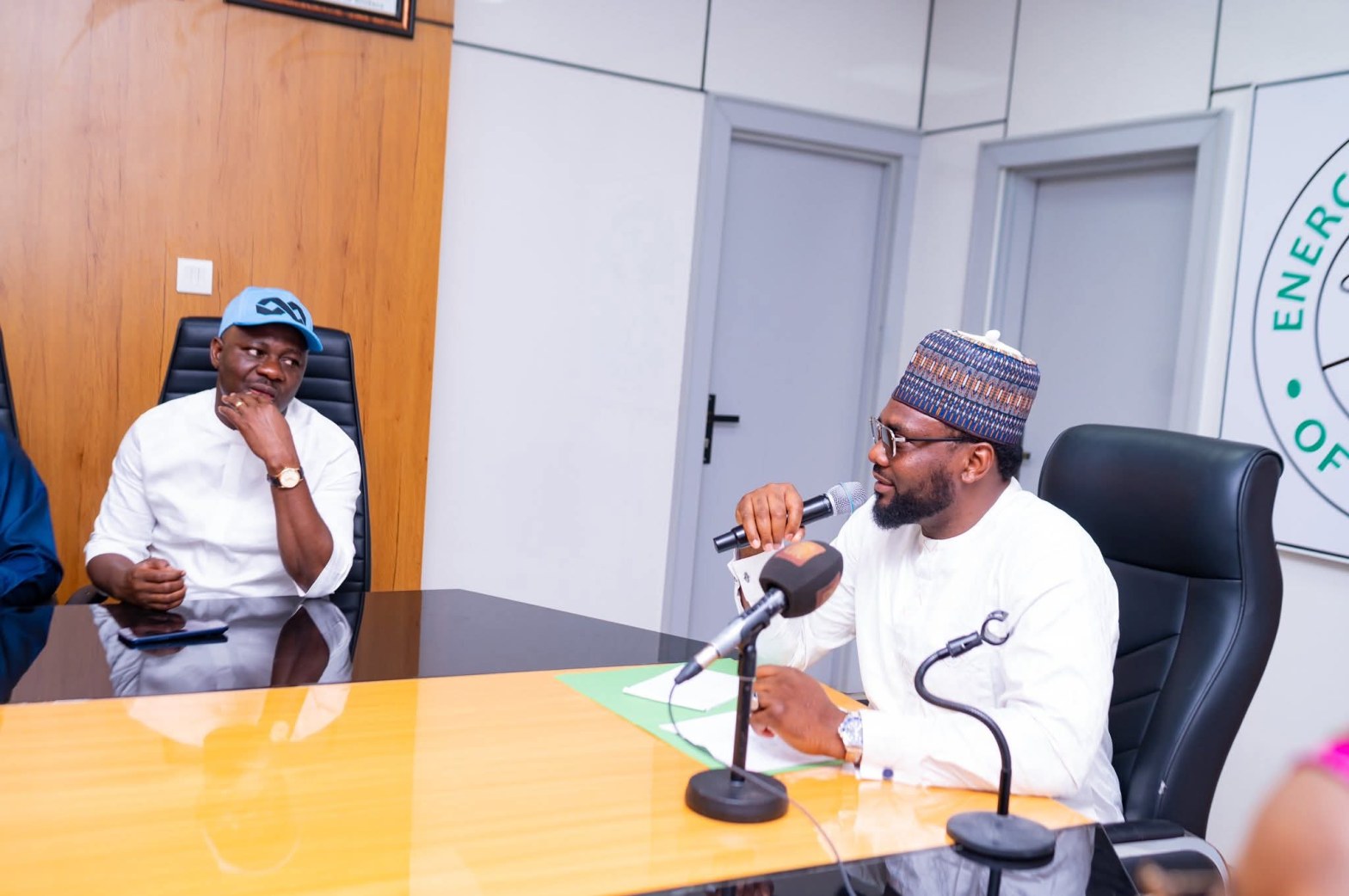
The visit was coordinated by the Director General of the Energy Commission of Nigeria (ECN), Dr. Mustapha Abdullahi, whose role in galvanising institutional and political support reflects the growing synergy between government policy drivers and grassroots mobilisation structures.

Dr. Abdullahi emphasised the importance of aligning advocacy, public enlightenment, and stakeholder engagement with the administration’s broader economic transformation objectives.

In attendance were prominent political leaders and influential voices within the ruling party and the national polity, including former Governor of Katsina State, Rt. Hon. Aminu Bello Masari; former Governor of Nasarawa State, Senator Tanko Al-Makura; former Senate President, Senator Pius Anyim; Senator Olubunmi Adetunmbi; Special Adviser to the President on Media and Public Communications, Mr. Sunday Dare; and Senior Special Assistant to the President on New Media, Mr. Otega Ogra.

Their presence underscored a broad coalition of political experience and strategic communication expertise, reinforcing the Renewed Hope Ambassadors’ mandate to serve as a bridge between government policies and the Nigerian people.

Observers note that the initiative is designed not merely as a political support structure, but as a platform for policy advocacy, citizen feedback, and structured engagement aimed at translating the Renewed Hope Agenda into tangible community-level impact.

Key focus areas include economic recovery, energy transition, youth empowerment, infrastructure development, food security, and digital innovation.

The convergence of governors, senators, presidential media aides, and zonal coordinators highlights the expanding momentum behind the initiative and reflects a coordinated effort to institutionalize grassroots participation in governance.

As the Secretariat becomes fully operational, expectations are high that the Renewed Hope Ambassadors will play a pivotal role in mobilising national consensus, strengthening party cohesion, and sustaining public confidence in the administration’s reform agenda.

The Abuja inspection therefore represents more than a routine visit — it signals the operational take-off of a nationwide movement structured to drive engagement, amplify government achievements, and consolidate support for President Tinubu’s vision of inclusive growth and national renewal.

Group Commends Appointment of Governor Uba Sani as APC Deputy DG, Renewed Hope Ambassador

…Says Move Boosts National Mobilisation and Renewed Hope Agenda

A prominent political advocacy group, Operation 19 Million Votes, has warmly welcomed the recent appointment of Uba Sani, Governor of Kaduna State, as Deputy Director-General and Renewed Hope Ambassador in the All Progressives Congress (APC) mobilisation structure, saying the development is set to strengthen national confidence, deepen youth engagement and galvanise support for the party’s agenda ahead of the 2027 general elections.

President Bola Ahmed Tinubu, as National Leader of the APC, on February 17, 2026, appointed Governor Sani to serve as Deputy Director-General (Deputy DG) of the Renewed Hope Ambassadors, a strategic outreach, engagement and mobilisation arm of the ruling party, in recognition of his “leadership and organisational abilities.” The appointment took effect immediately.

In a statement released by Operation 19 Million Votes today, the group described the appointment as timely and visionary, stating that Governor Sani’s political experience and grassroots appeal will be invaluable in strengthening the party’s footprint across Nigeria’s six geopolitical zones.

According to the group’s national spokesperson, Comrade Haruna Musa Mohammed, the Renewed Hope Ambassadors initiative, which is charged with promoting the APC’s policy achievements and engaging citizens nationwide, requires leaders with broad national appeal, strategic insight, and credibility among diverse constituencies.

The appointment of Sani, who hails from the North West and enjoys bipartisan respect, was said to reflect a commitment to inclusive leadership. The elders and youth wings of the organisation further noted that Gov. Sani’s mobilisational capacities particularly among young voters and traditional leaders will be an asset in shaping favourable perceptions of governance programmes under the Renewed Hope Agenda.

The statement further stated, “Operation 19 Million Votes emphasised that the Renewed Hope Ambassadors structure must focus on substantive engagements on governance impact, job creation, security dialogue, and voter education, particularly at the grassroots and community levels, areas the group believes will determine electoral outcomes in 2027.

“We believe that the appointment of Governor Uba Sani is not just symbolic but strategic. His role as Deputy Director-General and Renewed Hope Ambassador places him at the centre of public assurance, enabling constructive dialogue between government policies and citizens’ daily realities.”

President Tinubu, in a congratulatory letter to Governor Sani, tasked him with galvanising, promoting and disseminating the party’s programmes, policies, milestones and achievements nationwide, with the goal of strengthening public confidence and reinforcing the Renewed Hope message across the country.

According to the statement, the appointment is also part of broader party efforts to position the APC effectively ahead of the 2027 elections, underscoring the importance of unity and coordinated outreach strategies among key party stakeholders.

Governor Sani, who was elected Governor of Kaduna State in 2023, has been involved in national party affairs over time and is seen by supporters as a consensus builder who can bridge divides among party structures and regional interests.

The advocacy group’s endorsement of his appointment signals early support from key civil society actors, highlighting the growing intersection between organised civic action and mainstream political mobilisation in Nigeria’s evolving democratic landscape.

Renewed Hope Initiatives: President Ahmed Tinubu and the Solarization Drive in Nigeria’s Energy Sector

Since assuming office in May 2023, President Bola Ahmed Tinubu has positioned energy reform as a cornerstone of his administration’s economic transformation agenda. Among the most consequential initiatives is the accelerated push toward solarization—the large-scale deployment of solar energy systems across public institutions, rural communities, and critical infrastructure. In a country long challenged by unreliable grid electricity, high diesel costs, and energy poverty, the solarization project represents both an economic and social intervention with far-reaching gains.

In actualizing these gains, the Renewed Hope Agenda, President Bola Ahmed Tinubu saw the need to appoint someone with the right capacity, knowledge and verve to lead the sectors drive towards solarization of the nation, for a more focused sector that will ensure steady energy supply to all Nigerians. The President, Asiwaju Bola Ahmed Tinubu was therefore, applauded for his choice of Engineer Abdullahi Mustapha as Director General and Chief Executive Officer of the Energy Commission of Nigeria, ECN and, the choice of appointment has not failed in the task assigned him.

  1. Expanding Energy Access and Reducing Energy Poverty
    Nigeria has historically struggled with inadequate electricity generation and distribution, with millions of citizens lacking reliable access to power. The solarization initiative, supported through federal programs and partnerships with development finance institutions, aims to bridge this gap by:

. Deploying off-grid and mini-grid solar systems in rural and underserved communities
. Installing solar panels in schools, primary healthcare centers, and government facilities
. Supporting decentralized renewable energy solutions where grid extension is impractical
By prioritizing solar in rural electrification, the Tinubu administration has strengthened Nigeria’s progress toward universal energy access. Solar mini-grids have empowered small businesses, improved healthcare delivery (through reliable cold storage for vaccines and lighting for surgeries), and enabled students to study after dark.
The shift to decentralized solar solutions reduces overreliance on the national grid, which remains constrained by aging infrastructure and transmission bottlenecks.

  1. Fiscal Savings and Reduced Diesel Dependence
    One of the most significant gains of the solarization project is cost reduction in public sector energy consumption. Federal ministries, departments, and agencies have traditionally relied heavily on diesel generators due to inconsistent grid supply. This has led to:
    . recurrent fuel expenditure
    . Maintenance costs for generators
    . Exposure to fluctuating diesel prices
    Solar installations under the Tinubu administration are gradually lowering these operational costs. By replacing diesel generators with photovoltaic systems and battery storage, government institutions reduce long-term energy spending. These savings can be redirected toward social services, infrastructure, and economic development.
    Additionally, reduced diesel use lowers Nigeria’s demand for imported refined petroleum products, supporting broader macroeconomic stability and foreign exchange conservation.
  2. Boosting Economic Productivity and MSMEs
    Solarization contributes directly to economic productivity, especially among micro, small, and medium-sized enterprises (MSMEs). In markets and commercial clusters where power outages are frequent, solar-powered solutions provide:
    Reliable lighting for extended business hours
    Power for refrigeration, welding, tailoring, and agro-processing
    Reduced operational costs compared to generator use
    Lower energy costs increase profitability for small businesses and improve job retention. This aligns with President Tinubu’s broader economic reform agenda, which emphasizes private-sector growth and industrial competitiveness.
    In agricultural communities, solar-powered irrigation systems and cold storage facilities enhance food preservation and reduce post-harvest losses—an important contribution to food security.
  3. Environmental and Climate Benefits
    Nigeria is a signatory to international climate agreements and has committed to reducing greenhouse gas emissions. The solarization project strengthens Nigeria’s transition toward cleaner energy sources by:
    Lowering carbon emissions from diesel generators
    Reducing air pollution in densely populated areas
    Supporting sustainable development goals
    Solar power, as a renewable and low-emission source, aligns with global energy transition trends. Under Tinubu’s leadership, renewable energy deployment sends a signal to investors that Nigeria is open to green finance and climate-aligned investments.
    The environmental gains also translate into public health benefits, as reduced generator fumes mean lower exposure to particulate pollution in homes, offices, and markets.
  4. Strengthening Energy Security and Diversification
    Nigeria’s energy paradox—being an oil-producing nation with persistent electricity shortages—has long hindered economic growth. The solarization project contributes to energy diversification, reducing dependence on gas-fired power plants and vulnerable transmission infrastructure.
    Solar systems distributed across regions create a more resilient energy ecosystem. Unlike centralized power plants that can disrupt large areas if they fail, decentralized solar installations:
    Limit systemic blackouts
    Improve localized energy reliability
    Enhance disaster resilience
    This diversification strengthens national energy security and supports long-term stability in the power sector.
  5. Attraction of Investment and Private Sector Participation
    The administration’s emphasis on renewable energy has encouraged investor interest in Nigeria’s solar market. Through policy reforms, regulatory clarity, and partnerships with international development agencies, the government has:
    Facilitated financing for solar mini-grids
    Encouraged public-private partnerships
    Promoted local assembly and manufacturing of solar components
    Increased investor confidence is critical in a capital-intensive sector like energy. By creating an enabling environment, the solarization drive helps unlock domestic and foreign investment, fostering innovation and competition.
  6. Job Creation and Skills Development
    The expansion of solar infrastructure generates employment across multiple segments:
    Solar panel installation technicians
    Engineers and project managers
    Maintenance personnel
    Local manufacturing and assembly workers
    Training programs associated with solar deployment help build technical capacity among Nigerian youth. This not only reduces unemployment but also cultivates a workforce equipped for the global green economy.
    The renewable energy sector’s growth diversifies Nigeria’s labor market beyond oil and gas, making the economy more adaptable to global shifts.
  7. Support for Public Institutions and Social Infrastructure
    Under President Tinubu’s broader reform agenda, solarization has been integrated into national development priorities, including education and healthcare. Solar-powered public institutions benefit from:
    Uninterrupted lighting in hospitals and clinics
    Reliable electricity for diagnostic equipment
    Digital learning tools in schools
    These improvements enhance service delivery, especially in rural communities where grid power may be unreliable or nonexistent. Stable electricity enables digital governance, improves administrative efficiency, and supports modern public service systems.
  8. Long-Term Structural Reform of the Power Sector
    Solarization complements ongoing structural reforms in Nigeria’s power sector. By encouraging decentralized energy solutions, the administration reduces pressure on a grid that has struggled with transmission capacity constraints and distribution inefficiencies.
    Furthermore, renewable expansion fosters competition and innovation, challenging traditional power supply models. Over time, this diversification may contribute to:
    Improved electricity reliability
    More cost-reflective tariffs
    Increased consumer choice
    The solarization project, therefore, is not merely an environmental initiative but part of a broader restructuring of Nigeria’s electricity landscape.
    Conclusion
    President Bola Ahmed Tinubu’s solarization initiative marks a strategic shift in Nigeria’s energy policy—one that prioritizes renewable energy, fiscal efficiency, and decentralized access. The gains are multidimensional:
    Expanded energy access in underserved communities
    Reduced diesel dependence and fiscal savings
    Improved productivity for small businesses
    Environmental sustainability and climate alignment
    Enhanced energy security and diversification
    Increased investment and job creation
    While challenges remain—including financing scale, maintenance capacity, and regulatory coordination—the solarization project represents a significant step toward a more reliable, inclusive, and sustainable energy future for Nigeria.
    In positioning solar energy as a central pillar of national development, the Tinubu administration underscores the transformative potential of renewables in addressing long-standing power sector deficiencies. If sustained and effectively implemented, the solarization drive could become one of the defining energy reforms of his presidency.
    Stakeholders within the energy sector have continued to commend the DG/CEO of ECN for his commendable strides since his assumption into office especially with the solarization drive and renewable energy for all Nigerians.

Kaduna Christian Forum Hails Governor Uba Sani for Resuming Pilgrimage, Slams El-Rufai’s Past Policies

BA faith-based advocacy group, Christian Forum for Peaceful and United Kaduna, has commended Kaduna State Governor, Uba Sani, for reinstating the Christian pilgrimage scheme in the state, describing the move as bold, inclusive and a step toward rebuilding trust between government and the Christian community.

The group, in a statement issued in Kaduna, applauded the governor for approving the 2025 Christian pilgrimage and facilitating an orientation programme for 50 intending pilgrims held on February 17, 2026.

In the statement signed by the Secretary , Reverend Ishaya Bulus ,the group said, “The development marks the return of the programme after it was suspended in 2015 by former Governor Nasir El-Rufai, whose administration also scrapped the Christian Pilgrims Welfare Agency.

According to the forum, the reinstatement signals a renewed commitment to fairness and religious harmony in the state.

“We commend Governor Uba Sani for taking a courageous and just decision to reinstate the Christian pilgrimage scheme. This is a testament to inclusivity, equity and a genuine desire to strengthen unity among the diverse religious communities in Kaduna State,” the statement read.

The group recalled that it had strongly criticised the suspension of the scheme under the previous administration, arguing that it denied Christians in the state the opportunity to undertake pilgrimage to the Holy Land and offer prayers for peace and progress in Nigeria.

It noted that the return of the programme represents what it described as a departure from an atmosphere it perceived as unfavourable to Christians during the last administration.

“Today, a milestone has been achieved. The return of the pilgrimage programme demonstrates that government policies can be reviewed in the interest of justice and unity. It restores confidence among Christian faithful who felt marginalised,” the forum added.

“We are happy that Governor Sani’s administration has framed the reinstatement as part of broader efforts to promote religious harmony, inclusiveness and fairness in governance. We are also glad that the government has also emphasised the need to rebuild relationships with faith-based organisations across the state.

However, the Christian Forum further linked the development to what it described as improved security in Southern Kaduna, noting that the relative calm being experienced in recent months stands in contrast to the insecurity and tensions witnessed in previous years.

The group which condemned the decision of the former Governor, Mal Nasir Elrufai to suspend the pilgrimage scheme, urged the Governor Uba Sani to sustain policies that promote peace, equity and mutual respect among Kaduna’s diverse ethnic and religious groups.

Elrufai marginalized Christians in Kaduna and planted seed of discord and hatred amongst the two main religions. But we thank God ,Uba Sani has uprooted all those trees that hitherto created the cracks .

“Kaduna State, known for its complex religious and ethnic composition, has in the past grappled with sectarian tensions, it against this background that we say initiatives aimed at fostering inclusion and interfaith cooperation remain critical to consolidating peace and stability in the state.” It stated .