APC Group Accuses Former Speaker Zailani of Anti-Party Activities in Kaduna State

…He lost his ward and local Government to PDP in 2023 Elections.

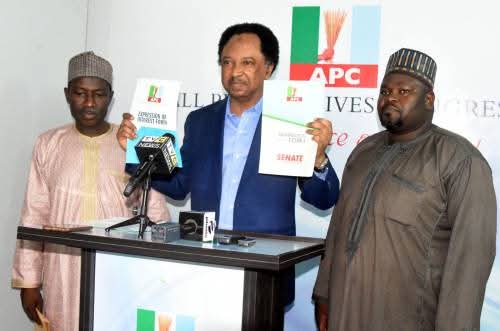
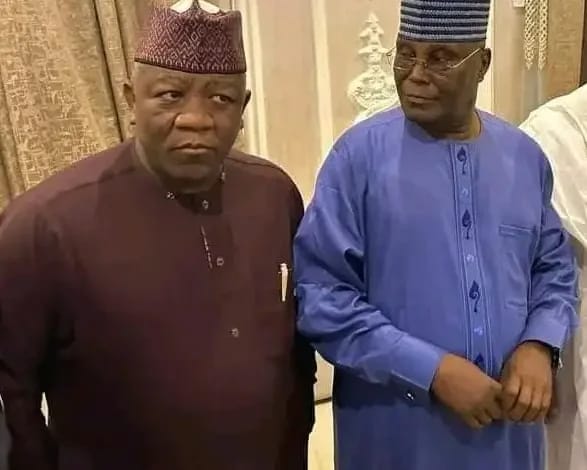
Fresh political tensions are emerging within the All Progressives Congress (APC) in Kaduna State following allegations that a former Speaker of the State House of Assembly, Yusuf Ibrahim Zailani, is working against the party’s interests ahead of the 2027 general elections.

The claims were made by the Kaduna Progressives Forum (KPF) in a statement signed by its Coordinator, Malam Bala Ibrahim Igabi, who expressed concern over what the group described as Zailani’s “desperate bid” for the Kaduna Central Senatorial seat.

According to the statement, the former Speaker’s political influence has declined significantly, with the group alleging that he failed to deliver his ward and local government area to the APC during the 2023 general elections. The forum argued that this development reflects weakening grassroots support in his political base.

“In several constituencies across Kaduna State, the opposition Peoples Democratic Party (PDP) made notable gains, pointing to an increasingly competitive political environment,” the statement noted.

The group also accused Zailani of engaging in actions perceived as detrimental to the unity and electoral strength of the APC in parts of the state. The accusations come amid lingering grievances within the party following the outcome of the 2023 polls.

The 2023 governorship election in Kaduna highlighted the intensity of the contest between the APC and the PDP, with the APC candidate securing victory by a narrow margin of less than one percentage point an outcome widely seen as evidence of a fragile political balance in the state.

Although Zailani won his seat in the State House of Assembly election, concerns persist among party members over internal divisions and the ability of key political figures to effectively mobilise support at the grassroots level.

The KPF further alleged that Zailani recorded minimal achievements during his over two decades in public office and accused him of failing to actively participate in, or support, the party during the Chikun/Kajuru by-election.

Some APC members warned that unresolved internal disputes and alleged anti-party activities could undermine the party’s chances in the 2027 elections.

They called on the party leadership in Kaduna State to investigate the allegations and enforce discipline where necessary to maintain cohesion and strengthen its electoral prospects.

A CLARION CALL: LET AVM ADAMU LEAD THE MILITARY PENSIONS BOARD TO RENEWED HOPE FOR VETERANS

Abuja, FCT The Governance and Leadership Reforms Network (GLRN) makes this heartfelt appeal to His Excellency, President Bola Ahmed Tinubu, GCFR, to graciously instruct for the immediate implementation of the appointment of Air Vice Marshal Abubakar Idris Adamu (Rtd) as Chairman, Military Pensions Board (MPB).

A Leader Prepared by Service
AVM Adamu (Rtd) is not a stranger to discipline, integrity, or institutional reform. A distinguished senior officer of the Nigerian Air Force, his career reflects decades of meritorious service marked by operational excellence, financial prudence, and uncommon empathy for personnel welfare. In every command he held, he left behind systems that worked and people who were better. That is the pedigree the Military Pensions Board needs today.

The Value He Brings: Competence Meets Compassion
The MPB is more than an administrative office. It is the last bridge between the nation and the men and women who gave it their youth, their strength, and sometimes their health. Under AVM Adamu’s leadership, we are confident the Board will witness a new era defined by:

  1. Prudent Management: Deployment of digital audit trails, transparent payment schedules, and strict adherence to the Standing Operating Procedure to eliminate delays and leakages.
  2. Welfare-Centered Innovation: Introduction of a Veterans Welfare Desk, quarterly town-halls with retirees, and a simplified verification process that respects age and dignity.
  3. Institutional Renovation: Modernization of MPB directorates for the Army, Navy, and Air Force to ensure seamless, data-driven pension administration and rapid response to veterans’ needs.
  4. Trust Restoration: Open-door policy and published service charters to rebuild confidence among retired military personnel and their families.

Why the Delay Hurts Those Who Served
For five months since presidential approval was granted effective December 1, 2025, our veterans have waited. Every day of delay is a day a widow waits for her entitlement, a day an amputee struggles without support, a day the nation appears to forget. AVM Adamu’s appointment was not just an administrative act; it was a promise to those who defended us. That promise must be kept.

Our Clarion Call
We respectfully urge President Bola Ahmed Tinubu, GCFR, whose Renewed Hope Agenda rests on Security and Welfare, to direct the immediate resumption of AVM Abubakar Idris Adamu (Rtd) as Chairman, MPB.

Let this competent, compassionate officer bring his renovations to life. Let the Board become a model of prudent management and good welfare. Let our veterans see that Nigeria remembers, Nigeria cares, and Nigeria rewards sacrifice.

When a nation honors its veterans, it strengthens its future. When it delays their dignity, it weakens its soul.

Signed:
Comrade Ayuba Garba

National Convener
Governance and Leadership Reforms Network (GLRN)

Northern Pro-Tinubu Group Begins Consultations, Mobilisation for 2027 Elections

A northern-based political support group, Talakawa Forum, has announced plans to commence regional consultations and grassroots mobilisation ahead of the 2027 general elections, with the aim of securing a landslide victory for President Bola Ahmed Tinubu.

The group said its decision was driven by what it described as “erroneous propaganda” from some northern elements who, it claimed, have failed to acknowledge ongoing reforms and efforts toward sustainable growth and development across the country.

In a press statement signed by its coordinator, Comrade Bala Isah Mohammed, the forum expressed strong support for President Tinubu’s administration, insisting that he should be allowed to complete a second term in office.
According to the statement, the group believes there is an existing understanding on power rotation between the North and the South, noting that the South should be allowed to complete its turn just as the North did under the late former President Muhammadu Buhari.

“We believe there is a gentleman agreement between the North and South for rotation of power. It is based on this understanding that we have resolved to engage and sensitise the masses, particularly the talakawa, to support and vote massively for President Tinubu in 2027,” the statement read.

The group expressed confidence in Tinubu’s leadership capacity, stating that his administration has the potential to address key challenges in the North, including poverty, insecurity, and educational backwardness.

It further argued that supporting Tinubu’s re-election could pave the way for future northern political opportunities, expressing optimism that he would, in turn, support a northern successor.

The Talakawa Forum outlined its core objectives to include reactivating its support base, mobilising women and grassroots communities, promoting the achievements of the Federal Government since 2023, and encouraging national unity.

The group also pledged to sensitise the public on the need for peaceful, credible, and transparent elections as part of its mobilisation efforts.

MINISTER BELLO MATAWALLE: A STRATEGIC BRIDGE IN NATIONAL SECURITY AND POLITICAL STABILITY

In the intricate landscape of Nigeria’s governance and security architecture, certain leaders distinguish themselves not merely by the offices they occupy, but by the depth of their engagement, the clarity of their vision, and their commitment to national unity. The Honourable Minister of State for Defence, Dr. Bello Muhammad Matawalle, continues to exemplify this rare blend of leadership.

His recent travel to Kano State marks the commencement of a deliberate political and strategic engagement, not as an isolated intervention, but as part of a broader, well-coordinated effort that is expected to extend across other Northern states and, indeed, the nation as a whole. It is a forward-looking initiative aimed at strengthening peace, fostering harmony, reinforcing security structures, and promoting the overall well-being of citizens. In a region as politically and socially significant as Kano, such an engagement carries both immediate and long-term national implications.

As the saying goes, “peace is not an accident, it is the product of deliberate effort and sustained engagement.” Dr. Matawalle’s approach reflects this philosophy. His presence in Kano is anchored on consultation, trust-building, and strategic alignment with key stakeholders, ensuring that the foundations of stability are not only built but sustained over time.

Over the years, Dr. Matawalle has proven himself to be a disciplined administrator, a thoughtful strategist, and a consummate political bridge-builder. His understanding of Nigeria’s complex political terrain, often described as that of a “political encyclopedia,” positions him uniquely to navigate sensitive issues with wisdom, patience, and foresight. He recognises that enduring peace is achieved not solely through force, but through inclusion, dialogue, and cooperation among diverse interests.

At the heart of his engagements is a deep and unwavering loyalty to President Bola Ahmed Tinubu, GCFR, Commander-in-Chief of the Armed Forces of the Federal Republic of Nigeria. Dr. Matawalle stands out as a staunch supporter of the President and a committed driver of the Renewed Hope Agenda. His actions consistently reflect a determination to translate the President’s vision into tangible outcomes, particularly in the critical areas of security, unity, and national stability.

In the political landscape of the North-West, where grassroots influence often determines electoral outcomes, the role of engagement cannot be overstated. It is widely understood that “a structure built from the ground stands longer than one imposed from above.” In this regard, Dr. Matawalle’s presence in Kano also reflects a subtle but deliberate effort to strengthen the grassroots foundations of the All Progressives Congress (APC). His engagements bring together party stakeholders, community leaders, Business community and mobilisers in a manner that reinforces unity within the party while aligning political structures with broader national objectives.

Indeed, his approach demonstrates that political consolidation and national stability are not mutually exclusive pursuits. By weaving grassroots political engagement for the APC into his broader strategic mission for peace, security, and unity, Dr. Matawalle exemplifies a model where governance and politics operate in synergy. His efforts are not about rhetoric, but about building trust, restoring confidence, and ensuring that the party remains connected to the aspirations of the people at the community level. As the saying goes; when a foundation is built on collective support, even the fiercest winds cannot bring it down.

Furthermore, within the evolving dynamics of the APC, such engagements are critical in sustaining cohesion and preventing fragmentation. Kano, as a political stronghold, requires continuous dialogue, reconciliation, and strategic alignment among party actors. Dr. Matawalle’s interventions are therefore seen as part of a broader effort to ensure that the party speaks with one voice, strengthens its internal unity, and positions itself effectively for future political contests. In politics, as often said, “those who gather early, command the direction of the crowd.” His ongoing efforts reflect this understanding.

It is often said in Hausa tradition, “Idan aka hada kai, komai yana yiwuwa”—when there is unity, everything becomes possible. This principle is evident in his method of engagement, which prioritises collaboration across political, security, and community structures. By fostering unity and building consensus, he contributes meaningfully to the strengthening of Nigeria’s internal cohesion.

Kano remains a critical hub in Nigeria’s political and socio-economic framework, and engagements within such a space must be both strategic and inclusive. However, what is even more significant is that this initiative is not confined to Kano alone. It represents the beginning of a wider national effort, one that will be replicated across other states to ensure that peace, stability, and security are entrenched at all levels of society.
In conclusion,

Dr. Bello Matawalle’s ongoing efforts reflect a clear understanding that national stability is a continuous process that requires vision, dedication, and coordinated action. His loyalty to President Tinubu, his commitment to the Renewed Hope Agenda, and his strategic engagements across the country position him as a key contributor to Nigeria’s journey toward lasting peace and sustainable development.

Indeed, as Nigeria continues to navigate its path toward greater stability and progress, leaders who combine loyalty with strategy, and vision with action, will remain indispensable to the realization of a more secure and united nation.

Dr. Awwal Abdullahi Aliyu

Spokesperson, Ministry of Defence Ministerial Standing Committee on Military Veterans Welfare

  • Director General, Initiative for Military Veterans & Family Support Foundation
  • Deputy National Coordinator, Retired Members of Nigerian Armed Forces (REMENAF)

General Secretary, Coalition of Concerned Military Veterans – North (CCV)

Secretary General, Veterans Federation of Nigeria (VFN)

  • National President, Nineteen Seventeen Northern Consensus Movement for Peace Unity Empowerment and Development Initiative NSNCM
  • An Amalgamation of 598 registered associations of northern from thett Nineteen northern states and associations of northern community resident in the Seventeen southern states and FCT.

MINISTER BELLO MATAWALLE: A STRATEGIC BRIDGE IN NATIONAL SECURITY AND POLITICAL STABILITY

In the intricate landscape of Nigeria’s governance and security architecture, certain leaders distinguish themselves not merely by the offices they occupy, but by the depth of their engagement, the clarity of their vision, and their commitment to national unity. The Honourable Minister of State for Defence, Dr. Bello Muhammad Matawalle, continues to exemplify this rare blend of leadership.

His recent travel to Kano State marks the commencement of a deliberate political and strategic engagement, not as an isolated intervention, but as part of a broader, well-coordinated effort that is expected to extend across other Northern states and, indeed, the nation as a whole. It is a forward-looking initiative aimed at strengthening peace, fostering harmony, reinforcing security structures, and promoting the overall well-being of citizens. In a region as politically and socially significant as Kano, such an engagement carries both immediate and long-term national implications.

As the saying goes, “peace is not an accident, it is the product of deliberate effort and sustained engagement.” Dr. Matawalle’s approach reflects this philosophy. His presence in Kano is anchored on consultation, trust-building, and strategic alignment with key stakeholders, ensuring that the foundations of stability are not only built but sustained over time.

Over the years, Dr. Matawalle has proven himself to be a disciplined administrator, a thoughtful strategist, and a consummate political bridge-builder. His understanding of Nigeria’s complex political terrain, often described as that of a “political encyclopedia,” positions him uniquely to navigate sensitive issues with wisdom, patience, and foresight. He recognises that enduring peace is achieved not solely through force, but through inclusion, dialogue, and cooperation among diverse interests.

At the heart of his engagements is a deep and unwavering loyalty to President Bola Ahmed Tinubu, GCFR, Commander-in-Chief of the Armed Forces of the Federal Republic of Nigeria. Dr. Matawalle stands out as a staunch supporter of the President and a committed driver of the Renewed Hope Agenda. His actions consistently reflect a determination to translate the President’s vision into tangible outcomes, particularly in the critical areas of security, unity, and national stability.

In the political landscape of the North-West, where grassroots influence often determines electoral outcomes, the role of engagement cannot be overstated. It is widely understood that “a structure built from the ground stands longer than one imposed from above.” In this regard, Dr. Matawalle’s presence in Kano also reflects a subtle but deliberate effort to strengthen the grassroots foundations of the All Progressives Congress (APC). His engagements bring together party stakeholders, community leaders, Business community and mobilisers in a manner that reinforces unity within the party while aligning political structures with broader national objectives.

Indeed, his approach demonstrates that political consolidation and national stability are not mutually exclusive pursuits. By weaving grassroots political engagement for the APC into his broader strategic mission for peace, security, and unity, Dr. Matawalle exemplifies a model where governance and politics operate in synergy. His efforts are not about rhetoric, but about building trust, restoring confidence, and ensuring that the party remains connected to the aspirations of the people at the community level. As the saying goes; when a foundation is built on collective support, even the fiercest winds cannot bring it down.

Furthermore, within the evolving dynamics of the APC, such engagements are critical in sustaining cohesion and preventing fragmentation. Kano, as a political stronghold, requires continuous dialogue, reconciliation, and strategic alignment among party actors. Dr. Matawalle’s interventions are therefore seen as part of a broader effort to ensure that the party speaks with one voice, strengthens its internal unity, and positions itself effectively for future political contests. In politics, as often said, “those who gather early, command the direction of the crowd.” His ongoing efforts reflect this understanding.

It is often said in Hausa tradition, “Idan aka hada kai, komai yana yiwuwa”—when there is unity, everything becomes possible. This principle is evident in his method of engagement, which prioritises collaboration across political, security, and community structures. By fostering unity and building consensus, he contributes meaningfully to the strengthening of Nigeria’s internal cohesion.

Kano remains a critical hub in Nigeria’s political and socio-economic framework, and engagements within such a space must be both strategic and inclusive. However, what is even more significant is that this initiative is not confined to Kano alone. It represents the beginning of a wider national effort, one that will be replicated across other states to ensure that peace, stability, and security are entrenched at all levels of society.
In conclusion,

Dr. Bello Matawalle’s ongoing efforts reflect a clear understanding that national stability is a continuous process that requires vision, dedication, and coordinated action. His loyalty to President Tinubu, his commitment to the Renewed Hope Agenda, and his strategic engagements across the country position him as a key contributor to Nigeria’s journey toward lasting peace and sustainable development.

Indeed, as Nigeria continues to navigate its path toward greater stability and progress, leaders who combine loyalty with strategy, and vision with action, will remain indispensable to the realization of a more secure and united nation.

Dr. Awwal Abdullahi Aliyu

Spokesperson, Ministry of Defence Ministerial Standing Committee on Military Veterans Welfare

  • Director General, Initiative for Military Veterans & Family Support Foundation
  • Deputy National Coordinator, Retired Members of Nigerian Armed Forces (REMENAF)

General Secretary, Coalition of Concerned Military Veterans – North (CCV)

Secretary General, Veterans Federation of Nigeria (VFN)

  • National President, Nineteen Seventeen Northern Consensus Movement for Peace Unity Empowerment and Development Initiative NSNCM
  • An Amalgamation of 598 registered associations of northern from thett Nineteen northern states and associations of northern community resident in the Seventeen southern states and FCT.

Doorgaan naar hoofdinhoudWHOLETRUTHNIGERIATruth over TribesFact Fake .pngAbout UsCutting through the bias, lies, misinformation and propaganda. Bringing you the whole truth.Welcome to Whole Truth Nigeria, your dedicated source for comprehensive, unbiased reporting on the ongoing farmer-herder conflict and banditry crises plaguing Nigeria. Founded in 2026, we are an independent news platform committed to countering the flood of misinformation, sensationalism, and biased reporting that has overwhelmed coverage of these critical issues in the West. Our mission is to deliver the whole truth—and nothing but the truth—uncovering root causes, amplifying marginalized voices, and fostering informed dialogue to promote peace and resolution.We cover all angles: the hardships faced by herders as they lose their grazing grounds, the fears of farming communities unable to access their lands due to threats. Whether you are Fulani, Hausa, Berom, Christian or Muslim, you have a voice here. TeamFlag Map of Nigeria.pngEditor(Name and photo redacted for security reasons)TwitterLinkedInMuhammad Bukhari Photo .pngMuhammad BukhariWriterTwitterLinkedInMary Headshot.JPGMary CrickmoreSocial Media CoordinatorTwitterLinkedInSubscribe to Our NewsletterEnter your email here*Yes, subscribe me to your newsletter.*SubscribeWhite Facebook Icon© 2035 by TheHours. Powered and secured by Wix

Give complete write up

Shehu Sani Knocks David Mark’s ADC Protest, Says Leaders Are ‘Old Hyenas in Garb of New Tigers’

Former Kaduna Central senator, Shehu Sani, has strongly criticised the recent protest spearheaded by former Senate President, David Mark, under the platform of the African Democratic Congress (ADC), describing it as insincere and driven by personal political ambitions.

Reacting to the development, Sani dismissed the protest as a gathering of “old hyenas in the garb of new tigers,” accusing its leaders of lacking the credibility to champion the cause of ordinary Nigerians.

According to him, many of those now presenting themselves as opposition figures had previously occupied positions of authority but failed to deliver meaningful progress during their time in office.

“They have been in power and achieved nothing,” Sani stated, adding that such actors now masquerade as agents of change despite being part of the system they currently criticise.

The outspoken activist further described the group as “retrogressive forces camouflaging as opposition,” insisting that their actions are not motivated by genuine concern for Nigerians but by personal political interests.

“If they are messiahs or magicians, Nigeria wouldn’t have been like this,” he said, questioning what he termed their sudden transformation into advocates of reform.

Sani also alleged that many of the leaders involved were instrumental in shaping what he described as Nigeria’s flawed political structure.

“They are the architects and structural engineers who built the faulty system in our country,” he added.

He further argued that none of the key figures within the ADC leadership demonstrated strong democratic credentials while in office, casting doubt on their current posture as champions of democracy.

In a metaphorical remark, Sani likened the party’s internal struggles to mechanical failure, stating that “the ADC leaders bought a used vehicle and are now battling with engine problems.”

He suggested that if the group desired a crisis-free platform, they should have registered a new political party rather than aligning under an existing structure.

The comments come amid growing political realignments and heightened activities among opposition parties ahead of future electoral contests, as analysts continue to monitor shifting alliances within Nigeria’s political landscape.

0ne Man, Many Parties; Kano’s Long Struggle with Political Monopoly

By Barrister Aminu Hussaini Sagagi

In the evolving theatre of Kano politics, the reported move by Sen. Rabiu Musa Kwankwaso to the African Democratic Congress (ADC) is being framed by his loyalists as yet another masterstroke of political relevance. But beneath the familiar choreography of defection lies a more uncomfortable truth, one that Kano’s politically conscious electorate must now confront with clarity and courage.

It is not a reinvention, as they euphorically claimed, it is a repetition. For decades, Kwankwaso has perfected a pattern of movement without ideological migration, defection without doctrinal evolution. From party to party, platform to platform, the constant has never been policy or principle; it has been personal centrality. The political vehicle may change, but the driver remains the same and the destination is invariably power concentrated in one man’s orbit.

For the first time in a long while, the choice before Kano electorates in 2027 is very clear – choosing between two political destinies; politics as personal preservation and politics as public evolution.

The ADC, in this context, risks becoming less a party and more an extension of a familiar enterprise; another platform recalibrated to sustain a personal political ecosystem. It is a model Kano knows too well; loyalty elevated above competence, structure subordinated to personality and dissent quietly erased in the name of movement cohesion.

This is the deeper question: At what point does political consistency give way to political monopoly?

Sen. Kwankwaso’s enduring strength has never been in institutional building but in emotional consolidation, the creation of a movement bound not by shared governance philosophy but by personal allegiance. Such a structure, while formidable in mobilization, is inherently fragile in transition. It struggles to outlive the will of its architect and resists the emergence of alternative voices within its fold. That is precisely where the contrast with Governor Abba Kabir Yusuf becomes both striking and significant.

Governor Yusuf’s political realignment, controversial as it may appear on the surface, signals something Kano has long been denied, the assertion of institutional independence over inherited loyalty. In choosing to chart a course outside the shadow of political godfatherism, he has disrupted a long-standing orthodoxy that, leadership in Kano must be tethered to a singular political patriarch.

That was not merely a defection, it was a declaration. A declaration that governance must evolve beyond the boundaries of personal empires. That Kano’s future cannot remain perpetually negotiated within the inner circles of a single political lineage. That leadership must, at some point, belong fully to the people, not proximally to a benefactor.

Critics will argue that politics is, by nature, fluid, that movement between parties is neither new nor inherently problematic. And they would be correct. But fluidity becomes suspect when it consistently flows in one direction, towards the preservation of personal dominance rather than the advancement of public purpose.

What Kano now witnesses is a defining divergence in political philosophy. On one hand, a recycled trajectory, a seasoned tactician seeking renewed relevance through another platform, carrying forward a model anchored in personal command. On the other, an emergent assertion, a sitting governor boldly attempting, however imperfectly, to redraw the boundaries between mentorship and control, loyalty and autonomy.

This moment, therefore, is larger than party labels. It is about the ownership of Kano’s political future. Will it remain the extension of an enduring political dynasty, adaptable in platform but constant in control?
Or will it gradually transition into a more open, institution-driven system where leadership is negotiated by performance rather than predetermined by allegiance?

Sen. Kwankwaso’s move to ADC may yet reshape alliances, energize opposition and reconfigure the electoral map. But it also inadvertently sharpens a narrative that may prove far more consequential, the contrast between politics as personal preservation and politics as public evolution. In that contrast lies the real contest ahead. And perhaps, for the first time in a long while, Kano is not merely choosing between parties, it is choosing between two political destinies.

Barrister Hussaini is the
Convener – “KanoFirst Movement”

ECN Felicitates Tinubu on Birthday, Commends Energy Reforms

The Energy Commission of Nigeria (ECN) has congratulated President Bola Ahmed Tinubu on the occasion of his birthday, lauding his leadership and commitment to national development, particularly in the energy sector.

In a statement issued on behalf of the Commission, the Director-General of the ECN, Dr. Mustapha Abdullahi, described the President as a courageous leader whose reform-driven governance has continued to inspire confidence and optimism across the country.

Abdullahi noted that Tinubu’s administration has demonstrated strong resolve in repositioning Nigeria’s energy landscape, with a clear focus on sustainability and innovation. He particularly highlighted the President’s support for solarisation initiatives and the transition to renewable energy, which he said have significantly improved power access in key sectors.

According to him, over 37 health institutions, tertiary institutions, Ministries, Departments and Agencies (MDAs), as well as several rural and urban communities, have benefited from solar energy interventions within the last three years.

He further commended the President’s role as Chairman of the ECN Board, noting that his practical commitment to energy reforms is laying a solid foundation for resilience, innovation, and sustainable national development.

“Your courageous leadership, firm resolve, and bold reform-driven governance continue to serve as a springboard for a renewed Nigeria,” Abdullahi stated.

The ECN boss also acknowledged the President’s broader impact across critical sectors, describing his leadership as instrumental in driving national progress.

He prayed for God to grant the President renewed wisdom, good health, and long life to continue steering the country toward greater prosperity.

“Happy Birthday, Mr. President,” the statement added, celebrating Tinubu as a leader committed to the advancement of Nigeria.

Renewed Hope Initiative: ECN DG Hosts Conference of Speakers, Reaffirms Push for Nationwide Solarization.

In a move to boost energy planning within the States of the Federation, the Director-General of the Energy Commission of Nigeria (ECN), Dr. Mustapha Abdullahi, has received the Conference of Speakers of State Houses of Assembly at the Commission’s headquarters in Abuja.

This ís as he reaffirmed the Federal Government’s commitment to strengthening partnerships with states to address energy shortfalls across critical public infrastructure.

The engagement which focused on advancing the solarization of government buildings, healthcare facilities, schools, and other essential institutions is part of a coordinated national effort to deliver clean and sustainable energy solutions.

Dr. Abdullahi noted that the initiative aligns with President Bola Ahmed Tinubu’s Renewed Hope Agenda and supports the decentralization of Nigeria’s energy master plan through the large-scale deployment of renewable energy technologies.

He emphasized that the project will enhance energy access, reduce reliance on the national grid, and promote environmental sustainability.

The Director-General further stated that the initiative is expected to significantly improve energy reliability in public institutions while accelerating Nigeria’s transition to sustainable energy.

Speaking on behalf of the delegation, the Speaker of the Delta State House of Assembly commended the solarization programme and assured that state legislatures would provide the necessary support to ensure its timely and effective implementation.

The solarization project, launched in 2025, is a key component of the Federal Government’s broader clean energy drive aimed at powering public institutions across the country with solar energy.