BREAKTHROUGH IN FIGHT AGAINST GRADUATE UNEMPLOYMENT IN NIGERIA_

By Ibrahim H. Tinja

The issue of graduate unemployment in Nigeria has been a major cause of concern for both the government and citizens. With thousands of graduates entering the job market each year, the limited employment opportunities available have resulted in a high rate of unemployment, especially in the northern region of the country.

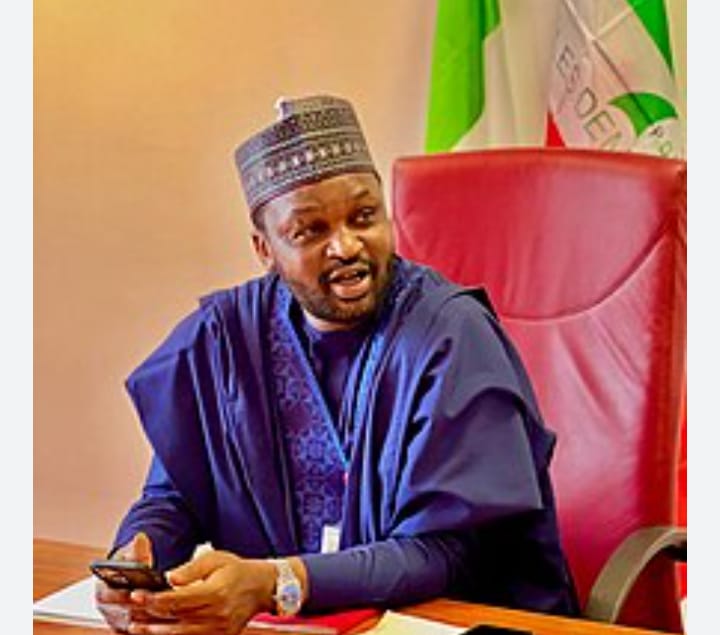
To address this issue, the Director-General of Small and Medium Enterprises Development Agency of Nigeria (SMEDAN), Dr. Charles Udii, recently visited the Honorable Fatima Talba, member representing Potiskum/Nangere Federal Constituency, to discuss empowerment and entrepreneurship training for graduates.

The meeting, which was held in collaboration with Arewa Ears Community Development Forum, aimed to explore ways to support and empower young graduates in the region. Under the leadership of Dr. Charles Udii, SMEDAN has been at the forefront of promoting entrepreneurship and providing business support services to small and medium enterprises in the country.

With the support of Honorable Fatima Talba’s Youth Empowerment program, the agency has promised to support 500 graduates who are not employed with skills acquisition and empowerment training in Potiskum/Nangere Federal Constituency. This initiative aims to equip young graduates with the necessary skills and knowledge to start their own businesses and become self-employed.

During the meeting, Honorable Fatima Talba requested the DG to consider providing loans to some of the participants, with her promise to act as their guarantor. In response, DG Udii expressed his concern over the issue of loan repayment, stating that many individuals who have been given loans in the past have failed to pay back the money.

The DG and Hon talba had agreed to conduct the skills and acquisition training and empowerment before the end of this year.

He further emphasized that this has been a major challenge for the agency. However, he commended Honorable Fatima Talba’s commitment to supporting her people and encouraged her to continue to be their advocate and motivator.

The issue of loans has been a major hindrance to the growth and development of small businesses in Nigeria. Due to the high risk involved, financial institutions are often reluctant to provide loans to entrepreneurs. As a result, many small businesses struggle to get the necessary funding to start or expand their businesses.

With the support of Honorable Fatima Talba, SMEDAN is optimistic that the new graduates’ empowerment and entrepreneurship training program will be a success. This initiative will not only provide the necessary skills and knowledge but also provide access to loans for young graduates. By having a guarantor, the risk for financial institutions is significantly reduced, providing more opportunities for the graduates to access the funds needed to start or grow their businesses.

PH Refinery: Shehu Sani commends Kyari…Urges action on Kaduna Refinery

Former lawmaker ,Senator Shehu Sani has commended the Eng Mele Kyari management of NNPCL for the commencement of crude oil and processing production.

According to him,the production will have impact on reducing the price of petroleum products and make life easier for the masses.

He however urged the management to expedite actions to ensure that the Kaduna Refining & Petrochemical Company Limited (KRPC) to come back to live after several years of non-production.

Senator Shehu Sani in a statement via a post on his X space said: “Glad to hear that Port Harcourt Refinery has commenced production.We hope this will impact on reducing the price of petroleum products and make life easier for the masses.

“We are anxiously waiting for similar gesture to Kaduna Refinery.A country that cannot process its natural resources is still a colony.Kudos to Kyaril.”

Port Harcourt Refinery, one of the oil refineries owned by the Nigerian state, has commenced processing crude oil production.

The Chief Corporate Communications Officer of the Nigerian National Petroleum Company Limited (NNPCL) Femi Soneye, confirmed this on Tuesday.

Group Commends  FG’s Milestone Achievement in Reviving Port Harcourt Refinery

By Bayo Olu

The Northern Awareness Network (NAN) has extended its heartfelt congratulations to the Federal Government of Nigeria and the Nigeria National Petroleum Company Ltd under Mele Kyari on the momentous announcement regarding the operational status of the Port Harcourt Refinery.

With the commencement of crude oil processing and an impressive installed production capacity of 60,000 barrels per day, the refinery is poised to load 200 trucks daily with locally refined products. This significant development heralds a new era for the Nigerian oil industry and renews the hopes of millions of citizens across the nation.

NAN in a statement by its Chairman Salihu Suleiman said, the reactivation of the Port Harcourt Refinery represents a pivotal milestone in Nigeria’s quest for self-sufficiency in petroleum products. For too long, the nation has grappled with the challenges of fuel scarcity and the economic repercussions that accompany it.

“The operationalization of this refinery not only promises to alleviate these pressing issues but also serves as a beacon of hope for economic revitalization and job creation, particularly in the northern regions of the country.

“The decision to recommence operations at the Port Harcourt Refinery aligns with the Federal Government’s broader strategy to enhance domestic refining capabilities and reduce dependence on imported petroleum products. By harnessing our local resources, Nigeria can bolster its economic resilience and create a more sustainable energy landscape”.

The Northern Awareness Network recognized that this initiative is not merely about increasing production; it is about fostering a sense of national pride and self-reliance.

“The anticipated daily loading of 200 trucks is a testament to the refinery’s capacity to meet the growing demand for refined products, ensuring that citizens have access to fuel without the undue burden of high prices or scarcity. This development is particularly crucial for northern Nigeria, where the demand for petroleum products is significant due to the region’s agricultural and industrial activities. The availability of locally refined products will enhance productivity, reduce transportation costs, and stimulate economic growth across various sectors.

“The reactivation of the Port Harcourt Refinery also presents an opportunity to address environmental concerns associated with fuel importation and distribution. By refining crude oil domestically, Nigeria can implement more stringent environmental regulations and practices, ultimately leading to a reduction in the carbon footprint associated with transporting fuel across borders. The Northern Awareness Network advocated for sustainable practices that prioritize the health of our communities and the environment.

Furthermore, the operationalization of the refinery is expected to generate thousands of jobs, both directly and indirectly. From skilled labor in the refinery to ancillary services in logistics and distribution, this initiative will create opportunities for employment and entrepreneurship, particularly for the youth in northern Nigeria.

The Northern Awareness Network urges the government to ensure that local communities are actively involved in the refinery’s operations and benefit from the economic opportunities it presents.

As we celebrate this monumental achievement, the Northern Awareness Network calls upon all stakeholders—government agencies, private sector actors, civil society organizations, and citizens—to work collaboratively towards the successful implementation of this initiative. It is imperative that we foster a spirit of unity, recognizing that the progress of the oil sector is intrinsically linked to the overall development of our nation.

We also encourage the Federal Government to prioritize transparency and accountability in the operations of the Port Harcourt Refinery. Regular updates on production levels, distribution logistics, and the impact on local economies will not only build trust among citizens but also ensure that the benefits of this initiative are equitably distributed.

The Northern Awareness Network envisions a future where Nigeria stands tall as a self-sufficient nation, capable of meeting its energy needs while fostering economic growth and environmental sustainability. The commencement of operations at the Port Harcourt Refinery is a crucial step in that direction. It is a moment of hope, resilience, and renewed commitment to the development of our great nation.

“In closing, we express our gratitude to the Federal Government, the Nigerian National Petroleum Company, and all those who have worked tirelessly to bring the Port Harcourt Refinery back online. Together, let us embrace this opportunity to transform our oil industry, uplift our communities, and chart a course towards a brighter, more prosperous Nigeria”.

AYCF Rejoices As Oil Sector Gets Boost as Port Harcourt Refinery Roars Back to Life

By Olukayode Gbogbola

The Arewa Youth Consultative Forum (AYCF) has congratulated the Federal Government and the Nigeria National Petroleum Company Ltd (NNPCL) for reviving the Port Harcourt Refinery.

In a statement by its President General, Yerima Shettima, the AYCF described the development as a pivotal moment in Nigeria’s oil industry, heralding a new era of growth, sustainability, and hope for millions of citizens.

The refinery’s operational status, with an installed production capacity of 60,000 barrels per day, represents a significant milestone in Nigeria’s journey towards self-sufficiency in petroleum products.

The AYCF commended the Federal Government and the NNPC for their dedication and commitment to revitalizing critical national infrastructure. The revival of the refinery is not merely an operational success; it is a beacon of hope that demonstrates what can be achieved when vision, determination, and strategic planning converge.

The implications of this development extend far beyond the immediate benefits of increased local production. With the refinery now operational, Nigeria is poised to reduce its reliance on imported petroleum products, enhance economic sovereignty, and contribute to the stabilization of fuel prices across the nation.

The revival of the Port Harcourt Refinery is expected to create numerous job opportunities for youth, addressing the pressing issue of unemployment. Empowering youth through job creation is essential for fostering a sense of purpose and belonging in society.

The AYCF acknowledged the environmental significance of reviving the refinery, which has the potential to minimize ecological impact associated with petroleum refining. This aligns with global efforts to promote sustainable development and responsible resource management.

The AYCF called upon all stakeholders in the Nigerian oil and gas sector to rally behind this initiative, fostering a collaborative approach that encourages innovation, investment, and transparency within the industry.

The Federal Government and the NNPC were urged to continue engaging with local communities and stakeholders to ensure that the benefits of the refinery’s revival are felt across all strata of society.

In conclusion, the AYCF commended the Federal Government and the NNPC under the leadership of Mele Kyari for their remarkable efforts in reviving the Port Harcourt Refinery. The AYCF looks forward to witnessing the positive impact this development will have on the economy, youth, and the future of the nation.

Yerima Shettima: A Man of All Seasons

By Suleiman Abbah

In the ever-evolving landscape of Nigerian society, where the tapestry of culture, politics, and social dynamics interweaves with the threads of history, few figures stand out as remarkably as Yerima Shettima. A man of many dimensions, Shettima epitomizes the essence of resilience, adaptability, and multifaceted contribution to his community and nation. As we delve into the life and legacy of Yerima Shettima, we explore the theme of “a man of all seasons,” examining how his diverse roles and unwavering commitment have positioned him as a beacon of hope and change in Nigeria.

The Early Years: Foundations of a Leader

Yerima Shettima was born into a world rich with cultural heritage and tradition. Growing up in a society marked by both promise and challenges, he quickly learned the value of education and community engagement. His early years were characterized by a deep-rooted understanding of the complexities of human interactions and the significance of cultural identity. This foundation would serve as the bedrock for his future endeavors.

Shettima’s academic pursuits led him to acquire knowledge that transcended mere textbooks. He understood that education was not just a means to an end but a powerful tool for social transformation. His commitment to knowledge would later manifest in his advocacy for educational reforms, particularly in northern Nigeria, where access to quality education remains a pressing issue. By championing the cause of education, Shettima laid the groundwork for his role as a leader who seeks to uplift his community through enlightenment and empowerment.

Cultural Advocacy: Preserving Heritage in a Changing World

One of the defining aspects of Yerima Shettima’s life is his unwavering commitment to cultural advocacy. In a world increasingly influenced by globalization and homogenization, Shettima has emerged as a staunch defender of Nigeria’s rich cultural heritage. He understands that culture is not merely a relic of the past but a living, breathing entity that shapes identities and fosters community cohesion.

Through various initiatives, Shettima has worked tirelessly to promote the arts, literature, and traditions of Nigeria, particularly those of the northern regions. His efforts have not only highlighted the significance of cultural preservation but have also provided a platform for emerging artists and writers to showcase their talents. By fostering a sense of pride in one’s heritage, Shettima has empowered individuals to embrace their roots while navigating the complexities of modernity.

Political Engagement: Navigating the Terrain of Governance

Yerima Shettima’s journey as a man of all seasons would be incomplete without acknowledging his involvement in the political arena. Recognizing the intricate relationship between culture, education, and governance, Shettima has positioned himself as a voice for the marginalized and a champion for social justice. His political engagement is characterized by a commitment to transparency, accountability, and inclusivity.

In a political landscape often marred by corruption and inefficiency, Shettima’s integrity stands as a testament to the possibility of ethical leadership. He has advocated for policies that prioritize the welfare of the people, particularly those in underserved communities. His approach to governance emphasizes the importance of grassroots participation, ensuring that the voices of ordinary citizens are heard and valued.

Philanthropy and Social Responsibility: A Heart for the People

Beyond his political and cultural endeavors, Yerima Shettima embodies the spirit of philanthropy and social responsibility. He recognizes that true leadership extends beyond the confines of political office; it involves a genuine commitment to the welfare of others. Through various philanthropic initiatives, Shettima has sought to address pressing social issues, including poverty alleviation, healthcare access, and youth empowerment.

His philanthropic work is characterized by a hands-on approach, often engaging directly with communities to understand their needs and aspirations. By fostering partnerships with local organizations and stakeholders, Shettima has been able to implement sustainable solutions that create lasting impact. His dedication to social responsibility reinforces the idea that leadership is not merely about authority but about service and sacrifice.

A Vision for the Future: Inspiring Generations

As a man of all seasons, Yerima Shettima embodies a vision for the future that transcends individual ambition. He understands that the challenges facing Nigeria are multifaceted and require collaborative efforts to address. His commitment to fostering dialogue among diverse groups reflects his belief in the power of unity and collective action.

Shettima’s vision extends to the younger generation, whom he sees as the torchbearers of change. Through mentorship programs and educational initiatives, he seeks to inspire young minds to embrace leadership roles and contribute positively to society. By instilling values of integrity, empathy, and resilience, Shettima aims to cultivate a new generation of leaders who are equipped to navigate the complexities of a rapidly changing world.

Conclusion: The Legacy of Yerima Shettima

In conclusion, Yerima Shettima stands as a testament to the idea that one can indeed be a man of all seasons. His journey, marked by cultural advocacy, political engagement, philanthropy, and a visionary outlook, reflects the multifaceted nature of leadership in today’s world. As Nigeria continues to grapple with its challenges, figures like Shettima remind us of the power of resilience, adaptability, and a commitment to the greater good.

Yerima Shettima’s legacy is not merely defined by his achievements but by the lives he has touched and the communities he has uplifted. As we reflect on his contributions, we are reminded that true leadership transcends individual accolades; it is about fostering a sense of belonging, nurturing potential, and inspiring hope for a brighter future. In a world that often seems divided, Shettima’s example serves as a beacon of light, guiding us toward a more inclusive and harmonious society.

Obasanjo’s Legacy Under Fire: Ohanaeze Youths Slam Ex-President Over Election Criticism

By: Damilare Fagbemi

The Ohanaeze Ndigbo Youth Council Worldwide has fired back at former President Olusegun Obasanjo’s criticism of Nigeria’s recent elections. Obasanjo described the 2023 general elections as a “travesty” at the Chinua Achebe leadership forum held at Yale University ¹. However, the Ohanaeze youths countered that Obasanjo’s own presidency was marred by electoral irregularities and malpractices.

Mazi Okwu Nnabuike, National President of Ohanaeze Ndigbo Youth Council Worldwide, accused Obasanjo of institutionalizing corruption and promoting a flawed electoral system during his tenure. Okwu questioned Obasanjo’s moral grounds to lecture on leadership, given his alleged involvement in electoral malpractices [1).

Obasanjo’s legacy as a civil soldier is difficult to summarize. Though he made several advances as Nigeria’s longest-serving civilian leader, he missed several opportunities to build institutions that would have helped entrench true civility and democracy within Nigeria ¹. His presidency was marked by significant events, including the attempted alteration of the constitution to allow himself to seek a third term in office.

The Ohanaeze youths’ statement concluded that Obasanjo’s past actions undermine his credibility, and his criticism should not be taken seriously. Would you like to know more about Obasanjo’s presidency or the Ohanaeze Ndigbo Youth Council Worldwide’s response?

The Paradox of Leadership: Obasanjo’s Legacy in Nigeria’s Political Landscape

By Sani Suleiman Alhassan

In the labyrinthine corridors of Nigeria’s political history, few figures elicit as much controversy as former President Olusegun Obasanjo. His tenure, which spanned from 1999 to 2007 during the Fourth Republic, remains a focal point of debate, characterized by both significant achievements and glaring failures. Recently, Obasanjo has emerged as a vocal critic of the current electoral commission, labeling the 2023 general election a “travesty.” This essay endeavors to explore the implications of his statements, the inconsistencies within his own leadership legacy, and the pressing need for a reformed electoral process in Nigeria.
To understand the weight of Obasanjo’s criticisms, one must first grapple with the contradictions of his own political legacy. As a former military ruler who transitioned to a civilian presidency, Obasanjo’s journey is emblematic of Nigeria’s tumultuous political evolution. He is often credited with laying the groundwork for democratic governance and economic reforms. Yet, his administration was not without its faults. Many critics argue that he institutionalized corruption, a claim that resonates particularly in light of the rampant electoral malfeasance that continues to plague Nigeria.
During Obasanjo’s presidency, allegations of electoral fraud were rampant. Results were often announced even as voters queued at polling stations, a practice that undermined the very foundation of democratic engagement. This inconsistency raises an important question: Can a leader who oversaw such irregularities justifiably critique the integrity of subsequent elections? Obasanjo’s recent denunciation of the 2023 general election as a “travesty” seems to echo the very practices he once allowed to fester during his own leadership.
One of the most controversial chapters of Obasanjo’s presidency was his unsuccessful bid for a third term in office. This endeavor not only exposed the depths of his ambition but also highlighted the lengths to which he would go to maintain power. The attempt to amend the constitution, which would have allowed him to extend his presidency, was met with widespread opposition and ultimately failed. Critics argue that this pursuit of power, coupled with the notorious “Ghana-must-go” bags of cash allegedly used to bribe members of the National Assembly, reflects a troubling willingness to compromise democratic principles for personal gain.
The implications of this episode extend beyond Obasanjo’s personal ambition; they underscore a broader culture of political impunity that has plagued Nigeria. By attempting to manipulate the political system for his benefit, Obasanjo inadvertently set a precedent that subsequent leaders have followed, perpetuating a cycle of corruption and electoral malpractice. Thus, his current critiques of the electoral commission resonate with a certain irony, as he himself played a role in shaping the very environment he now condemns.
Obasanjo’s denunciation of the 2023 general election must be viewed through the lens of his own leadership record. The election, marred by allegations of violence, voter suppression, and logistical failures, reflects a broader systemic issue that has roots in the governance practices of previous administrations, including his own. The former president’s claims that the electoral commission failed to uphold its mandate resonate with many Nigerians who have grown disillusioned with the political process. However, his moral authority to speak on these matters is undermined by his own past.
Furthermore, the involvement of retired military leaders in the alleged unconstitutional suspension of collation during the 2023 elections raises questions about the integrity of the process. Obasanjo, a figure with deep ties to Nigeria’s military history, must confront the implications of such actions. The intertwining of military influence and civilian governance remains a contentious issue in Nigeria, one that Obasanjo has both benefited from and contributed to throughout his career.
Obasanjo’s troubling pattern of forgetting the past is a concerning aspect of his character that has been evident throughout his time in politics. One significant example of this behavior is his actions prior to General Sani Abacha’s death in 1998. During this period, Obasanjo found himself imprisoned in the Gulag, facing the prospect of imminent execution. This experience should have left a lasting impact on him, serving as a reminder of the need for accountability and for standing up against oppressive regimes. However, it seems that Obasanjo has chosen to overlook this dark chapter in his life, as evidenced by his subsequent actions.
Furthermore, Obasanjo’s behavior around the formation of the People’s Democratic Party (PDP) raises further questions about his commitment to democratic principles and the rule of law. Instead of using his platform and influence to advocate for transparency and accountability within the party, Obasanjo accepted the 1999 President Ticket pro bono, effectively positioning himself at the helm of a party that was marred by corruption and other malpractices. This decision speaks volumes about Obasanjo’s priorities and his willingness to compromise his values in pursuit of power and influence.
Once in office, Obasanjo’s presidency was marked by a series of controversies and scandals that tarnished his legacy and eroded public trust in the government. From the mismanagement of key sectors such as healthcare and education to the human rights abuses committed under his watch, Obasanjo’s tenure was marred by a lack of accountability and a disregard for the well-being of ordinary Nigerians. Despite his shortcomings, Obasanjo attempted to extend his time in office through unconstitutional means, by pushing for a Third Term agenda that would have undermined the democratic process and the constitution.
In light of these troubling developments, it is disheartening to see that Obasanjo continues to display a lack of remorse or reflection on his actions. Like the proverbial Donkey, he seems oblivious to the consequences of his decisions and the impact they have had on the country and its people. This inability to acknowledge his mistakes and learn from them speaks to a deeper character flaw that is not just unfortunate but dangerous for Nigeria’s future.
Obasanjo’s habit of forgetting the past and repeating the same mistakes is a cause for concern for all Nigerians. His disregard for democratic norms, his willingness to put personal gain above the greater good, and his reluctance to take responsibility for his actions all point to a leader who is out of touch with reality. If Nigeria is to move forward and address the challenges it faces, it is crucial that leaders like Obasanjo learn from their past mistakes and demonstrate a genuine commitment to accountability and transparency. Anything less would be a disservice to the Nigerian people and a betrayal of the ideals of democracy.
In conclusion, Olusegun Obasanjo’s legacy is a complex tapestry woven with threads of glaring failure. His recent criticisms of the 2023 general election are clouded by the inconsistencies of his own leadership. As the nation grapples with the pressing need for electoral reform, it is essential for political leaders to engage in genuine self-reflection and accountability.
The path toward a more transparent and democratic electoral process in Nigeria requires not only the dismantling of corrupt practices but also a commitment to ethical leadership. While Obasanjo’s voice may serve as a catalyst for discussion, it is imperative that he, along with other leaders, acknowledges their roles in the current state of affairs. Only then can Nigeria hope to navigate the labyrinthine corridors of its political history and emerge with a renewed commitment to democracy and governance.

Northern Awareness Network Fires Back at Obasanjo Over INEC Criticism

Adamu Girei

The Northern Awareness Network (NAN) has responded sharply to former President Olusegun Obasanjo’s criticism of the Independent National Electoral Commission (INEC) and its Chairman, Mahmood Yakubu. NAN Chairman Salihu Suleiman described Obasanjo’s accusations as shameless, given his own history of electoral malfeasance during his presidency.

Obasanjo’s track record on electoral integrity is questionable, with numerous reports of irregularities, violence, and rigging in elections during his time in office. He even admitted to manipulating elections to ensure victory for his preferred candidates. This, according to NAN, makes it difficult to take his criticisms of the current government seriously.

NAN emphasized the importance of holding leaders accountable for their actions and decisions but noted that Obasanjo’s past actions undermine his credibility. His administration was marked by a lack of significant electoral reforms, and he failed to prioritize transparency in the electoral process.

Moreover, Obasanjo’s criticism of INEC’s reliance on technology, such as the Bimodal Voter Accreditation System (BVAS) and the INEC Election Result Viewing Portal (IReV), seems misplaced. His own administration was characterized by a manual electoral process prone to manipulation.

The Northern Awareness Network questioned Obasanjo’s moral authority to lecture on governance and integrity, given his involvement in institutionalizing corruption. His presidency was marred by allegations of financial impropriety and influence peddling.

In conclusion, NAN urged contemporary leaders to learn from the past and prioritize the establishment of a transparent and accountable electoral process. They also cautioned against taking Obasanjo’s criticisms seriously, given his history of electoral malpractice.

Mahmood Yakubu, the current INEC Chairman, has been leading the commission since 2015 ¹. His background is in political history and international studies, and he has held various academic and administrative positions before joining INEC.

Coalition To Embark on Protest over New Tax Reform Bills

…Says alleged “Anti North” Bills are Rejected

Angry over recent open support of some northerners for the new tax reform initiative,Coalition of northern groups under aegis of Forum for Growth and Development of Arewa(FGDA) have fixed Wednesday to embark over the bills they described as “Anti-North”.

Accordingly to the Coalition , the decision to embark on the protest is to send a strong to message to President Bola Ahmed Tinubu and members of Senate and House of Representatives that the alleged”Anti North Bills” are rejected and unacceptable.

President Bola Tinubu has transmitted the Fiscal Policy and Tax Reform Bill to the Senate. The proposed legislation is aimed at streamlining tax collection, ensuring compliance and optimising revenue.

But in a statement signed by the Convener made available to journalists in Kaduna today said, “We have consulted widely and carried out investigation about the proposed tax reform bills and discovered that the implementation would relatively affect and “relegate the northerner region economically and commercially.”

The group which condemned House of Representatives member, Abdulmumin Jibrin, representing Kiru/Bebeji Federal Constituency of Kano State for his supportive stance and endorsement of the controversial tax reform bill, said his position on the tax reform is without consideration to our backwardness and development gap between South and North.

“We therefore submit that the tax reform will disproportionately affect the economic livelihoods and aspirations of our people, especially considering the current harsh economic reality in the country.” It stated.

While acknowledging that the proposed tax reform could be of significant interest or benefits to those in the South, the group insisted, “We make bold to inform this backing this anti-North bill remember that an average northern is suffering now and cannot afford to dragged beyond this point of poverty line.

“North is currently facing problems insecurity,severe poverty, unemployment, and dearth of infrastructure and any move to further create a policy that will improvish us will be met with resistance.

“We are therefore calling our youths and citizens from the region to join to stop further action on the tax reform bills.” The statement “

Attack on Nuhu Ribadu , Baseless , Irresponsible says Shehu Sani

Former lawmaker and Senator who represented Kaduna Central Senatorial District in 8th Senate, Comrade Shehu Sani has described the recent attack on Nuhu Ribadu as baseless and irresponsible.

According to him, Ribadu has performed more than any past National Security Adviser in coordinating security agencies and fighting terrorism.

Shehu Dani who disclosed this in chat with newsmen the National Security Adviser has restored order; peace and relative stability in most areas of the North that have been besieged and destroyed by bandits and terrorists.

Reacting to remarks made by a former governor of Jigawa State, Sule Lamido, on the insecurity in parts of the country, he said Ribadu has been able to coordinate a security strategy that has protected Schools in the North and guarded key roads like the Abuja kaduna road,Maiduguri Damaturu road and Kaduna Birnin Gwari road, he revealed that Most of the terrorists leaders in the North have been arrested or eliminated.

He however recalled, “After the catastrophic failure of the GEJ and Buhari administration to secure the North,Nuhu has relatively accomplished in the area they failed. ‘

He further stated that “Nuhu Ribadu is a round peg in a round hole.His achievements are self evident.Under Buhari,mass killings and kidnappings was a daily tragedy despite billions stolen in the name of defense and security.

“Nuhu Ribadu’s Performance,dedication and passion for security in the North is unmatched,unparalleled and unprecedented”.