Renewed Hope Ambassadors Launch Abuja Secretariat with Key Political Leaders in Attendance

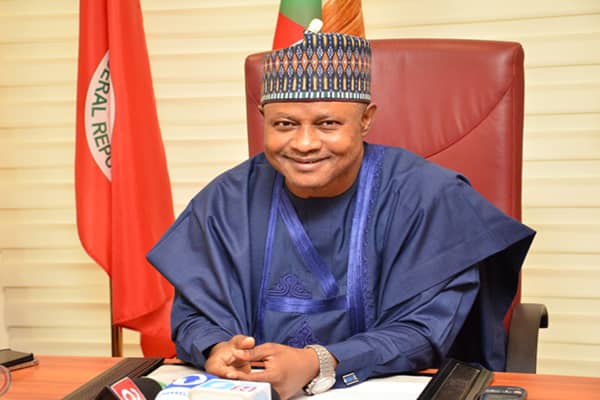
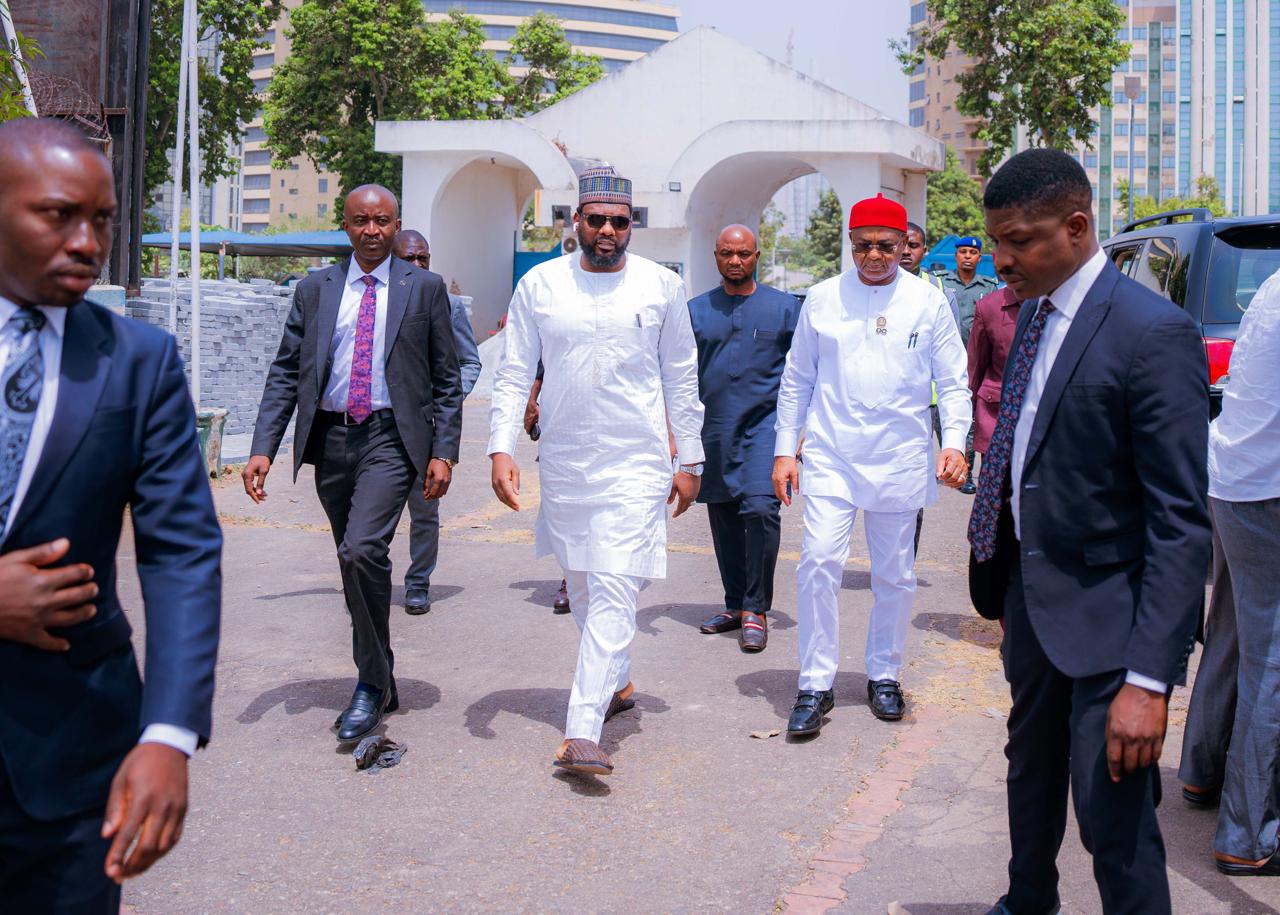
The leadership of the Renewed Hope Ambassadors, under the guidance of the Governor of Imo State, Senator Hope Uzodinma, on Friday carried out a strategic inspection of the group’s Abuja Secretariat.

This marks a significant step in consolidating the nationwide grassroots mobilisation drive recently unveiled by President Bola Ahmed Tinubu under his Renewed Hope Agenda.

The inspection signals the formal activation of the Secretariat as a national coordination hub for the movement’s outreach, stakeholder engagement, and policy communication efforts across the six geopolitical zones.

It comes at a critical time, as the administration intensifies efforts to communicate ongoing reforms and deepen citizen participation in governance.

The visit was coordinated by the Director General of the Energy Commission of Nigeria (ECN), Dr. Mustapha Abdullahi, whose role in galvanising institutional and political support reflects the growing synergy between government policy drivers and grassroots mobilisation structures.

Dr. Abdullahi emphasised the importance of aligning advocacy, public enlightenment, and stakeholder engagement with the administration’s broader economic transformation objectives.

In attendance were prominent political leaders and influential voices within the ruling party and the national polity, including former Governor of Katsina State, Rt. Hon. Aminu Bello Masari; former Governor of Nasarawa State, Senator Tanko Al-Makura; former Senate President, Senator Pius Anyim; Senator Olubunmi Adetunmbi; Special Adviser to the President on Media and Public Communications, Mr. Sunday Dare; and Senior Special Assistant to the President on New Media, Mr. Otega Ogra.

Their presence underscored a broad coalition of political experience and strategic communication expertise, reinforcing the Renewed Hope Ambassadors’ mandate to serve as a bridge between government policies and the Nigerian people.

Observers note that the initiative is designed not merely as a political support structure, but as a platform for policy advocacy, citizen feedback, and structured engagement aimed at translating the Renewed Hope Agenda into tangible community-level impact.

Key focus areas include economic recovery, energy transition, youth empowerment, infrastructure development, food security, and digital innovation.

The convergence of governors, senators, presidential media aides, and zonal coordinators highlights the expanding momentum behind the initiative and reflects a coordinated effort to institutionalize grassroots participation in governance.

As the Secretariat becomes fully operational, expectations are high that the Renewed Hope Ambassadors will play a pivotal role in mobilising national consensus, strengthening party cohesion, and sustaining public confidence in the administration’s reform agenda.

The Abuja inspection therefore represents more than a routine visit — it signals the operational take-off of a nationwide movement structured to drive engagement, amplify government achievements, and consolidate support for President Tinubu’s vision of inclusive growth and national renewal.
Group Commends Appointment of Governor Uba Sani as APC Deputy DG, Renewed Hope Ambassador

…Says Move Boosts National Mobilisation and Renewed Hope Agenda

A prominent political advocacy group, Operation 19 Million Votes, has warmly welcomed the recent appointment of Uba Sani, Governor of Kaduna State, as Deputy Director-General and Renewed Hope Ambassador in the All Progressives Congress (APC) mobilisation structure, saying the development is set to strengthen national confidence, deepen youth engagement and galvanise support for the party’s agenda ahead of the 2027 general elections.

President Bola Ahmed Tinubu, as National Leader of the APC, on February 17, 2026, appointed Governor Sani to serve as Deputy Director-General (Deputy DG) of the Renewed Hope Ambassadors, a strategic outreach, engagement and mobilisation arm of the ruling party, in recognition of his “leadership and organisational abilities.” The appointment took effect immediately.

In a statement released by Operation 19 Million Votes today, the group described the appointment as timely and visionary, stating that Governor Sani’s political experience and grassroots appeal will be invaluable in strengthening the party’s footprint across Nigeria’s six geopolitical zones.

According to the group’s national spokesperson, Comrade Haruna Musa Mohammed, the Renewed Hope Ambassadors initiative, which is charged with promoting the APC’s policy achievements and engaging citizens nationwide, requires leaders with broad national appeal, strategic insight, and credibility among diverse constituencies.

The appointment of Sani, who hails from the North West and enjoys bipartisan respect, was said to reflect a commitment to inclusive leadership. The elders and youth wings of the organisation further noted that Gov. Sani’s mobilisational capacities particularly among young voters and traditional leaders will be an asset in shaping favourable perceptions of governance programmes under the Renewed Hope Agenda.

The statement further stated, “Operation 19 Million Votes emphasised that the Renewed Hope Ambassadors structure must focus on substantive engagements on governance impact, job creation, security dialogue, and voter education, particularly at the grassroots and community levels, areas the group believes will determine electoral outcomes in 2027.

“We believe that the appointment of Governor Uba Sani is not just symbolic but strategic. His role as Deputy Director-General and Renewed Hope Ambassador places him at the centre of public assurance, enabling constructive dialogue between government policies and citizens’ daily realities.”

President Tinubu, in a congratulatory letter to Governor Sani, tasked him with galvanising, promoting and disseminating the party’s programmes, policies, milestones and achievements nationwide, with the goal of strengthening public confidence and reinforcing the Renewed Hope message across the country.

According to the statement, the appointment is also part of broader party efforts to position the APC effectively ahead of the 2027 elections, underscoring the importance of unity and coordinated outreach strategies among key party stakeholders.

Governor Sani, who was elected Governor of Kaduna State in 2023, has been involved in national party affairs over time and is seen by supporters as a consensus builder who can bridge divides among party structures and regional interests.

The advocacy group’s endorsement of his appointment signals early support from key civil society actors, highlighting the growing intersection between organised civic action and mainstream political mobilisation in Nigeria’s evolving democratic landscape.

Renewed Hope Initiatives: President Ahmed Tinubu and the Solarization Drive in Nigeria’s Energy Sector

Since assuming office in May 2023, President Bola Ahmed Tinubu has positioned energy reform as a cornerstone of his administration’s economic transformation agenda. Among the most consequential initiatives is the accelerated push toward solarization—the large-scale deployment of solar energy systems across public institutions, rural communities, and critical infrastructure. In a country long challenged by unreliable grid electricity, high diesel costs, and energy poverty, the solarization project represents both an economic and social intervention with far-reaching gains.

In actualizing these gains, the Renewed Hope Agenda, President Bola Ahmed Tinubu saw the need to appoint someone with the right capacity, knowledge and verve to lead the sectors drive towards solarization of the nation, for a more focused sector that will ensure steady energy supply to all Nigerians. The President, Asiwaju Bola Ahmed Tinubu was therefore, applauded for his choice of Engineer Abdullahi Mustapha as Director General and Chief Executive Officer of the Energy Commission of Nigeria, ECN and, the choice of appointment has not failed in the task assigned him.

  1. Expanding Energy Access and Reducing Energy Poverty
    Nigeria has historically struggled with inadequate electricity generation and distribution, with millions of citizens lacking reliable access to power. The solarization initiative, supported through federal programs and partnerships with development finance institutions, aims to bridge this gap by:

. Deploying off-grid and mini-grid solar systems in rural and underserved communities
. Installing solar panels in schools, primary healthcare centers, and government facilities
. Supporting decentralized renewable energy solutions where grid extension is impractical
By prioritizing solar in rural electrification, the Tinubu administration has strengthened Nigeria’s progress toward universal energy access. Solar mini-grids have empowered small businesses, improved healthcare delivery (through reliable cold storage for vaccines and lighting for surgeries), and enabled students to study after dark.
The shift to decentralized solar solutions reduces overreliance on the national grid, which remains constrained by aging infrastructure and transmission bottlenecks.

  1. Fiscal Savings and Reduced Diesel Dependence
    One of the most significant gains of the solarization project is cost reduction in public sector energy consumption. Federal ministries, departments, and agencies have traditionally relied heavily on diesel generators due to inconsistent grid supply. This has led to:
    . recurrent fuel expenditure
    . Maintenance costs for generators
    . Exposure to fluctuating diesel prices
    Solar installations under the Tinubu administration are gradually lowering these operational costs. By replacing diesel generators with photovoltaic systems and battery storage, government institutions reduce long-term energy spending. These savings can be redirected toward social services, infrastructure, and economic development.
    Additionally, reduced diesel use lowers Nigeria’s demand for imported refined petroleum products, supporting broader macroeconomic stability and foreign exchange conservation.
  2. Boosting Economic Productivity and MSMEs
    Solarization contributes directly to economic productivity, especially among micro, small, and medium-sized enterprises (MSMEs). In markets and commercial clusters where power outages are frequent, solar-powered solutions provide:
    Reliable lighting for extended business hours
    Power for refrigeration, welding, tailoring, and agro-processing
    Reduced operational costs compared to generator use
    Lower energy costs increase profitability for small businesses and improve job retention. This aligns with President Tinubu’s broader economic reform agenda, which emphasizes private-sector growth and industrial competitiveness.
    In agricultural communities, solar-powered irrigation systems and cold storage facilities enhance food preservation and reduce post-harvest losses—an important contribution to food security.
  3. Environmental and Climate Benefits
    Nigeria is a signatory to international climate agreements and has committed to reducing greenhouse gas emissions. The solarization project strengthens Nigeria’s transition toward cleaner energy sources by:
    Lowering carbon emissions from diesel generators
    Reducing air pollution in densely populated areas
    Supporting sustainable development goals
    Solar power, as a renewable and low-emission source, aligns with global energy transition trends. Under Tinubu’s leadership, renewable energy deployment sends a signal to investors that Nigeria is open to green finance and climate-aligned investments.
    The environmental gains also translate into public health benefits, as reduced generator fumes mean lower exposure to particulate pollution in homes, offices, and markets.
  4. Strengthening Energy Security and Diversification
    Nigeria’s energy paradox—being an oil-producing nation with persistent electricity shortages—has long hindered economic growth. The solarization project contributes to energy diversification, reducing dependence on gas-fired power plants and vulnerable transmission infrastructure.
    Solar systems distributed across regions create a more resilient energy ecosystem. Unlike centralized power plants that can disrupt large areas if they fail, decentralized solar installations:
    Limit systemic blackouts
    Improve localized energy reliability
    Enhance disaster resilience
    This diversification strengthens national energy security and supports long-term stability in the power sector.
  5. Attraction of Investment and Private Sector Participation
    The administration’s emphasis on renewable energy has encouraged investor interest in Nigeria’s solar market. Through policy reforms, regulatory clarity, and partnerships with international development agencies, the government has:
    Facilitated financing for solar mini-grids
    Encouraged public-private partnerships
    Promoted local assembly and manufacturing of solar components
    Increased investor confidence is critical in a capital-intensive sector like energy. By creating an enabling environment, the solarization drive helps unlock domestic and foreign investment, fostering innovation and competition.
  6. Job Creation and Skills Development
    The expansion of solar infrastructure generates employment across multiple segments:
    Solar panel installation technicians
    Engineers and project managers
    Maintenance personnel
    Local manufacturing and assembly workers
    Training programs associated with solar deployment help build technical capacity among Nigerian youth. This not only reduces unemployment but also cultivates a workforce equipped for the global green economy.
    The renewable energy sector’s growth diversifies Nigeria’s labor market beyond oil and gas, making the economy more adaptable to global shifts.
  7. Support for Public Institutions and Social Infrastructure
    Under President Tinubu’s broader reform agenda, solarization has been integrated into national development priorities, including education and healthcare. Solar-powered public institutions benefit from:
    Uninterrupted lighting in hospitals and clinics
    Reliable electricity for diagnostic equipment
    Digital learning tools in schools
    These improvements enhance service delivery, especially in rural communities where grid power may be unreliable or nonexistent. Stable electricity enables digital governance, improves administrative efficiency, and supports modern public service systems.
  8. Long-Term Structural Reform of the Power Sector
    Solarization complements ongoing structural reforms in Nigeria’s power sector. By encouraging decentralized energy solutions, the administration reduces pressure on a grid that has struggled with transmission capacity constraints and distribution inefficiencies.
    Furthermore, renewable expansion fosters competition and innovation, challenging traditional power supply models. Over time, this diversification may contribute to:
    Improved electricity reliability
    More cost-reflective tariffs
    Increased consumer choice
    The solarization project, therefore, is not merely an environmental initiative but part of a broader restructuring of Nigeria’s electricity landscape.
    Conclusion
    President Bola Ahmed Tinubu’s solarization initiative marks a strategic shift in Nigeria’s energy policy—one that prioritizes renewable energy, fiscal efficiency, and decentralized access. The gains are multidimensional:
    Expanded energy access in underserved communities
    Reduced diesel dependence and fiscal savings
    Improved productivity for small businesses
    Environmental sustainability and climate alignment
    Enhanced energy security and diversification
    Increased investment and job creation
    While challenges remain—including financing scale, maintenance capacity, and regulatory coordination—the solarization project represents a significant step toward a more reliable, inclusive, and sustainable energy future for Nigeria.
    In positioning solar energy as a central pillar of national development, the Tinubu administration underscores the transformative potential of renewables in addressing long-standing power sector deficiencies. If sustained and effectively implemented, the solarization drive could become one of the defining energy reforms of his presidency.
    Stakeholders within the energy sector have continued to commend the DG/CEO of ECN for his commendable strides since his assumption into office especially with the solarization drive and renewable energy for all Nigerians.

Kaduna Christian Forum Hails Governor Uba Sani for Resuming Pilgrimage, Slams El-Rufai’s Past Policies

BA faith-based advocacy group, Christian Forum for Peaceful and United Kaduna, has commended Kaduna State Governor, Uba Sani, for reinstating the Christian pilgrimage scheme in the state, describing the move as bold, inclusive and a step toward rebuilding trust between government and the Christian community.

The group, in a statement issued in Kaduna, applauded the governor for approving the 2025 Christian pilgrimage and facilitating an orientation programme for 50 intending pilgrims held on February 17, 2026.

In the statement signed by the Secretary , Reverend Ishaya Bulus ,the group said, “The development marks the return of the programme after it was suspended in 2015 by former Governor Nasir El-Rufai, whose administration also scrapped the Christian Pilgrims Welfare Agency.

According to the forum, the reinstatement signals a renewed commitment to fairness and religious harmony in the state.

“We commend Governor Uba Sani for taking a courageous and just decision to reinstate the Christian pilgrimage scheme. This is a testament to inclusivity, equity and a genuine desire to strengthen unity among the diverse religious communities in Kaduna State,” the statement read.

The group recalled that it had strongly criticised the suspension of the scheme under the previous administration, arguing that it denied Christians in the state the opportunity to undertake pilgrimage to the Holy Land and offer prayers for peace and progress in Nigeria.

It noted that the return of the programme represents what it described as a departure from an atmosphere it perceived as unfavourable to Christians during the last administration.

“Today, a milestone has been achieved. The return of the pilgrimage programme demonstrates that government policies can be reviewed in the interest of justice and unity. It restores confidence among Christian faithful who felt marginalised,” the forum added.

“We are happy that Governor Sani’s administration has framed the reinstatement as part of broader efforts to promote religious harmony, inclusiveness and fairness in governance. We are also glad that the government has also emphasised the need to rebuild relationships with faith-based organisations across the state.

However, the Christian Forum further linked the development to what it described as improved security in Southern Kaduna, noting that the relative calm being experienced in recent months stands in contrast to the insecurity and tensions witnessed in previous years.

The group which condemned the decision of the former Governor, Mal Nasir Elrufai to suspend the pilgrimage scheme, urged the Governor Uba Sani to sustain policies that promote peace, equity and mutual respect among Kaduna’s diverse ethnic and religious groups.

Elrufai marginalized Christians in Kaduna and planted seed of discord and hatred amongst the two main religions. But we thank God ,Uba Sani has uprooted all those trees that hitherto created the cracks .

“Kaduna State, known for its complex religious and ethnic composition, has in the past grappled with sectarian tensions, it against this background that we say initiatives aimed at fostering inclusion and interfaith cooperation remain critical to consolidating peace and stability in the state.” It stated .

Shehu Sani Defends Ribadu,Dismisses Elrufai’s claims

Former Senator representing Kaduna Central, Shehu Sani, has defended the National Security Adviser, Nuhu Ribadu, dismissing allegations made against him by former Kaduna State Governor, Nasir El-Rufai, as diversionary and unfounded.

Sani, in a statement via his X handle @shehusani on Sunday, said the former governor should concentrate on addressing allegations reportedly raised against him by the Economic and Financial Crimes Commission rather than making what he described as “phantom claims” against the National Security Adviser.

“The ex-governor of Kaduna State should focus on the allegations before him and clear his name instead of diverting attention with his purported and phantom claims against the NSA,” Sani said.

He questioned the timing of the allegations, asking why such sensitive information was not made public earlier.
“Why the delay in disclosing such sensitive information to the public until when he was invited? His antics and deceptions should be ignored,” he added.
Sani, a long-time critic of the former governor, further accused him of attempting to whip up public sentiment to deflect from accountability.

He said leaders who have held public office must be prepared to answer for their stewardship rather than seek to shift focus.

Reflecting on his personal experiences during El-Rufai’s tenure, Sani alleged that he and others were subjected to harassment and intimidation but maintained that such experiences did not break their resolve.

“For those of us whom he once traumatised, framed and dragged to the police and the courts in Kaduna, we forgive him, but urge him to learn to handle his karma with maturity, decorum and faith. We have been to prisons, police cells, DSS cells and even military underground cells, but never lost our sense of reasoning,” he said.

The former lawmaker warned that shielding former public office holders from scrutiny sends a dangerous signal to those currently in power.

“If our society continues to pamper and protect past leaders who should be held accountable for their actions while in power, it is giving a life and unconditional guarantee to those in power today that they will also be protected after power,” he stated.

Kano’s Power Shift: How the ‘City Boy’ Youth Surge is Redefining 2027

By Barrister Aminu Hussaini

In politics, timing is everything. In Kano, the timing could not be more decisive.

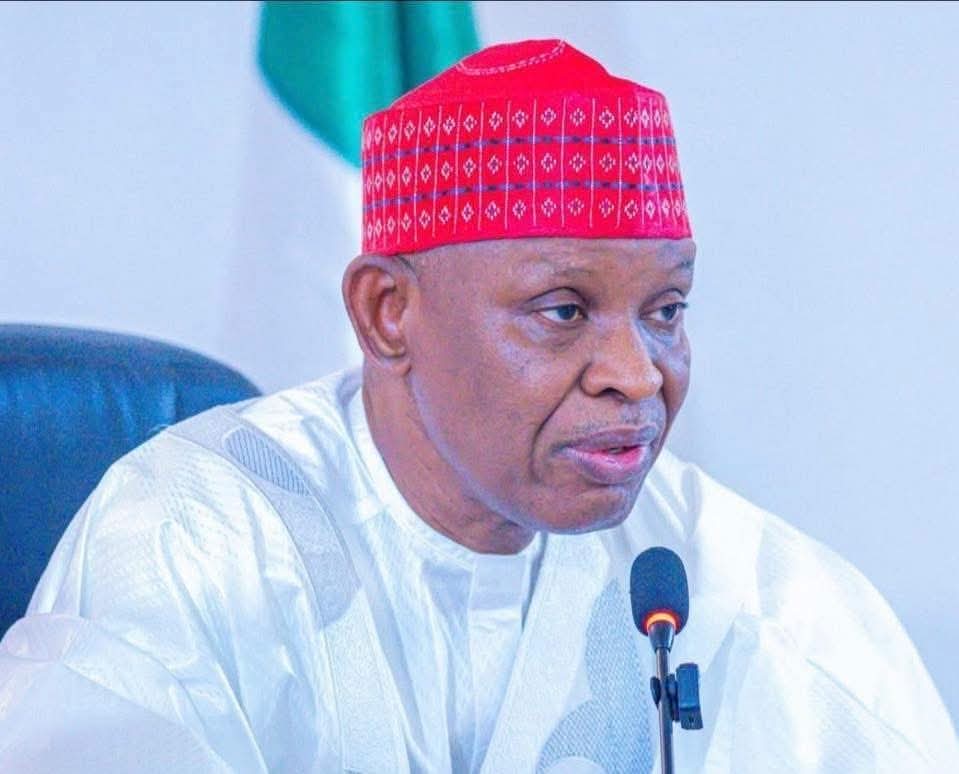
With the formal movement of Governor Abba Kabir Yusuf into the All Progressives Congress (APC), the conversation about “possible alignment” between Kano and the federal government is no longer speculative. It has happened. The real question now is not whether Kano will realign—but how profoundly that realignment will reshape 2027.

For a state long considered the strategic heartbeat of northern politics, this development is seismic. Kano is not just numerically significant; it is symbolically powerful. It has birthed movements, defined oppositions and influenced presidential trajectories. Any shift in its political center of gravity sends ripples across the federation.

In 2023, the dominance of the New Nigeria Peoples Party (NNPP) under the formidable influence of Sen. Rabiu Musa Kwankwaso appeared to signal a durable restructuring of Kano’s loyalty map. But politics in Kano has always been dynamic rather than permanent. Structures hold—until they don’t.
The Governor’s shift fundamentally alters the architecture of power in the state.

In Nigeria’s federal system, alignment between a state government and the presidency is not merely symbolic; it is structural. It affects project delivery, fiscal coordination, political patronage networks and most importantly, public perception.
When voters see synergy rather than rivalry between Kano and Abuja, it changes the psychology of governance. Federal presence becomes more visible; infrastructure collaboration accelerates and political messaging becomes unified rather than combative. In a state where performance increasingly shapes voter behavior, this matters.
The alignment also supercharges an already growing youth mobilisation wave around President Bola Ahmed Tinubu. The “City Boy Movement”, once dismissed by critics as branding theatrics, now operates within a dramatically altered terrain. Youth-driven digital messaging combined with institutional state backing is a far more potent formula than online enthusiasm alone.

Kano is demographically young. Its streets, campuses, markets and online spaces are politically alive. Youth identity and aspirational politics are becoming central drivers of loyalty. When that demographic energy aligns with both the state and the federal factor, it creates a consolidation effect that opposition forces will find difficult to fracture.

More provocatively, the Governor’s move forces a recalculation within opposition ranks. Political narratives built around resistance lose potency when governance delivery improves under alignment.
The argument of marginalisation becomes harder to sustain if federal-state cooperation produces visible results.
It is true, none of these guarantee 2027. Economic pressures have remained real and misinformation about ongoing reforms exist. Likewise, voter volatility is a permanent feature of Nigeria’s democracy and Kano’s political culture has never been short of surprises.

But what cannot be ignored is this: the electoral battlefield has shifted. What was once a competitive triangle is steadily consolidating into a power bloc. The APC no longer approaches Kano as an external contender—it now operates from within the state’s executive core.
Kano has made a move. Governor AKY has made a move. And with federal alignment now an established reality rather than a theoretical possibility, the game of thrones in 2027 has not merely evolved – it has been irrevocably rewritten. For Nigeria, the game has changed.
In a country where electoral arithmetic is often decided by strategic states, Kano’s latest chapter will not just influence the next election; it will define it.

Barrister Aminu Hussaini – is the Special Adviser to the Governor of Kano State-AKY on Justice/Constitutional Matters

Shehu Sani Blasts El-Rufai as “Hypocritical Tyrant,” Says He Unleashed Terror in Kaduna, Now Preaches Democracy

Former Senator representing Kaduna Central and human rights activist, Shehu Sani, has accused former Kaduna State Governor, Malam Nasir El-Rufai, of criticising President Bola Ahmed Tinubu out of frustration and unmet personal expectations rather than genuine concern for democracy or citizens’ welfare.

Sani made the remarks during an interview with journalists, where he argued that El-Rufai ignored democratic principles and human rights while in office but only began championing them after leaving power.

According to him, El-Rufai’s eight-year administration in Kaduna State was characterised by repression, insecurity and deep division, leaving behind what he described as a troubling legacy.

“El-Rufai forgot democracy and human rights when he was in power and remembered them only when he left office,” Sani said. “He planted tyranny and insecurity and is now preaching democracy and security.”

While acknowledging that President Tinubu is not without flaws, the former lawmaker maintained that the president’s record does not compare with what he described as “years of tyranny” under El-Rufai’s leadership in Kaduna State.

“Asiwaju is not a perfect leader—there is no perfect leader anywhere in the world—but he did not leave behind a legacy of divisiveness, persecution, repression, violation of human rights and wholesale evil, as witnessed by the people of Kaduna State,” Sani stated.

He further alleged that El-Rufai’s administration treated parts of Kaduna State as though they were detention centres, claiming that Northern Kaduna was treated like Kuje Prison while Southern Kaduna resembled Kiri Kiri Prison.

Sani also warned Nigerians against embracing El-Rufai as a political alternative, urging caution over what he described as a dangerous misjudgment.
“Nigerians searching for an alternative to an eagle should not make the mistake of embracing a vulture,” he warned.

In his concluding remarks, Sani said that when measured by service, history, character and morality, El-Rufai falls far below President Tinubu.

“In the barometer of record of service, history, character and morality, El-Rufai is an apprentice to Tinubu,” he said.

Sani’s remarks were in response to El-Rufai’s recent statements in which the former governor claimed that he never had a personal relationship with President Tinubu comparable to the one he had with former President Muhammadu Buhari, of blessed memory.

Poor Performance: Kaduna Elders Ask Senator Lawal Adamu to Account for Stewardship

… Accuses of him of Being only Visible on Social media

The Kaduna Central Elders Forum has asked Senator Lawal Adamu Usman, representing Kaduna Central Senatorial District, to render an account of his stewardship at the National Assembly, citing what it described as poor performance and weak engagement with constituents since his election.

The elders accused the senator of being more visible on social media than in the communities he represents, saying his approach to representation has failed to address the pressing challenges facing Kaduna Central.

In a statement jointly issued and signed by Mal. Inuwa Rigachikun and Mr Moses Bulus Madami, the forum described Senator Lawal Adamu as a lawmaker who relies largely on Facebook posts to communicate with constituents, rather than regular physical engagement, consultations and constituency outreach.

“Our Kaduna senator appears to exist only on Facebook. Representation goes beyond online posts. The people need to see, feel and interact with their elected representative,” the forum stated.

The group, made up of traditional rulers, retired civil servants and community stakeholders across the senatorial district, said the senator’s poor physical presence had widened the gap between him and grassroots communities, especially at a time when Kaduna Central is grappling with insecurity, unemployment and deteriorating infrastructure.

According to the elders, several communities within the district have not had any direct engagement with the senator since he assumed office, either through town hall meetings, constituency visits or stakeholder consultations.

They also accused the senator of failing to take strong positions on critical local issues, including repeated security challenges affecting rural communities, economic hardship, youth unemployment and the poor state of roads and public facilities.

“The people of Kaduna Central are facing serious challenges. These problems cannot be addressed from Abuja or through Facebook posts alone,” the elders said, adding that constituents expect their representative to be vocal both on the floor of the Senate and within the district.

The forum further called on the senator to publicly outline constituency projects attracted so far and explain his legislative contributions in clear terms to the people he represents.

The elders who underscores the senator’s performance as underwhelming, said physical presence was critical to effective representation. “Even if motions are sponsored, people want to see their senator. Physical engagement builds trust,” they said.

DANGOTE: THE LEGENDARY ICON OF ALL TIME (1)

By Ibrahim Abdullahi

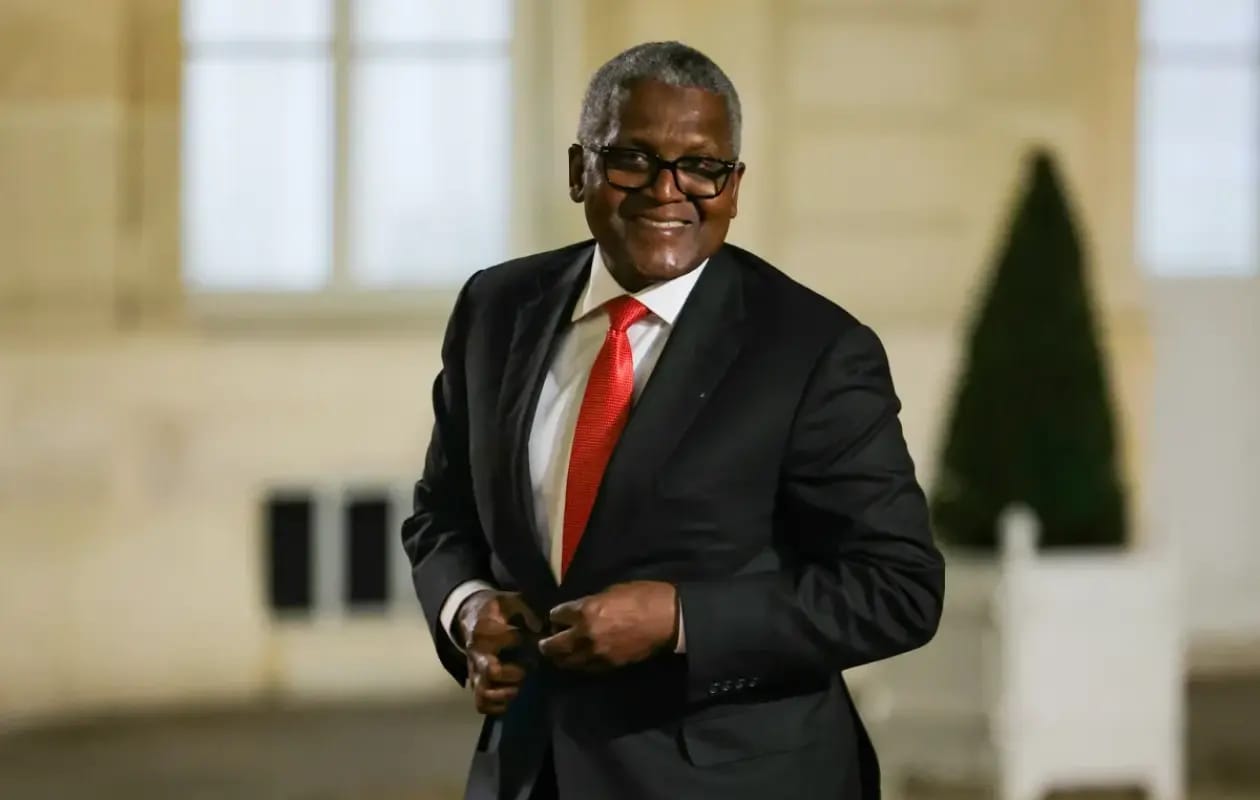
Aliko Dangote is the founder of the Dangote Refinery, situated in Lagos. He built the refinery through hard work and perseverance, a process that took about four years.

Today, Dangote Refinery is the largest in Africa and the world’s biggest single‑train refinery. An expansion is already underway; and on completion it will produce over one million barrels of petroleum product per day, making it the largest refinery globally.

Dangote started as a humble businessman, rising from the bottom to the top. He has never held a government appointment, so no one can accuse him of embezzling public funds. Before entering oil and gas, he invested in cement, rice, sugar, spaghetti and other sectors. He is the largest individual employer in Nigeria and across Africa, and after the expansion his company will surpass the Federal Government in employment numbers.

After investing $20 billion, some “enemies of the nation” — self‑styled cabals — have tried to sabotage the refinery. Their goal is to keep importing fuel, which drains foreign exchange, weakens the naira and enables fraudulent claims on government subsidies. A functional refinery is the best way to stop this economic sabotage.

Dangote once offered to buy NNPC’s refineries, but public outcry and former President Yar’Adua’s rejection halted the deal. He then built his own, far larger than any state‑owned plant. When the Nigerian Midstream and Downstream Petroleum Regulatory Authority, led by Ahmed Farouk, refused to supply crude, Dangote was forced to import from the United States. He exposed the problem through the media, prompting public pressure.

Farouk’s office later accused Dangote’s fuel of being substandard and high in sulfur. Dangote countered with evidence from his world‑class laboratory, inviting the National Assembly to inspect it. The legislators were satisfied, while the regulator failed to produce its own test results, revealing it had no functional laboratory.

The cabal then tried to block product loading by withdrawing union trucks. Dangote responded by purchasing 4,000 trucks to distribute his products nationwide, eliminating reliance on the union fleet. The union, backed by the cabal, demanded his drivers join them, but Dangote refused, citing voluntary union membership. A fire incident damaged part of the refinery, but it was repaired at cost.

PENGASSAN later joined the fight, striking against the refinery. Nigerians opposed the strike, and the President intervened, ending it. The President also ordered the regulator to sell crude to Dangote in naira, removing the need for foreign exchange. Since then, the naira has stabilized, and Nigeria now exports refined products, earning foreign exchange and boosting GDP.

Recently, Dangote accused Farouk of corruption, alleging he paid $5 million (≈N7 billion) for his children’s school fees. The claim shocked the nation, and many call for Farouk’s prosecution to recover alleged looted funds. The President has already removed Farouk from office, but further legal action is urged.
With the ongoing development, Dangote submitted petition to ICPC, which he later withdrew but sent a fresh one to the EFCC and the agency is now carrying out a thorough investigation.

Some cabal members who took delight in spreading false allegations that Dangote’s wealth is fraudulent had to take back their vomit. A retired NNPC staff from Kaduna State immediately retracted his statement after receiving a lawyer’s letter. He had since buried his head shame in shame by “retracting and apologizing” to Dangote.

While Nigerians continue to thank Dangote for locating the refinery in Nigeria rather than abroad, viewing it as a national pride and a solution to years of moribund state refineries, I personally suggest that to protect this asset, the President should advisably declare the Dangote Refinery “a national asset and monument,” deterring future sabotage. The refinery has already prevented fuel prices from reaching N5,000 per litre and has created thousands of jobs.

My advice to Dangote is simple: build modern depots in each of Nigeria’s six geopolitical zones to ease Lagos congestion, reduce highway accidents and lower truck wear‑and‑tear.
If the depots are built in each geo political centres the trucks will load at their zones and they do not need to come all the way to Lagos to load their products. If this advice is taken by Alh Aliko Dangote it will reduce accident on the high ways, reduce congestion in Lagos, and it will also reduce the wear and tear of his trailer vehicles.
This is my own humble technical advice to the legendary Icon of all time Alh Aliko Dangote.

In summary, Dangote’s refinery is really a transformational, privately‑driven achievement reshaping Nigeria’s energy landscape, creating jobs, and challenging entrenched import interests. With continued support, it will secure Nigeria’s future and remain a source of national pride. We wish you more grease to your elbows, ride on my big brother you are doing great and shame to the cabals.

Ibrahim Abdullahi is the Managing Director, Jessibram Investment Ltd, Abuja.

From Turbulence to Traction: Why Governor AKY’s APC Shift Could Reset Kano’s Politics

For decades, Kano politics has been a theatre of perpetual motion—loud, crowded and endlessly combative. Elections came and went, governments changed, yet the underlying rhythm remained the same: tension over stability, politics over policy and survival over strategy.

Governor Abba Kabir Yusuf’s (AKY) alignment with the All Progressives Congress (APC) may well mark the first decisive break from that cycle. This is not merely a political realignment; it is an appointment with history.

Kano’s greatest paradox has always been its strength. As Nigeria’s commercial nerve centre of the North, blessed with population, enterprise, culture and talent, the state should have been miles ahead. Instead, political fragmentation has repeatedly turned energy into friction.

Governments spent too much time fighting for legitimacy and too little time governing for growth. AKY’s move into the APC, aligning Kano with the party at the centre, directly confronts this structural weakness. Stability, in politics, is not the absence of opposition; it is the presence of predictable cooperation. By collapsing the wall between Kano Government House and the federal power structure, AKY has altered the incentives of politics itself. Conflict now comes at a higher cost, while collaboration suddenly pays dividends. This alone recalibrates the political atmosphere—from constant brinkmanship to cautious consensus.
More importantly, the alignment repositions Kano within Nigeria’s national development conversation. Infrastructure, security coordination, industrial policy, power projects, rail connectivity and urban renewal are no longer distant lobbying points; they become shared responsibilities. A governor operating within the same political framework as the presidency gains not just access, but influence. For a state as large and complex as Kano, that influence is oxygen.

Critics may frame the move as opportunism.
History, however, judges outcomes—not slogans. Kano’s politics has tried purity and paid the price in paralysis. What AKY appears to be betting on instead is effectiveness.
The APC platform offers a wider governing coalition, deeper institutional reach and a pathway to long-term policy continuity beyond electoral cycles. In a state fatigued by political drama, continuity itself becomes a reform.

There is also a quieter, but more profound implication. AKY’s alignment sends a signal to Kano’s political class that the era of perpetual antagonism may be ending. When the governor chooses convergence over confrontation, the tone of politics changes from the top down. Investors notice. Civil servants recalibrate. Politics stops being war by other means and starts resembling governance.

History is unkind to leaders who merely occupy office. It is far kinder to those who recognise defining moments and act decisively. AKY’s alignment with the APC is such a moment—a calculated risk, yes, but also a strategic correction long overdue. If managed with discipline, inclusiveness and a relentless focus on delivery, this decision could stabilise Kano politics for a generation and unlock progress that has been promised for decades but postponed by discord.

Kano has waited long enough. History has finally knocked—and this time, the door appears to be opening.

Barrister Aminu Hussaini – is the Special Adviser to the Governor of Kano State on Justice/Constitutional Matters- 234 8033 742424, aminuhussaini173@gmail.com