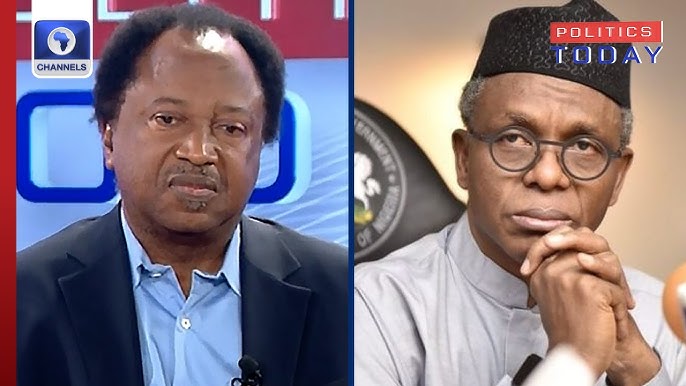
Shehu Sani Blasts Trump: “Stop Listening to Anarchists—Nigeria Will Rise Above Terrorism”

Abuja, Nigeria — Former Kaduna Central Senator and human rights activist Shehu Sani has issued a strong rebuttal to former U.S. President Donald Trump’s remarks on Nigeria, accusing him of relying on “anarchists and propagandists” who deliberately distort the country’s security situation for political ends.

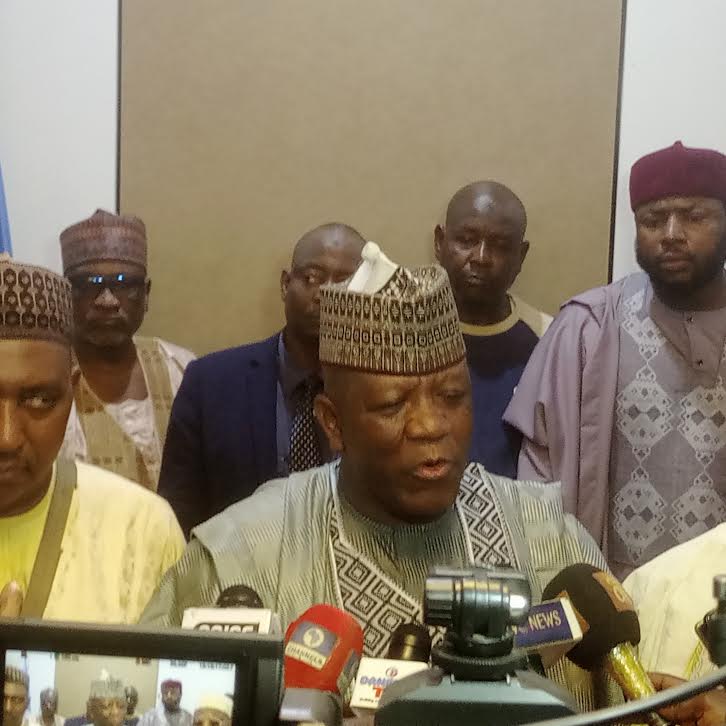
In an interview with the Washington Post, Sani said Trump had been “misinformed and misled by anarchists and propagandists” spreading half-truths about Nigeria’s war against terrorism and internal security challenges.

“Trump’s views about Nigeria and its leadership were shaped by people who thrive in chaos and division,” Sani stated. “They present a one-sided picture of insecurity and ignore the courage and resilience of Nigerians confronting terrorism daily.”

The former senator, who served in the 8th National Assembly and is known for his outspoken activism, acknowledged that while Nigeria continues to face grave threats from insurgents, bandits, and extremist groups, the country remains steadfast in its determination to restore peace.

“Nigeria will defeat terrorism. It may take time and sacrifice, but the people have refused to surrender to fear,” Sani said. “Our diversity and democracy remain stronger than the hate and violence of extremists.”

He called on the international community, particularly the United States, to adopt a more balanced and fact-based approach in assessing Nigeria’s internal challenges. According to Sani, foreign leaders should focus on supporting Nigeria through intelligence sharing, humanitarian aid, and fair diplomacy, rather than amplifying politically motivated narratives.

“Western countries must not allow bias or misinformation to shape their policy towards Africa,” he cautioned. “The weaponization of falsehoods against nations like Nigeria only fuels division and weakens the fight against terror.”

Sani further stressed that Nigeria’s security battle cannot be won through military means alone. He advocated for a comprehensive approach that tackles the root causes of extremism — including poverty, unemployment, and corruption.

“The fight against terrorism requires both force and fairness,” he explained. “Without justice and inclusion, we risk perpetuating the same cycle of violence we seek to end.”

The interview comes amid heightened global scrutiny of Nigeria’s human rights record and its ongoing war against terror groups such as Boko Haram and Islamic State in West Africa Province (ISWAP). Several recent foreign commentaries — including those from U.S. and European analysts — have accused the Nigerian government of mishandling security crises and ignoring civilian suffering.

Sani, however, warned that outsiders often overlook local resilience and reform efforts while magnifying negative narratives. He described such portrayals as harmful to Nigeria’s democratic image and counterproductive to peacebuilding efforts.

“Nigeria’s story should be told by Nigerians, not by those who profit from its pain,” he declared.

The former senator concluded by expressing optimism that, despite current hardships, Nigeria’s unity, diversity, and democratic values would ultimately triumph over extremism and misinformation.

Forum Wants Visa Ban on Nigerians Attacking Organizations on Social Media

The Forum for Growth and Development of Nigeria (FGDN) has urged the European Union (EU), the United Kingdom (UK), the People’s Republic of China, and Canada to impose visa restrictions on individuals engaging in what it described as “coordinated social media attacks” against the organization and its leadership.

In a statement signed by its National Coordinator, Dr. Adams Shaiza Musa, and made available to journalists in Kaduna, the group expressed deep concern over what it termed an increasing wave of “malicious and unhealthy” online campaigns targeted at both local and international organizations.

According to the statement, FGDN—known for its advocacy for national unity, good governance, and youth empowerment—said it has recently noticed some “unwarranted and orchestrated online assaults” aimed at discrediting international organizations.

“We are disturbed by the level of hate speech and false narratives being peddled on social media against several organizations. These attacks are not only defamatory, but also capable of inciting divisions and discouraging civic engagement between patriotic Nigerians and international communities,” the statement read.

While reaffirming support for the constitutional right to freedom of expression, the group stressed that such freedom must be exercised responsibly and within the bounds of truth and decency. It warned that the abuse of digital platforms to spread misinformation and launch personal attacks poses a threat to national unity and social cohesion.

“We call on the embassies of the EU member states, China, the United Kingdom, and Canada to take note of individuals who habitually use the internet to malign others. They should be denied visas and international privileges until they desist from such unethical conduct,” FGDN stated.

The group also called on relevant Nigerian agencies, including the National Information Technology Development Agency (NITDA) and the Nigerian Communications Commission (NCC), to strengthen regulatory measures governing online communication in order to curb misinformation and cyberbullying.

However, it reaffirmed FGDN’s commitment to promoting development-oriented dialogue, civic education, and initiatives that foster peace and social progress across Nigeria.

“FGDN remains focused on its mission to contribute positively to national development. We will not support those who seek attention through baseless accusations. Our objective is to unite Nigerians with international communities around ideas that can move the nation forward,” he said.

The statement concluded with an appeal to media practitioners and social commentators to verify information before publishing or sharing it online, urging them to uphold ethics and professionalism in their work.

A Bold Step in Non-Kinetic National Security: Commending DSS and the DG on the N50,000 Cash Empowerment Initiative for 7,774 Vulnerable Nigerians

In a nation where economic hardship continues to test the resilience of its people, the Department of State Services (DSS) under the visionary leadership of Director General Mr. Adeola Oluwafemi Ajayi, has once again demonstrated that true security transcends the barrel of the gun. The recent announcement of a N50,000 one-time cash assistance to 7,774 carefully selected vulnerable Nigerians, 10 from each of the 774 local government areas stands as a landmark achievement in the annals of non-kinetic security operations in Nigeria.

This initiative, totaling approximately N388 million, is not merely a welfare gesture, it is a masterstroke in nation-building, social inclusion and sustainable peace.

The Nineteen Seventeen Northern Consensus Movement for Peace, Unity, Empowerment and Development Initiative (NSNCM) wholeheartedly commends the DSS and its Director General for this people-centered intervention. By deliberately targeting the “poorest of the poor”, widows, the elderly, persons with disabilities, the unemployed, and those burdened by medical challenges. It recognizes that hunger, despair and exclusion are fertile grounds for unrest, radicalization and criminality. In providing direct financial relief, the DSS is not only alleviating immediate suffering but is also fortifying the social fabric of our beloved country.

The selection process itself deserves special praise. Unlike many top-down interventions that often bypass the most deserving, the DSS adopted a grassroots, consultative approach. Security heads, traditional rulers, religious leaders, local government officials, and community stakeholders were all involved in identifying beneficiaries. This ensures transparency, fairness, and cultural relevance. When an 80-year-old grandfather like Pa Segun in the Southwest receives his N50,000 with tears of gratitude, it is not just money changing hands, it is dignity being restored, hope being rekindled, and loyalty to the state being reinforced.

For the beneficiaries, this N50,000 is far more than a cash transfer, it is a lifeline with transformative potential. In rural communities where daily income barely exceeds N500, this sum can cover three months of basic food needs for a family of five. A widow in Sokoto can now purchase grains, cooking oil, and medicine without begging. An unemployed youth in Ebonyi can use the funds to start a small poultry or vegetable farm, generating sustainable income. A disabled artisan in Kano can acquire tools to resume his trade. These are not abstract possibilities, they are real pathways out of poverty, made possible by the DSS’s foresight.

Moreover, this initiative aligns perfectly with global best practices in countering violent extremism. Research from the United Nations and the Institute for Economics and Peace consistently shows that economic empowerment reduces vulnerability to recruitment by criminal or terrorist groups. When citizens feel seen, supported, and valued by state institutions, they become active defenders of peace. The DSS, through this program, is building a human security firewall and deserve our commendation for that. We particularly applaud the DG’s emphasis on “winning hearts and minds.” This is leadership with empathy.

In a time when security agencies are often criticized for heavy-handedness, Mr. Ajayi has shown that strength also lies in compassion. By investing nearly N400 million of its resources into direct citizen support, the DSS is setting a powerful example for other agencies and tiers of government. We call on state governors, local government chairmen, and federal ministries to emulate this model. Imagine the impact if every security outfit in Nigeria allocated just 1% of its budget to similar empowerment schemes.

As the National President of the Nineteen Seventeen Northern Consensus Movement, I urge the DSS to sustain and expand this initiative. Future phases could include skills training, micro-credit follow-ups, and digital literacy programs to ensure long-term self-reliance. We also recommend the establishment of a public monitoring framework, perhaps through civil society partnerships to track outcomes and share success stories nationwide.

In conclusion, the DSS N50,000 cash assistance program is without doubt a beacon of hope in Nigeria’s development journey. It proves that security is not just about intelligence and enforcement but about justice, equity and human dignity.

On behalf of the Nineteen Seventeen Northern Consensus Movement for Peace, Unity, Empowerment and Development Initiative (NSNCM), I extend our deepest gratitude to Director General Adeola Ajayi and the entire DSS family. May this initiative inspire a new era of inclusive governance where no Nigerian is left behind.

Dr Awwal Abdullahi Aliyu
Sarkin Yakin Kanya Babba,
National President
Nineteen Seventeen Northern Consensus Movement For Peace, Unity, Empowerment and Development Initiative (NSNCM)

Southern and Middle Belt Leaders Warn Tinubu Over Rising Insecurity, Demand Nnamdi Kanu’s Release and Security Reform

Samson Baruwa

Abuja,

– The Southern and Middle Belt Leaders Forum (SMBLF) has expressed serious concern over the recent designation of Nigeria by United States President Donald Trump as a Country of Particular Concern (CPC) due to alleged widespread persecution of Christians, even as it opposed any form of foreign military intervention in the country.

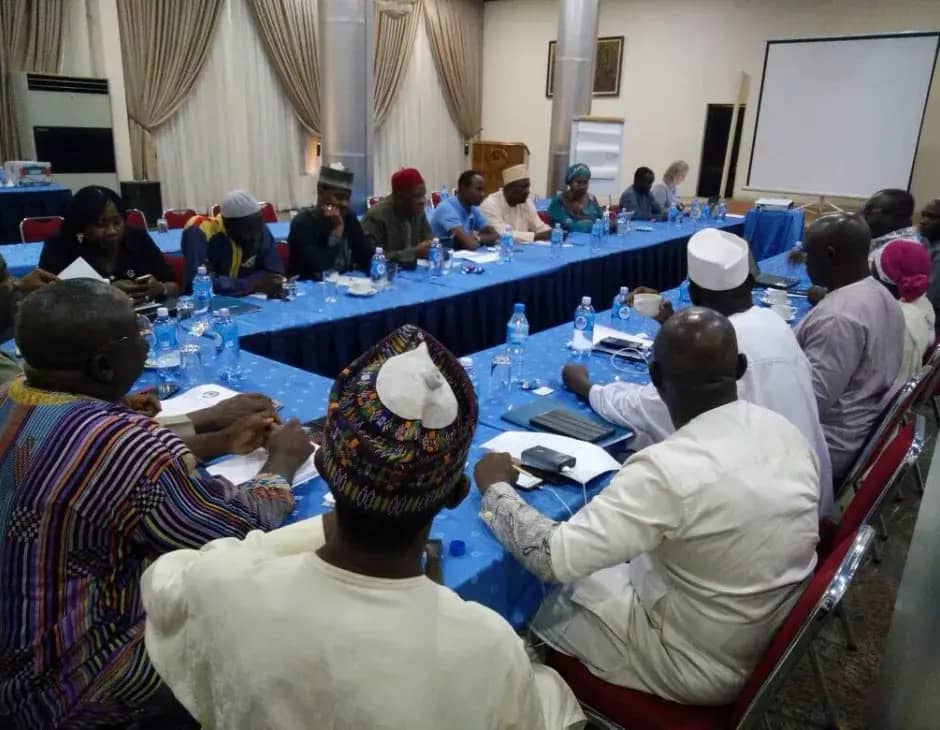
In a communiqué issued at the end of its National Caucus meeting held on Saturday, November 2, 2025, the Forum described Trump’s designation as a “wake-up call” to the Federal Government to act decisively in halting what it called “the ongoing mayhem and killings” across the country.

The meeting, which brought together leaders of the four major socio-cultural and political blocs—Afenifere, Ohanaeze Ndigbo, the Middle Belt Forum, and PANDEF—was convened to discuss matters of urgent national importance, particularly the US designation, insecurity, and the political direction of Nigeria ahead of the 2027 general elections.

According to the communiqué signed by HRM Oba Oladipo Olaitan, Leader of Afenifere; Dr. Bitrus Pogu, President of the Middle Belt Forum; Senator John Azuta-Mbata, President-General of Ohanaeze Ndigbo Worldwide; and H.E. Ambassador Godknows Igali, National Chairman of PANDEF, the Forum noted that while Nigeria must reject external interference, it must equally confront internal threats that have destroyed lives and displaced communities.

“The SMBLF notes with very serious concern the designation by the US President Donald Trump of Nigeria as a Country of Particular Concern over religious persecution against Christians,” the communiqué stated.

The leaders affirmed their opposition to any “unsolicited foreign military intervention in Nigeria over any matter.” However, they described the CPC designation as a serious warning to the authorities in Abuja to take full responsibility for restoring order, justice, and equity in the handling of national security.

“We consider the designation of Nigeria as a Country of Particular Concern a wake-up call to the Federal Government to pursue with a sense of urgency and responsibility halting the ongoing mayhem and killings,” the communiqué read.

The Forum specifically called on the government to confront and dismantle the various militias, killer herdsmen, and Islamist terrorist groups that have been blamed for massacres and land seizures in parts of the country. It urged the administration to “restore occupied lands to their rightful owners of all faiths and ethnic nationalities,” naming Benue, Plateau, Southern Kaduna, Taraba, Gombe, Southern Borno, and Southern Kebbi as areas most affected by the violence.


Call for Security Sector Reforms

While acknowledging the recent reshuffling of the nation’s Service Chiefs, the SMBLF said the move was welcome but insufficient. The Forum called on the President to extend the reform process to other key defence and security institutions, particularly the Office of the National Security Adviser (ONSA), the Minister of Defence, and the Minister of State for Defence.

According to the Forum, these strategic positions “are presently occupied by persons from one section of the country,” a situation that does not reflect Nigeria’s ethnic and regional diversity.

“This will not only ensure a comprehensive overhaul of the national defence architecture but also reflect the diversity of the country,” the communiqué declared.


Nnamdi Kanu’s Continued Detention

On the issue of detained IPOB leader Nnamdi Kanu, the SMBLF reaffirmed its commitment to Nigeria’s unity but criticized what it described as the excessive military response by previous administrations to peaceful agitations.

“SMBLF restates its commitment to the unity and continued coexistence of the Nigerian Federation wherein every citizen and constituent ethnic nationality will be equally respected and have genuine sense of belonging,” the statement read.

The Forum recalled that Kanu’s agitation began peacefully but was “radicalised by ill-advised and excessive military responses codenamed operations ‘Crocodile Smile’ and ‘Python Dance’ by the erstwhile Buhari administration.” These military campaigns, the group argued, forced Kanu into exile, leading to his arrest in Kenya, rendition to Nigeria in 2021, and ongoing prosecution since then.

Without prejudice

Nigeria’s Sovereignty, Our Unity: Responding to Threats of Foreign Intervention

When we first red the words of President Donald Trump on social media over the weekend that he may send U.S troops into Nigeria over what he described as “Christian killings” in this country, we felt more than surprise. We felt the sharp pang of a violation, not only of facts, but of our dignity as a sovereign nation.

We are saying this as plainly as possible: yes, Nigeria suffers insecurity. But no, we do not live under a campaign of targeted genocide against Christians. Violence in Nigeria is not shaped by faith alone. It is shaped by geography, by poverty, by criminal networks, and by terror groups who kill indiscriminately both Christians and Muslims, infact more Muslims have been killed by these groups than Christians.

When a foreign power threatens invasion or military action on behalf of one religious group, we must see it not as defence, but as interference. It risks dividing us further, weakening our national resolve, and eroding the principle that no external actor takes orders from a sovereign that will not give them. In that moment, we must remind ourselves: we are Nigerians first. United in diversity. Bound by shared citizenship.

President Trump has claimed there are “record numbers of Christians being killed in Nigeria,” suggesting U.S. military action could follow unless those “killings” stop. He even placed Nigeria once more on the so-called “Countries of Particular Concern” list, citing alleged religious freedom violations. When violence occurs in northern or central Nigeria, it may strike Christian communities, especially in mixed-religion zones, but the pattern is not one of religious extermination. It is instead a pattern of insecurity that fails us all. It undermines farmers, destroys villages, displaces families and leaves both Christians and Muslims reeling in pain and anguish.

We must state clearly: Nigeria is a sovereign state. We do not take orders from another sovereign, whether in rhetoric or in action. If any foreign leader believes that military operations can simply be imposed on Nigeria because of alleged human rights violations, then that undermines our constitutional independence. If the U.S. has concerns about religious freedom or violence, there are diplomatic channels, partnership frameworks, multilateral mechanisms. But they do not extend to invading a country under the banner of defence of one religious group. That is dangerous. It could set a precedent not just for Nigeria, but for all nations.

We also must remember: the United States itself faces severe internal challenges. Gun violence, domestic terrorism, civil unrest, fracturing communities etc. These are real issues within its own borders. It is somewhat ironic to issue threats of military intervention abroad while your own soil is grappling with violence. Perhaps America should look inward and address its challenges before brandishing threats against another country.

That said, we cannot dismiss the reality: Nigeria does face a ravaging insecurity crisis. Boko Haram, ISWAP, bandits, kidnappers, ethno-communal violence etc. These are real and they harm people, regardless of faith. We must acknowledge that the government, security forces, civil society and citizens are striving every day to curb the carnage.
There are efforts under way: military operations in the northeast, patrols in rural communities, peace-building dialogues, policing reforms, attempts at disarmament, investment in local conflict resolution mechanisms and coordination with international partners who support not through threats, but through capacity-building.

We must support that. We must urge it. Because while external threats of invasion are misguided, internal reform is both necessary and urgent. Our leaders must be held accountable. Our security architecture must be improved. Our communities must heal.

In this moment of tension, Nigerians must resist the temptation to divide along religious lines. We must reject false narratives that places Christians against Muslims or one region against another. Such division plays into the hands of violent actors which are the terrorists, the extremists, the opportunists, who thrive in fragmentation.

Let us instead remind ourselves of who we are: a country of over 200 million people, with many faiths and ethnicities, united by a shared aspiration for peace, security and development. When we say “security for all,” we mean every Nigerian, regardless of faith or tribe.

When foreign voices threaten intervention in the name of one group, we should see that as a call not to turn inward in anger alone, but to stand outward in solidarity. We must also call on our leaders to continue to fight insurgency, modernise our security forces, ensure justice for victims, invest in community protection and reform local governance. Let our security strategy be shaped by Nigerians first, with Nigerian consent, not by pressure applied from beyond our borders.

Conclusively, let us not celebrate the absurd idea that an American leader might invade our land for alleged failures that do not reflect the full picture. That kind of rhetoric divides more than it heals.
Instead, let us affirm our unity. Let us work harder to build a security architecture that protects all Nigerians. Let us demand good governance, efficient security service, and genuine justice. Let us resist external coercion, and stand tall under our own flag.

May we remain one people, one nation, committed to peace, justice and greater destiny under God Almighty.

Dr. Awwal Abdullahi Aliyu, President, Northern Consensus Movement for peace unity empowerment and Development initiative. NSNCM.

Dr. Mustapha Abdullahi: Championing Tinubu’s Renewed Hope Agenda in the Energy Sector

President Bola Ahmed Tinubu’s Renewed Hope Agenda is the overarching philosophy guiding his administration’s policies, which focus on restoring confidence, attracting investments, and empowering citizens through various initiatives.

“Renewed hope” means a revived or re-established sense of optimism and belief in a positive future, often after a period of difficulty or disappointment. It signifies regaining hope and confidence, whether through personal effort, external programs, or spiritual means, to overcome challenges and strive for a better life.

For Dr. Mustapha Abdullahi, Director General of the Energy Commission of Nigeria (ECN), his devotion and dedication to attracting investments in the energy sector and striving to put the sector on the global map is highly commendable.

As a dedicated believer in the Renewed Hope Agenda and its benefits to Nigerians, he has made remarkable progress in repositioning the energy sector.

Recently, Dr. Mustapha Abdullahi recorded a great feat and landmark achievement as he finalized a partnership between Nigeria and the world’s largest solar panel production company, LONGi, at its headquarters in Xi’an, Shaanxi, China.

Nigeria, through the Energy Commission of Nigeria (ECN), concluded this strategic partnership with LONGi, the world’s leading solar technology manufacturer. The Nigerian delegation, led by Dr. Abdullahi, was received by President Boshen Zhong and Vice President Li Wenxue of LONGi, who took them on a tour of one of the world’s largest solar cell production facilities.

The visit followed the Memorandum of Understanding (MoU) signed between ECN and LONGi in London earlier this year. During the visit, Dr. Abdullahi advanced discussions on establishing a 500–1000 MW solar panel production factory in Nigeria — a move set to significantly boost the nation’s renewable energy capacity.

ECN’s presentation to LONGi highlighted Africa’s growing market and the increasing demand for solar mini-grids. It also emphasized President Bola Ahmed Tinubu’s Renewed Hope Solarisation Policy, which seeks to accelerate access to clean and affordable energy across Nigeria.

LONGi expressed strong interest in investing in Nigeria and demonstrated readiness to advance concrete plans for the construction of the factory. This partnership marks a historic milestone for the Nigerian renewable energy landscape and aligns with national efforts to expand local solar manufacturing capacity.

The ECN, under Dr. Abdullahi’s visionary leadership, is working assiduously to ensure that Nigerians enjoy improved electricity supply. His management team is delivering on the Renewed Hope Initiative of President Bola Ahmed Tinubu’s administration, particularly its policy on solarisation. The Commission looks forward to working closely with LONGi and the Federal Government to realize this transformative initiative, which will create jobs, enhance energy security, and drive sustainable development across the country.

In another positive development and in constant pursuit of delivering the benefits of the Renewed Hope Agenda to Nigerians, the Energy Commission of Nigeria, through its DG Dr. Mustapha Abdullahi, signed a Memorandum of Understanding with UNIDACO Limited, London, for an initial €100 million investment in Nigeria’s energy sector.

Speaking on the development, Dr. Abdullahi stated, “The signing, held at the House of Lords, London, during the Renewed Hope Global Dialogue (UK Edition), marks a major milestone in advancing Nigeria’s clean energy transition.”

According to him, “This partnership underscores our commitment to expanding renewable energy access, driving innovation, and strengthening Nigeria’s capacity to harness clean technologies. Moreover, it aligns with President Bola Ahmed Tinubu’s Renewed Hope Agenda, particularly on sustainable energy solutions as a catalyst for economic growth and development.”

He added that the distinctive MoU was signed in the presence of dignitaries and investors of repute from Nigeria and across the world. “Overall, this milestone reaffirms our resolve to deepen global partnerships that will accelerate Nigeria’s energy transformation. Together, we are charting a new course toward an inclusive, energy-secure, and prosperous nation built on innovation and collaboration,” Dr. Abdullahi concluded.

With ardent adherents of the Renewed Hope Agenda like Dr. Mustapha Abdullahi, Director General of the Energy Commission of Nigeria, the government of President Bola Ahmed Tinubu is truly walking the talk of the Renewed Hope Agenda.

Political Storm in Kaduna: ADC Faction Defies Alleged Coup Against Acting Chairman

The Kaduna State chapter of the African Democratic Congress (ADC) has dismissed as null and void the purported expulsion of its Acting Chairman, Hon. Ahmed Tijjani Mustapha, and several other key party officials in the state.

In a statement issued on Monday, October 27, 2025, and signed by the State Publicity Secretary, Engr. Idris Musa, the party described the alleged expulsion as a desperate move by individuals who, according to the ADC, are not bona fide members of the party.

Engr. Musa stated that the individuals behind the purported expulsion are members of the Social Democratic Party (SDP) in Kaduna State but have been parading themselves as ADC members with the aim of hijacking the party’s structure in the state and across the North-West zone.

“We wish to inform all well-meaning and duly registered members of the ADC in Kaduna State to disregard the said expulsion, as it is considered null and void,” the statement said.

“The action appears to be a desperate attempt by individuals who are not members of the ADC but are struggling to take over the party under the guise of coalition partners. It’s either you are in the ADC or you are out,” the party added.

The statement further linked the alleged expulsion to a pending legal case — Suit No. FCT/HC/GAR/CV/383/2025 — filed at the FCT High Court in Abuja. The case reportedly challenges the dual membership status of former Kaduna State Governor Malam Nasir El-Rufai and others.

Engr. Musa noted that the move against the state leadership, including Hon. Ahmed Tijjani Mustapha, Engr. Idris Musa, Alhaji Suleiman Abdulkadir, and Barr. Danlami Dabai, was a “fight-back” by those affected by the legal action.

The statement urged ADC members across Kaduna State to remain calm and law-abiding while the matter is before the court.

“We will not join issues with these individuals, especially in view of the pending case at the FCT High Court in Abuja. Our party will continue to operate in accordance with its Constitution and principles, and we will not be swayed by the antics of desperate politicians,” it stated.

The ADC reaffirmed its commitment to internal democracy, rule of law, and the unity of its members in Kaduna State and beyond.

Uba Sani Promises Support for Family of Late Comrade Abiodun Aremu…As Activists Commend Governor’s Solidarity

Kaduna State Governor, Senator Uba Sani, has pledged full support to the family of the late human rights activist, Comrade Abiodun Aremu, who recently died in a tragic hit-and-run incident in Ogun State.

Speaking through former lawmaker, Senator Shehu Sani, who represented him at the burial ceremony held on Thursday in Sango-Ota, Ogun State, the governor described the late activist as a courageous fighter who dedicated his life to the struggle for democracy, justice, and human rights in Nigeria.

Governor Sani extolled Comrade Aremu’s steadfastness during the dark years of military dictatorship, noting that his sacrifices and resilience contributed immensely to the democratic freedom Nigerians enjoy today.

“Comrade Aremu was a man of conviction and courage who stood on the side of truth, even in the face of intimidation and persecution. His contributions to the pro-democracy struggle will never be forgotten,” Governor Uba Sani stated.

The burial ceremony attracted a large turnout of prominent activists and civil society leaders from across the country, including Chief Femi Falana (SAN), Dr. Joe Okei-Odumakin, and representatives of the Nigeria Labour Congress (NLC), Academic Staff Union of Universities (ASUU), and Trade Union Congress (TUC), as well as veteran student leaders such as Segun Maiyegun.

In his tribute, Chief Femi Falana (SAN) described the deceased as “one of Nigeria’s most consistent and principled activists,” recalling how he was imprisoned during the pro-democracy struggle and led campaigns for the release of detained rights icons such as Chief Gani Fawehinmi and Dr. Beko Ransome-Kuti.

Other speakers reflected on shared moments from the 1990s struggles, recalling how Uba Sani, then an activist himself, coordinated the activities of the Campaign for Democracy (CD) and worked closely with Comrade Aremu and other movement leaders in the fight against military rule.

They also commended the Kaduna governor for standing by the family of his late comrade, describing the gesture as a demonstration of genuine solidarity and enduring commitment to the ideals of social justice.

Governor Sani, in his message, urged the younger generation to emulate Comrade Aremu’s passion for justice, courage in the face of adversity, and unwavering commitment to the enthronement of true democracy in Nigeria.

Late Comrade Abiodun Aremu, who was the Secretary of the Joint Action Front (JAF) — the umbrella body for pro-labour civil society organisations — reportedly died on October 12 after being knocked down by a vehicle near his residence in Ota, Ogun State. He was 65 years old.

Dr Mustapha Abdullahi, DG Energy Commission of Nigeria; A Trail Blazer With A Midas Touch.

In the appointment of Dr. Mustapha Abdullahi as the Director-General and Chief Executive Officer of the Energy Commission of Nigeria (ECN), stakeholders roundly commended President Bola Ahmed Tinubu on the choice of this astute and result oriented energy expert and policy strategist, a visionary administrator.

The saying that a golden fish has no hiding place aptly qualifies Dr. Mustapha Abdullahi’s appointment by His Excellency Bola Ahmed Tinubu, GCFR , who was able to spot the energy poster boy, and placed him strategically where competence meets passion.

Indeed, the appointment of Dr. Abdullahi as the Director General of Energy Commission qualifies the saying of putting a round peg in a round hole.

Dr. Mustapha Abdullahi who combines academic distinction with hands-on experience in energy systems, regulation, and innovation, has variously been described by stakeholders as a key figure in shaping Nigeria’s energy future, scoring a vital point in the Renewed Hope Initiative of President Bola Ahmed Tinubu’s administration, which clearly aims to resuscitate and reinvigorate the country’s energy sector.

As an avid scholar who holds a master’s and a doctorate in Engineering from the prestigious University of Manchester who has also served as a Research Associate and Teaching Assistant in the School of Mechanical, Aerospace, and Civil Engineering in same institution, Dr. Abdullahi’s penchant for excellence is distinctive and highly commendable.

As a Chartered Engineer (CEng) and a member of the Institution of Mechanical Engineers (MIMechE), Dr. Abdullahi has distinguished himself in ways so uncommon and achievements quite alluring.
His commitment to professional excellence and technical innovation underscores his capacity and capabilities in delivering on the mandate of the Energy Sector and the Commission generally.

As a Postdoctoral Fellow at the University of Manchester, United kingdom, from 2021 to 2023, Dr. Abdullahi conducted an impactful research entitled “Assessment of the Structural Integrity,” contributing valuable insights to the field. His work was recognized and supported by the Industry Collaboration Fund, United kingdom, highlighting his commitment to advancing knowledge through industry-academia collaboration.

Dr. Abdullahi has over 14 years of experience in Nigeria’s energy sector, particularly within the oil and gas industry and is known to have spent a significant part of his career at the Department of Petroleum Resources (now the Nigerian Upstream Petroleum Regulatory Commission -NUPRC), contributing to regulatory policy, energy systems management, and sustainability initiatives.

His technical competence is further complemented by his role at the National Space Research and Development Agency (NASRDA), where he engaged in research and development at the intersection of space and energy technology.

Before being appointed as Director-General of ECN, Dr. Abdullahi served as the Senior Technical Adviser to the former Minister of Innovation, Science, and Technology, Chief Uche Geoffrey Nnaji. In that capacity, he was instrumental in shaping national policies that promoted innovation, renewable energy adoption, and scientific advancement.

His advisory role provided strategic direction for programmes aimed at building Nigeria’s technological capacity in line with global sustainability trends.

He is widely reputed to be a multi-disciplinary leader, with a systems-thinking approach to Nigeria’s energy challenges, integrating insights from engineering, space research, and policy.

Since assuming office as Director General of the Energy Commission of Nigeria ECN in 2023, keen observers say his leadership at the Commission is anchored in collaboration, stakeholder engagement, and a strong commitment to energy transition and security.

Dr. Abdullahi is focused on delivering sustainable, inclusive, and technology-driven energy solutions that support national development goals and align with international climate commitments.

Asides from his professional and academic accomplishments, he is also active in the politics of his country, Nigeria. He is a founding member and co-convener of The Asiwaju Group (TAG), one of the leading support groups for President Bola Ahmed Tinubu also having served as Deputy Chairman of the All Progressives Congress United Kingdom (APC UK) chapter, he is also an Executive Member of the APC UK since February 2014.

As a committed and loyal party chieftain, Abdullahi’s political engagements include membership in the APC Presidential Campaign Council (PCC) 2023, the APC PCC Nigeria Strategic Communication Committee (2019), and the APC National Convention Sub-Committee (2022).

He is widely respected for his integrity, strategic vision, and passion for sustainable development. His dynamic experience across sectors positions him as a transformative leader at the helm of Nigeria’s energy transition journey.

A peek into his two years stint as the Director General of the Energy Commission of Nigeria ECN reveals amazing achievements such as:

  • Implementation of the Renewed Hope Solarization Project for the provision of 2 MW of a solar hybrid system in 37 universities and 37 tertiary hospitals across the 36 states and Abuja.
    (2025)
    Signed a Memorandum of Understanding with China Energy Engineering Corporation to boost renewable energy and address Nigeria’s energy challenges by establishing State Energy Planning Implementation Units in all the 36 states in Nigeria.

(2025)
Signed an agreement with LONGI a China solar module manufacturer to establish a manufacturing plant of their new solar panel technology in Nigeria.

(2025)
Launched the Compendium on Industrial Energy Efficiency Policies with the collaboration of UNIDO and GEF.

(2025)
Commissioned a Hybrid 5 kilowatts solar-powered Electric Vehicle (EV) Charging Station.

(2025)
Promotion of clean cooking and obtaining a Patent for developing a Hexagonal Type Domestic Charcoal Stove for improved thermal efficiency.

(2025)
Signed an MOU with a Chinese company to establish a Lithium battery production plant in Nigeria.

(2024)
Launched the newly gazette National Energy Policy (NEP)and National Energy Master Plan (NEMP) by the Federal Government of Nigeria.

(2024)
Establishment of a 10MW Solar PV Module Production Assembly Plant at Enugu Research Centre.

(2024)
Development of Pyrolysis Machine for Hydrogen Generation at Bauchi Research Centre.

(2024)
Establishment of a Pilot Bioethanol Plant with Fractional Distillation Unit at Benin Research Centre.

(2024)
Development of Pilot Integrated Modular Refinery at Bauchi Research Centre.

(2024)
The Energy Commission of Nigeria in collaboration with the FMIST on Implementation of the National Policy on Methanol Fuel Production from Gas.

(2024)
Launch of the Minimum Energy Performance Standards (MEPS) for air conditioners in collaboration with the United Nations Environment Programme, United for Efficiency initiative, and the Standards Organisation of Nigeria.

(2024)
Launched a Computerized National Energy Information System website in Collaboration with the ECOWAS Commission.

(2024)
Establishment of a Pilot Green Hydrogen Plant as a policy target of domestication and localization of Green Energy in the country.

(2024)
Establishment of Barefoot Renewable Energy College in Kogi State.

(2024)
The Energy Commission of Nigeria’s participation as the National Focal point at the Brazil G202024 Energy Transitions Working Group Meetings to negotiate and endorse Principles for Just and Inclusive Energy Transitions.

(2024)
Launched the implementation of the project titled ‘Abating Greenhouse Gas Emissions From Obsolete Refrigerators and Air Conditioners Equipment (AGORA) in Nigeria with the
collaboration of UNDP and UNEP.

(2024)
The Nigeria Energy and Emission Pathway Calculator 2050 (NECAL 2050)(2024) Comprehensive Energy Audit for the University of Lagos, Akoka carried out by National Centre for Energy Efficiency and Conservation.

(2024)
Designed, Constructed and Installed Two (2) 5kW Wind Turbines located at Usmanu Danfodiyo University Sokoto (UDUS), Sokoto State.

(2023)
Design and development of the 24-CUP Pelton Wheel Single-Jet Small Hydropower Turbine System and the Split Cup Pelton Wheel Two-Jet Small Hydropower Turbine System by NACHRED, University of llorin)

(2023)
Design, Construction and Testing energy-efficient biomass Cookstoves by National Centre for Energy Research and Development, University of Nigeria, Nsukka.

(2023)
Development of Small, Medium and Commercial scale Solar Powered Chicken Brooding systems.

These achievements of Dr. Mustapha Abdullahi have been variously described as the footprints of a man of greatness, vision and exemplary leadership, deserving of commendation.

.

ADC Suspends Kaduna Chairman, Secretary Over Alleged Misconduct

The African Democratic Congress (ADC) in Kaduna State has suspended its State Chairman, Elder Patrick Ambut, and State Secretary, Mr. Victor Oluwatuyi, over allegations of anti-party activities, gross misconduct, and violation of the party’s constitution.

In a statement issued on Monday by the State Publicity Secretary, Engr. Idris Musa, the party said the suspension followed a meeting of the State Working Committee (SWC) convened after receiving petitions from the Igabi and Sabon Gari Local Government Chairmen, as well as complaints from other local chapters.

According to the statement, the suspended officials were accused of engaging in acts capable of causing dis-affection among members, creating parallel party organs, and breaching several provisions of the ADC Constitution (2022 as amended).

The ADC also disclosed that it received a letter from the Kaduna State Police Command confirming an ongoing investigation into the alleged illegal removal of the Igabi Local Government Chairman, involving both suspended officials.

“The Chairman’s undemocratic disposition and selective relationship with State Working Committee members, coupled with his poor leadership style, contravene Articles 7(8 & 11) and 20(1b) of the ADC Constitution,” the statement said.

The party further accused Ambut and Oluwatuyi of running the Kaduna ADC like a “secret cult,” making unilateral decisions without due consultation or reference to the State Working Committee, and undermining the principles of transparency, accountability, and rule of law for personal gain.

To restore order and preserve the integrity of the party, the State Working Committee resolved to: Suspend Elder Patrick Ambut and Mr. Victor Oluwatuyi pending the conclusion of investigations; and Constitute a five-man Disciplinary Committee to probe the allegations and make recommendations;

The SWC however, appointed Hon. Ahmed Tijjani Mustapha, the Deputy State Chairman, as Acting State Chairman, and Mrs. Rachael Didams as Acting State Secretary.

The statement added that the decision was necessary to uphold the ADC’s values and allow the disciplinary process to proceed without interference.

“The suspension is aimed at protecting the integrity of the party and ensuring due process in line with our constitution,” the statement concluded.