Poor Performance: Kaduna Elders Ask Senator Lawal Adamu to Account for Stewardship

… Accuses of him of Being only Visible on Social media

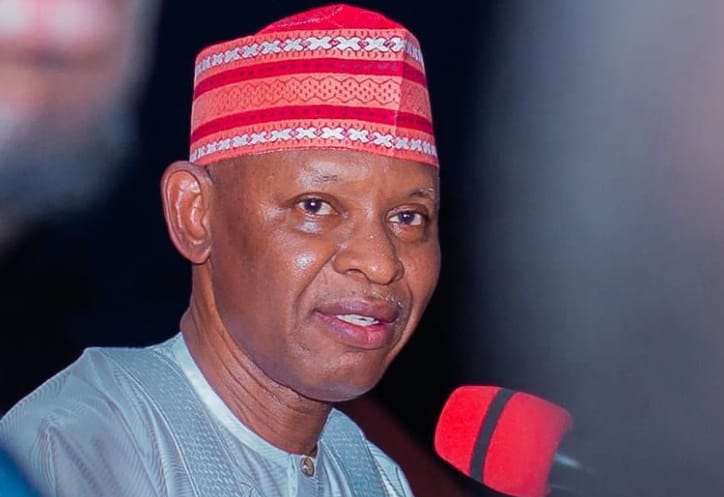
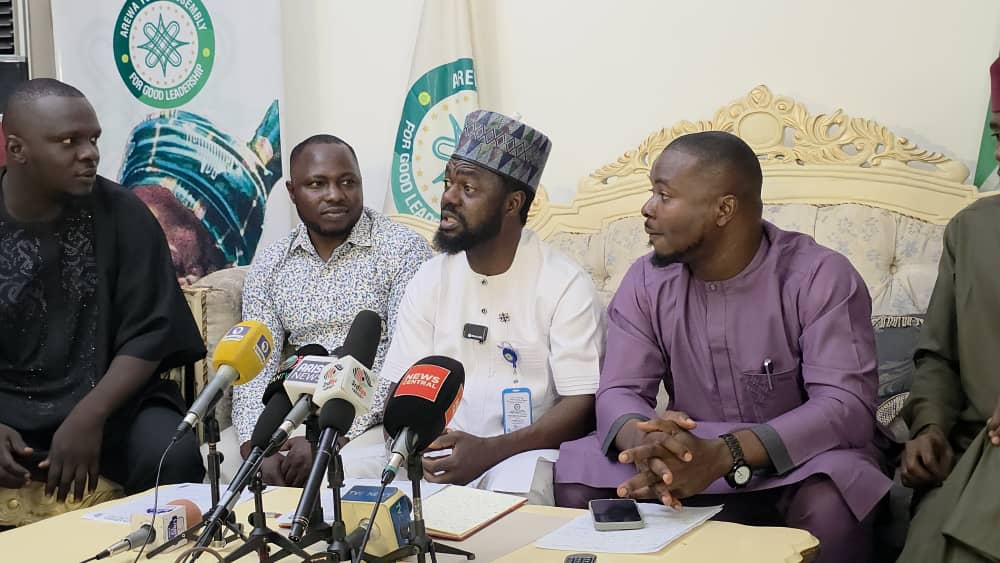
The Kaduna Central Elders Forum has asked Senator Lawal Adamu Usman, representing Kaduna Central Senatorial District, to render an account of his stewardship at the National Assembly, citing what it described as poor performance and weak engagement with constituents since his election.

The elders accused the senator of being more visible on social media than in the communities he represents, saying his approach to representation has failed to address the pressing challenges facing Kaduna Central.

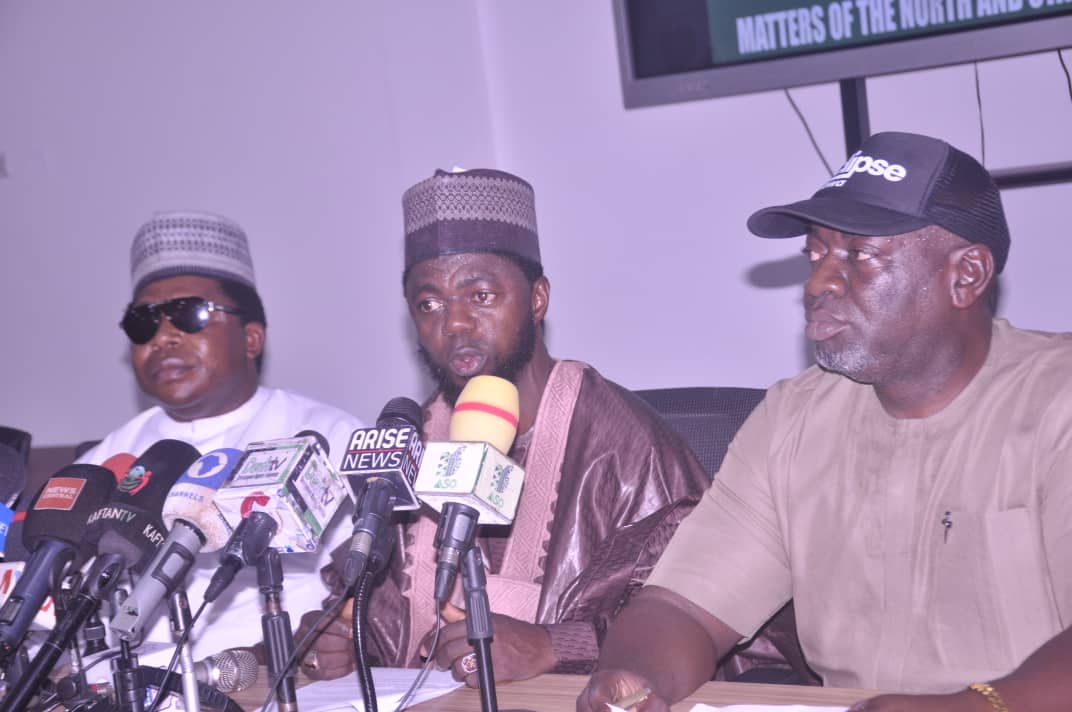
In a statement jointly issued and signed by Mal. Inuwa Rigachikun and Mr Moses Bulus Madami, the forum described Senator Lawal Adamu as a lawmaker who relies largely on Facebook posts to communicate with constituents, rather than regular physical engagement, consultations and constituency outreach.

“Our Kaduna senator appears to exist only on Facebook. Representation goes beyond online posts. The people need to see, feel and interact with their elected representative,” the forum stated.

The group, made up of traditional rulers, retired civil servants and community stakeholders across the senatorial district, said the senator’s poor physical presence had widened the gap between him and grassroots communities, especially at a time when Kaduna Central is grappling with insecurity, unemployment and deteriorating infrastructure.

According to the elders, several communities within the district have not had any direct engagement with the senator since he assumed office, either through town hall meetings, constituency visits or stakeholder consultations.

They also accused the senator of failing to take strong positions on critical local issues, including repeated security challenges affecting rural communities, economic hardship, youth unemployment and the poor state of roads and public facilities.

“The people of Kaduna Central are facing serious challenges. These problems cannot be addressed from Abuja or through Facebook posts alone,” the elders said, adding that constituents expect their representative to be vocal both on the floor of the Senate and within the district.

The forum further called on the senator to publicly outline constituency projects attracted so far and explain his legislative contributions in clear terms to the people he represents.

The elders who underscores the senator’s performance as underwhelming, said physical presence was critical to effective representation. “Even if motions are sponsored, people want to see their senator. Physical engagement builds trust,” they said.

DANGOTE: THE LEGENDARY ICON OF ALL TIME (1)

By Ibrahim Abdullahi

Aliko Dangote is the founder of the Dangote Refinery, situated in Lagos. He built the refinery through hard work and perseverance, a process that took about four years.

Today, Dangote Refinery is the largest in Africa and the world’s biggest single‑train refinery. An expansion is already underway; and on completion it will produce over one million barrels of petroleum product per day, making it the largest refinery globally.

Dangote started as a humble businessman, rising from the bottom to the top. He has never held a government appointment, so no one can accuse him of embezzling public funds. Before entering oil and gas, he invested in cement, rice, sugar, spaghetti and other sectors. He is the largest individual employer in Nigeria and across Africa, and after the expansion his company will surpass the Federal Government in employment numbers.

After investing $20 billion, some “enemies of the nation” — self‑styled cabals — have tried to sabotage the refinery. Their goal is to keep importing fuel, which drains foreign exchange, weakens the naira and enables fraudulent claims on government subsidies. A functional refinery is the best way to stop this economic sabotage.

Dangote once offered to buy NNPC’s refineries, but public outcry and former President Yar’Adua’s rejection halted the deal. He then built his own, far larger than any state‑owned plant. When the Nigerian Midstream and Downstream Petroleum Regulatory Authority, led by Ahmed Farouk, refused to supply crude, Dangote was forced to import from the United States. He exposed the problem through the media, prompting public pressure.

Farouk’s office later accused Dangote’s fuel of being substandard and high in sulfur. Dangote countered with evidence from his world‑class laboratory, inviting the National Assembly to inspect it. The legislators were satisfied, while the regulator failed to produce its own test results, revealing it had no functional laboratory.

The cabal then tried to block product loading by withdrawing union trucks. Dangote responded by purchasing 4,000 trucks to distribute his products nationwide, eliminating reliance on the union fleet. The union, backed by the cabal, demanded his drivers join them, but Dangote refused, citing voluntary union membership. A fire incident damaged part of the refinery, but it was repaired at cost.

PENGASSAN later joined the fight, striking against the refinery. Nigerians opposed the strike, and the President intervened, ending it. The President also ordered the regulator to sell crude to Dangote in naira, removing the need for foreign exchange. Since then, the naira has stabilized, and Nigeria now exports refined products, earning foreign exchange and boosting GDP.

Recently, Dangote accused Farouk of corruption, alleging he paid $5 million (≈N7 billion) for his children’s school fees. The claim shocked the nation, and many call for Farouk’s prosecution to recover alleged looted funds. The President has already removed Farouk from office, but further legal action is urged.
With the ongoing development, Dangote submitted petition to ICPC, which he later withdrew but sent a fresh one to the EFCC and the agency is now carrying out a thorough investigation.

Some cabal members who took delight in spreading false allegations that Dangote’s wealth is fraudulent had to take back their vomit. A retired NNPC staff from Kaduna State immediately retracted his statement after receiving a lawyer’s letter. He had since buried his head shame in shame by “retracting and apologizing” to Dangote.

While Nigerians continue to thank Dangote for locating the refinery in Nigeria rather than abroad, viewing it as a national pride and a solution to years of moribund state refineries, I personally suggest that to protect this asset, the President should advisably declare the Dangote Refinery “a national asset and monument,” deterring future sabotage. The refinery has already prevented fuel prices from reaching N5,000 per litre and has created thousands of jobs.

My advice to Dangote is simple: build modern depots in each of Nigeria’s six geopolitical zones to ease Lagos congestion, reduce highway accidents and lower truck wear‑and‑tear.
If the depots are built in each geo political centres the trucks will load at their zones and they do not need to come all the way to Lagos to load their products. If this advice is taken by Alh Aliko Dangote it will reduce accident on the high ways, reduce congestion in Lagos, and it will also reduce the wear and tear of his trailer vehicles.
This is my own humble technical advice to the legendary Icon of all time Alh Aliko Dangote.

In summary, Dangote’s refinery is really a transformational, privately‑driven achievement reshaping Nigeria’s energy landscape, creating jobs, and challenging entrenched import interests. With continued support, it will secure Nigeria’s future and remain a source of national pride. We wish you more grease to your elbows, ride on my big brother you are doing great and shame to the cabals.

Ibrahim Abdullahi is the Managing Director, Jessibram Investment Ltd, Abuja.

From Turbulence to Traction: Why Governor AKY’s APC Shift Could Reset Kano’s Politics

For decades, Kano politics has been a theatre of perpetual motion—loud, crowded and endlessly combative. Elections came and went, governments changed, yet the underlying rhythm remained the same: tension over stability, politics over policy and survival over strategy.

Governor Abba Kabir Yusuf’s (AKY) alignment with the All Progressives Congress (APC) may well mark the first decisive break from that cycle. This is not merely a political realignment; it is an appointment with history.

Kano’s greatest paradox has always been its strength. As Nigeria’s commercial nerve centre of the North, blessed with population, enterprise, culture and talent, the state should have been miles ahead. Instead, political fragmentation has repeatedly turned energy into friction.

Governments spent too much time fighting for legitimacy and too little time governing for growth. AKY’s move into the APC, aligning Kano with the party at the centre, directly confronts this structural weakness. Stability, in politics, is not the absence of opposition; it is the presence of predictable cooperation. By collapsing the wall between Kano Government House and the federal power structure, AKY has altered the incentives of politics itself. Conflict now comes at a higher cost, while collaboration suddenly pays dividends. This alone recalibrates the political atmosphere—from constant brinkmanship to cautious consensus.
More importantly, the alignment repositions Kano within Nigeria’s national development conversation. Infrastructure, security coordination, industrial policy, power projects, rail connectivity and urban renewal are no longer distant lobbying points; they become shared responsibilities. A governor operating within the same political framework as the presidency gains not just access, but influence. For a state as large and complex as Kano, that influence is oxygen.

Critics may frame the move as opportunism.
History, however, judges outcomes—not slogans. Kano’s politics has tried purity and paid the price in paralysis. What AKY appears to be betting on instead is effectiveness.
The APC platform offers a wider governing coalition, deeper institutional reach and a pathway to long-term policy continuity beyond electoral cycles. In a state fatigued by political drama, continuity itself becomes a reform.

There is also a quieter, but more profound implication. AKY’s alignment sends a signal to Kano’s political class that the era of perpetual antagonism may be ending. When the governor chooses convergence over confrontation, the tone of politics changes from the top down. Investors notice. Civil servants recalibrate. Politics stops being war by other means and starts resembling governance.

History is unkind to leaders who merely occupy office. It is far kinder to those who recognise defining moments and act decisively. AKY’s alignment with the APC is such a moment—a calculated risk, yes, but also a strategic correction long overdue. If managed with discipline, inclusiveness and a relentless focus on delivery, this decision could stabilise Kano politics for a generation and unlock progress that has been promised for decades but postponed by discord.

Kano has waited long enough. History has finally knocked—and this time, the door appears to be opening.

Barrister Aminu Hussaini – is the Special Adviser to the Governor of Kano State on Justice/Constitutional Matters- 234 8033 742424, aminuhussaini173@gmail.com

SMBLF Condemns  Abduction of 177 Adara Christians in Southern Kaduna, Demands Immediate Rescue

The Southern and Middle Belt Leadership Forum (SMBLF) joins all people of conscience, faith-based bodies, civil society organisations, and the international community in unequivocally condemning the heinous and barbaric kidnapping of 177 innocent Adara natives from Kurmin Wali village, Afogo Ward, Kajuru Local Government Area of Southern Kaduna, in Nigeria’s Middle Belt.

This reprehensible crime, which targeted harmless civilians worshipping peacefully in their community, is yet another tragic reminder of the unrelenting terror being visited upon indigenous populations of the Middle Belt. We stand firmly in solidarity with the Adara people, Southern Kaduna, and all victims of terrorism across the region.

What has further compounded this atrocity is the irresponsible and shocking public denial of the mass kidnapping by the Kaduna State Commissioner of Internal Security and Home Affairs, Barr. Sule Shu’aibu (SAN); the Kaduna State Commissioner of Police, CP Mohammed Rabiu; and the Chairman of Kajuru Local Government Council, Mr. Madaki Dauda. The SMBLF views this conduct not merely as a betrayal of public trust, but as a grave act of incompetence that undermined rescue efforts, emboldened the criminals, and gave the kidnappers valuable time to relocate their captives to remote terror enclaves.

Now that the Inspector-General of Police, Mr. Kayode Egbetokun, has publicly affirmed that the kidnapping indeed occurred, there can be no moral or administrative justification for silence or inaction. We therefore expect the appropriate authorities to sanction all officials who deliberately misled the public, obstructed emergency response, or sought to trivialise the suffering of victims.

This grievous crime has once again validated the long-standing position of the SMBLF in strongly condemning the so-called amnesty programme granted to armed bandits and terrorists in Kaduna State. It is deeply insensitive and strategically reckless for the Kaduna State Government to continue offering free medical care, educational opportunities for the children of terrorists, and skills acquisition programmes to violent criminals who have neither surrendered their weapons nor renounced terrorism, while their victims are abandoned to trauma, displacement, and poverty.

Even more alarming is the reality that hundreds of indigenous communities in Southern Kaduna remain without any meaningful security presence, while scarce public resources are being expended on the welfare of those who have shed innocent blood.

Let it be clearly stated that the Middle Belt has increasingly become the most fertile ground for terrorist banditry, where human lives are commodified for ransom with little consequence for the perpetrators.
Recent events beyond Kaduna State further reinforce the dangerous pattern in the Middle Belt.

The horrifying abduction of over 300 school pupils and their teachers from Papiri community in, Agwara LGA of Niger State; the mass abduction of Christians during worship at Christ Apostolic Church (CAC), Oke Isegun, in Eruku town, located in the Ekiti LGA of Kwara State in the Middle Belt among others, provide chilling evidence of systematic attacks on Christian communities across Nigeria by Islamic terrorists.

These incidents lend weight to widespread affirmation about an unfolding Christian genocide through terror and state failure.

Our Demands

We call on the Federal Government of Nigeria to immediately deploy all necessary military and intelligence resources to secure the safe rescue of the abducted, law-abiding citizens of Kurmin Wali.

All public officials who denied or downplayed this crime must be suspended and thoroughly investigated for their roles in obstructing justice and endangering lives.

Governor Uba Sani must urgently establish and properly fund community-based vigilante formations in every Southern Kaduna community, to serve as a first line of defence against terrorist incursions.
The Governors of the Middle Belt states must immediately form a Joint Regional Security Outfit, similar to the South-West model, to enhance intelligence sharing across state boundaries and to enable rapid, coordinated response to attacks.

The time for the formation of State Police is long overdue. The National Assembly must as a matter of urgency start working on a bill that will facilitate it.

The SMBL believes that only a restructured Nigeria with a new Constitution can qurantee the safety, progress and wellbeing of every citizen and we insist that Nigeria must be restructured largely based on the recommendations of 2014 National Conference.

This is the moment for Nigeria to activate and operationalise its security cooperation agreements with the United States and Israel, as it has become evident that Nigeria cannot defeat these transnational terror networks in isolation.

Conclusion.

We call on Governor Uba Sani to abandon the failed policy of appeasing terrorists and to place the welfare, safety, and security of law-abiding citizens above all other considerations. The lives of innocent Nigerians must never be treated as expendable.

The SMBLF assures the people of Adara land, Southern Kaduna, and the entire Middle Belt of our solid solidarity.

While we join all well-meaning Nigerians in prayer for the safe return of the hostages, we insist that prayers must be matched with decisive action.

The government must do everything necessary to ensure the immediate rescue of the abducted and to prevent the recurrence of such horrors.

Signed:
HRM Oba Oladipo Olaitan
Leader, SMBLF and Leader of Afenifere

Dr. Bitrus Pogu
President, Middle Belt Forum

Senator John Azuta-Mbata
President-General, Ohanaeze Ndigbo Worldwide

H.E Ambassador Godknows Igali
National Chairman, PANDEF

22nd January, 2026

Bandits’ Attack: Kajuru/Chikun Women Group Blasts Senator Lawal Adamu Over Alleged Neglect of Affected Communities

A women’s group operating under the aegis of Kajuru/Chikun Women Group has strongly criticised Senator Lawal Adamu, representing Kaduna Central Senatorial District over what it described as his alleged failure to visit or support communities affected by recent bandit attacks in Kajuru Local Government Area of Kaduna State.

The group, in a press statement jointly signed by its Coordinator, Mrs. Jumai Bulus, and Secretary,Mrs. Mary Galadima, accused the senator of showing “no sense of concern” for victims of insecurity in Kajuru and Chikun local government areas, despite the spate of attacks that have left several communities traumatised and displaced.

According to the women, it was disheartening that a lawmaker elected with the hope of improving the welfare and security of his constituents had failed to rise to the occasion at a critical time.

“It is painful to note that our senator has not only failed in his duties as a lawmaker, but has also disappointed the electorate who voted for him with the hope that he would make their lives better,” the statement read.

The group noted that previous occupants of the senatorial seat, under similar circumstances, didn’t waste time to speak out on the floor of the Senate and further visited affected communities as well as identified with victims of attacks and provided relief materials to ease their suffering.

“In this trying period, we expected Senator Lawal to act like his predecessors ,who openly condemned such attacks and personally visited affected areas. As we speak, we are not aware of any such visit or intervention by him,” the women said.

They further lamented what they described as the senator’s habitual silence on critical issues of security and welfare, stressing that both are fundamental constitutional responsibilities of elected representatives.

“We are deeply pained that our senator has not shown concern about our security and welfare, which are fundamental constitutional matters,” the statement added.

The women also alleged that rather than engaging with constituents or initiating legislative and advocacy efforts to address insecurity, the senator had been frequently travelling outside the country.

“We gathered that instead of sitting down to make relevant laws or interventions to better the lives of his people, he is often travelling out of the country,” the group claimed.

Raising further concerns, the Kajuru/Chikun women said they were unaware of any tangible constituency projects attracted or executed by the senator since he assumed office over two years ago.

“We have not seen any meaningful constituency projects that he has either attracted or executed since he came into office. If there are any in our communities, he should boldly come out to tell us,” they challenged.

The group also called on Senator Lawal to publicly account for constituency funds allocated to lawmakers by President Bola Ahmed Tinubu for constituency outreach and development.
“We are challenging him to render account of the huge monies given to lawmakers by President Bola Ahmed Tinubu to boost constituency outreach,” the statement read.

The women vowed to mobilise their communities to vote the senator out in the 2027 general elections, insisting that they would support candidates with proven capacity, courage and commitment to speaking for their people on the floor of the Senate.

“We will no longer support docile lawmakers. We are determined to elect people with proven track records of capacity and purpose—leaders who will stand up and speak for us,” they declared.

Ministry Of Power, Energy Commission Of Nigeria Collaborate To Transform Energy Sector.

As part of dedicated efforts to deliver the dividends of democracy to Nigerians under President Bola Ahmed Tinubu’s Renewed Hope Agenda, the Federal Government and Energy Commission of Nigeria have strengthened their collaboration in transforming Nigeria’s Energy Sector.

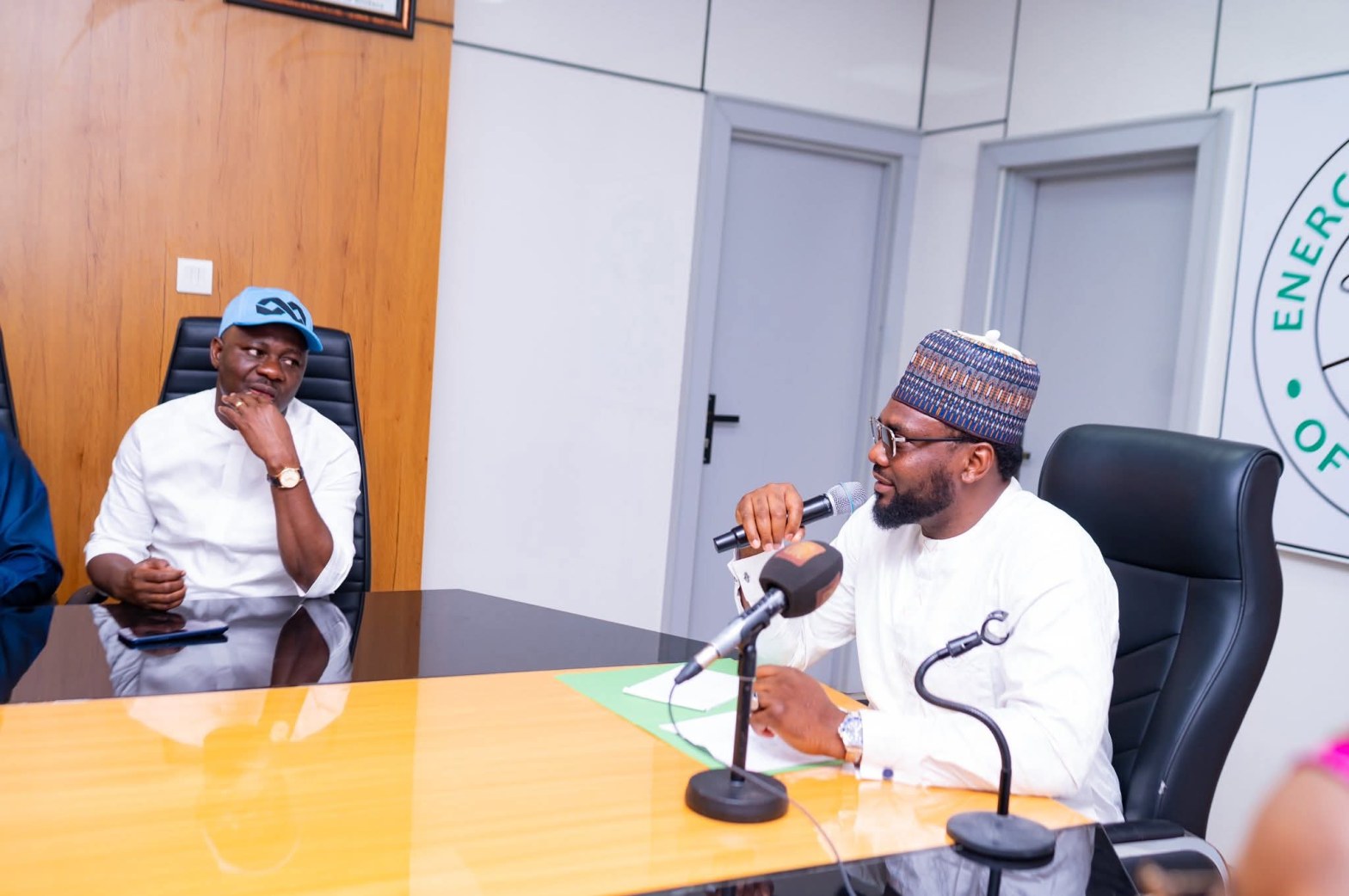
The Energy Commission of Nigeria (ECN), led by DG/CEO Dr. Mustapha Abdullahi, in a meeting with the Minister of power, Chief Adebayo Adelabu discussed on strengthening collaboration and align with national energy
priorities.

Discussions were focused on enhancing cooperation on renewable energy priorities
and integrating ECN’s research outputs into national power infrastructure through joint implementation and shared resources.

Chief Adelabu reaffirmed the Ministry’s commitment to sustained partnerships,
especially in hydroelectric power generation and other strategic energy initiatives critical to transforming Nigeria’s power sector.

ECN updated the Minister on key programmes, including the Renewed Hope Solarization Programme, the National Energy Master Plan, and the National Energy Policy, reaffirming its commitment to delivering results that advance Nigeria’s energy and development goals.

Ministry Of Power, Energy Commission Of Nigeria Collaborate To Transform Energy Sector.

As part of dedicated efforts to deliver the dividends of democracy to Nigerians under President Bola Ahmed Tinubu’s Renewed Hope Agenda, the Federal Government and Energy Commission of Nigeria have strengthened their collaboration in transforming Nigeria’s Energy Sector.

The Energy Commission of Nigeria (ECN), led by DG/CEO Dr. Mustapha Abdullahi, in a meeting with the Minister of power, Chief Adebayo Adelabu discussed on strengthening collaboration and align with national energy
priorities.

Discussions were focused on enhancing cooperation on renewable energy priorities
and integrating ECN’s research outputs into national power infrastructure through joint implementation and shared resources.

Chief Adelabu reaffirmed the Ministry’s commitment to sustained partnerships,
especially in hydroelectric power generation and other strategic energy initiatives critical to transforming Nigeria’s power sector.

ECN updated the Minister on key programmes, including the Renewed Hope Solarization Programme, the National Energy Master Plan, and the National Energy Policy, reaffirming its commitment to delivering results that advance Nigeria’s energy and development goals.

Nigeria debuts indigenous defence platform at DIMDEX 2026 in Doha

By Israel Bulus, Kaduna

Doha, Qatar — Nigeria has recorded a historic milestone in its defence and industrial development with the global debut of the DICON-D7G, a fully indigenous defence platform, at the ongoing Doha International Maritime Defence Exhibition and Conference (DIMDEX 2026).

The exhibition, which runs until January 23, is one of the world’s leading maritime and naval defence gatherings, bringing together policymakers, senior military officials, and defence technology companies from across the globe.

The Chief of Naval Staff, Vice Admiral Idi Abbas, who formally declared the DICON-D7G exhibition booth open on Monday, described the platform as a major demonstration of Nigeria’s growing indigenous defence manufacturing capacity and technological innovation.

Abbas, noted that Nigeria’s participation at DIMDEX reflects the country’s commitment to maritime security cooperation and industrial advancement on the global stage, adding that the exhibition represents Nigeria’s most ambitious international defence presentation to date.

For the first time since the establishment of the Defence Industries Corporation of Nigeria (DICON) in 1968, the Federal Government is showcasing a comprehensive platform designed for the production, assembly, maintenance, storage, and export of military equipment.

The initiative, officials said, underscores Nigeria’s determination to transition from an import-dependent defence system to a self-reliant, export-oriented military-industrial complex.

Fielding questions from journalists, the Chief Executive Officer of DICON-D7G, Mr Osman Chennar, said the platform was a product of years of strategic reforms, public-private partnerships, and policy alignment aimed at revitalising Nigeria’s defence manufacturing ecosystem.

“DICON-D7G delivers end-to-end defence solutions, ranging from weapons production and systems integration to maintenance, logistics, warehousing, and export readiness,” Chennar said.

He added that the platform actively integrates retired military generals and other seasoned professionals with civilian experts to mentor and train the next generation of defence personnel.

“We are not just building equipment; we are building human capacity for the future of Nigeria’s defence sector,” he said.

Also speaking, Retired Major General Mainasara Abdul Masanawa, Director of Land Systems at DICON, described DIMDEX 2026 as a strategic opportunity for Nigeria to showcase its expanding capabilities while engaging global defence manufacturers, technology partners, and investors.

According to him, DICON-D7G is exploring technology transfer arrangements, joint ventures, and export opportunities, particularly across Africa, the Middle East, and other emerging defence markets.

Industry analysts said Nigeria’s participation at DIMDEX sends a strong signal of the Federal Government’s resolve to reposition DICON as a competitive player in the global defence industry while strengthening national security through local content development.

Similarly, Retired Brigadier General Abiodun Morakinyo noted that Nigeria’s presence at the exhibition aligns with broader national defence and industrialisation objectives, including reducing foreign exchange exposure, enhancing the operational readiness of the Armed Forces, creating skilled jobs, and promoting technological innovation.

“DIMDEX is a global platform where nations assert their defence autonomy, and Nigeria’s debut sends a clear message that the country is now firmly part of that league,” he said.

Beyond technology exhibition, the Nigerian delegation is also engaging in high-level discussions on strategic partnerships, maritime security cooperation, and defence export opportunities.

With the unveiling of the DICON-D7G platform, Nigeria aims to secure a foothold in international defence markets, particularly among African and Middle Eastern countries seeking reliable and affordable defence solutions.

Observers say the launch represents a broader vision for Nigeria’s defence sector, focused on local innovation, job creation, and technological growth, while reducing reliance on foreign suppliers.

As DIMDEX 2026 continues, analysts expect Nigeria’s indigenous defence debut to attract significant global interest and strengthen the country’s strategic standing in the international defence and security landscape.

Energy Commission Staff Applaud Dr. Mustapha Abdullahi’s Visionary Leadership on His Birthday, Commend President Tinubu

The Management and Staff of Energy Commission of Nigeria has congratulated their Director General, Dr Mustapha Abdullahi on the occasion of his birthday.

The staffs in their birthday message applauded the leadership style of Dr. Mustapha describing him as a good manager of men and resources.

Dr Mustapha Abdullahi was also described as a man with an amiable personality and God -fearing disposition.

According to the staffs. “Dr. Mustapha Abdullahi has displayed an enviable leadership quality in the development of the sector through his significant contributions to the Commission including the energy sector that has witnessed sustainable growth in energy solutions that has also fostered appreciable levels.

“His unwavering dedication to duty, improvements to staff welfare have remained a rallying point that has continued to” encourage staff, attract admiration and support to his policies for the overall good of the sector.

While wishing the indefatigable DG a happy birthday anniversary celebration, the Management and Staff of the Energy Commission of Nigeria, ECN called on Dr. Abdullahi Mustapha to remain focused on his vision to take the Commission to the enviable heights for all and the nation at large.

The staffs lauded him as a dedicated agent of Renewed Hope which has uplifted the spirit of the workforce from its near-obscurity in its over four decades of existence.

They further commended Mr. President for appointing a sound visionary and genuinely dedicated person as Director General of the Energy Commission of Nigeria in the person of Dr. Mustapha, who on assumption to office had assured that under his leadership, “The ECN will set the tone for economic development based on progressive innovation and policy initiatives as envisioned by President Bola Ahmed Tinubu’s Renewed Hope agenda.”

Yari Foundation Schedules Peace and Development Summits for Lagos, Enugu, Port Harcourt

The Yari Foundation has concluded arrangements to organise a series of high-level summits in Lagos, Enugu and Port Harcourt as part of efforts to promote peace, national development and inclusive dialogue across Nigeria.

According to the Foundation, the summits, scheduled to hold between January 19 and 23, will bring together key stakeholders from government, the private sector, civil society, academia and the media to deliberate on critical national issues. Key focus areas include economic growth, education, leadership, peacebuilding and social development.

A statement issued by the Foundation explained that the choice of Lagos, Enugu and Port Harcourt was deliberate, noting that the cities are major commercial, cultural and industrial hubs in the South-West, South-East and South-South geopolitical zones respectively.

The Foundation said hosting the summits across the regions would ensure broad participation while underscoring its commitment to national unity and balanced development.

The statement further disclosed that each summit would feature keynote addresses, panel discussions, interactive sessions and policy dialogues aimed at generating practical and sustainable solutions to challenges confronting the country.
Participants are expected to share ideas and experiences that would help strengthen institutions, promote an enabling environment for peace and enhance sustainable development at both national and grassroots levels.

While expressing optimism about the prospects of a peaceful and prosperous Nigeria, the Foundation said preparations for the events were at an advanced stage, adding that invitations would be extended to prominent Nigerians and relevant stakeholders across various sectors.

The Yari Foundation reiterated its commitment to initiatives that foster peace, dialogue, capacity building and socio-economic advancement, stressing that the forthcoming summits form part of its broader mandate to contribute meaningfully to Nigeria’s development and national cohesion.

It recalled that the Foundation successfully organised similar summits in Abuja, Kano and Jos last year, which attracted wide participation and positive reviews from stakeholders across the country.