
By Ibrahim Musa, Kaduna
The Northern Awareness Network (NAN) has strongly criticized the African Democratic Congress (ADC) over its recent comments questioning the credibility of voter registration figures released by the Independent National Electoral Commission (INEC). NAN described the ADC’s statements as unfounded, misleading, and indicative of a party grappling with political irrelevance.
In a statement signed by its Chairman, Salihu Sulaiman, NAN expressed concern over what it called the ADC’s “public disputes” regarding registration statistics in Osun State and the South West region. According to NAN, the figures reported by INEC are consistent with ongoing nationwide efforts to expand voter participation and reflect the electoral engagement of the citizens, not any form of manipulation.
“It is both irresponsible and dishonest for any political party to interpret voter registration numbers through the lens of their own electoral ambitions,” the statement read. NAN cited the 2022 Osun Governorship election, in which the People’s Democratic Party (PDP) defeated the All Progressives Congress (APC), as proof that high registration figures do not necessarily favor any one party. NAN said it was perplexing that the PDP, now aligned with the ADC in their criticism, would dispute data from a state they had recently won.
The group further accused the ADC of selective outrage, pointing out the party’s silence on figures from the Federal Capital Territory (FCT). NAN argued that such cherry-picking calls into question the sincerity of the ADC’s concerns and suggests that their allegations may be politically motivated rather than rooted in a genuine interest in electoral transparency.
“Why the focus on Osun and the South West while ignoring voter numbers from other parts of the country, including the FCT? The ADC’s silence on other data suggests they are more interested in discrediting the process than in strengthening democracy,” NAN stated. The group said the ADC’s posture amounted to an intentional undermining of INEC and its critical mandate.
Rather than stirring controversy, NAN urged the ADC to take up the responsibility of educating and mobilizing Nigerians to register and participate in elections. It emphasized that all political parties share in the burden of building a robust democratic process, and that distracting the public with unsubstantiated claims was counterproductive and dangerous.
According to NAN, parties should work with INEC and other democratic institutions to encourage voter participation. “Political energy should be directed towards positive engagement, not divisive rhetoric. The focus should be on inclusion and participation, not paranoia,” the group said, adding that constant political quarrels only serve to discourage potential voters.
The organization went further to accuse the ADC of trying to set the stage for rejecting future election results. NAN stated that baseless allegations are often the hallmark of struggling political outfits preparing excuses for poor electoral performance. “This is a textbook case of a party preparing to blame everyone but itself for a defeat it already anticipates,” NAN noted.
Salihu Sulaiman called on Nigerians to remain vigilant and not be swayed by what he described as the antics of political actors who invent conspiracies to mask their own failings. He emphasized that sustaining democracy requires political maturity and a commitment to facts, not propaganda and manufactured outrage.
In conclusion, NAN reiterated its support for INEC and all efforts aimed at expanding voter registration across the country. The group urged Nigerians to register, participate, and reject divisive politics. “We must all protect the sanctity of our democracy from those who would tear it down just to make a headline,” the statement concluded.
Author Archives: News All Around
Writer,Blogger,Historian, Journalist
Yoruba Youths Defend INEC Over Osun Registration Figures, Slam PDP, ADC

By Samuel Adeyemi
The Yoruba Youth Council (YYC), an umbrella organisation of Yoruba youths nationwide, has cautioned political parties against actions capable of disrupting the forthcoming governorship election in Osun State or discrediting the Independent National Electoral Commission (INEC).
In a statement issued at the weekend by its spokesman, Saheed Adeola, quoting the YYC National President, Comrade Eric, the group faulted what it described as unnecessary alarm raised by the Peoples Democratic Party (PDP) and the African Democratic Congress (ADC) over the number of registered voters credited to Osun State in the latest nationwide pre-registration exercise conducted by INEC.
According to INEC’s figures, Osun State recorded 393,269 pre-registrations, the highest in the country. But some stakeholders, including the PDP and ADC, dismissed the numbers as unrealistic and alleged fraud.
Responding, INEC, through a statement issued on Thursday by the chairman’s spokesman, Rotimi Oyekanmi, debunked the allegations, explaining that the figures were consistent with data from its 2021 online registration exercise.
YYC maintained that the alarm raised by the PDP and ADC was needless, noting that the figures for Osun State were not unusual.
“In any case, in the 2022 governorship election in Osun State, PDP defeated the APC. It is therefore surprising that the PDP will now query the statistics,” the group said.
It added that contrary to claims of fraud, the latest figure aligned with the pattern recorded in 2021. “For instance, Osun recorded 232,880 registrants in a similar exercise conducted by the same INEC in 2021. There is no significant difference in the data recorded for Osun State in 2021 and the figures of 393,289 for the 2025 online pre-registration,” the statement read.
YYC further noted that INEC would still clean up the data and publish the register for claims and objections before finalising the exercise.
“Interestingly, they are querying the figures for Osun and the South West in the latest exercise but not those of the FCT. Rather than busy themselves in raising unnecessary alarm that amounts to a storm in a tea cup, the PDP and ADC should participate in mobilising our people to register in the Continuous Voter Registration, instead of querying figures and heating up the polity unnecessarily,” YYC added.
YYC Cautions PDP, ADC Over Allegations on INEC Osun Registration Figures
By Saheed Adeola
The Yoruba Youth Council (YYC), an umbrella organisation of Yoruba youths nationwide, has cautioned political parties against actions capable of disrupting the forthcoming governorship election in Osun State or discrediting the Independent National Electoral Commission (INEC).
In a statement issued at the weekend by its spokesman, Saheed Adeola, quoting the YYC National President, Comrade Eric, the group faulted what it described as unnecessary alarm raised by the Peoples Democratic Party (PDP) and the African Democratic Congress (ADC) over the number of registered voters credited to Osun State in the latest nationwide pre-registration exercise conducted by INEC.
According to INEC’s figures, Osun State recorded 393,269 pre-registrations, the highest in the country. But some stakeholders, including the PDP and ADC, dismissed the numbers as unrealistic and alleged fraud.
Responding, INEC, through a statement issued on Thursday by the chairman’s spokesman, Rotimi Oyekanmi, debunked the allegations, explaining that the figures were consistent with data from its 2021 online registration exercise.
YYC maintained that the alarm raised by the PDP and ADC was needless, noting that the figures for Osun State were not unusual.
“In any case, in the 2022 governorship election in Osun State, PDP defeated the APC. It is therefore surprising that the PDP will now query the statistics,” the group said.
It added that contrary to claims of fraud, the latest figure aligned with the pattern recorded in 2021. “For instance, Osun recorded 232,880 registrants in a similar exercise conducted by the same INEC in 2021. There is no significant difference in the data recorded for Osun State in 2021 and the figures of 393,289 for the 2025 online pre-registration,” the statement read.
YYC further noted that INEC would still clean up the data and publish the register for claims and objections before finalising the exercise.
“Interestingly, they are querying the figures for Osun and the South West in the latest exercise but not those of the FCT. Rather than busy themselves in raising unnecessary alarm that amounts to a storm in a tea cup, the PDP and ADC should participate in mobilising our people to register in the Continuous Voter Registration, instead of querying figures and heating up the polity unnecessarily,” YYC added.
Capacity Movement Faults Senator Lawal Adamu Over Remarks on Gov. Uba Sani
By Ibrahim Yusuf
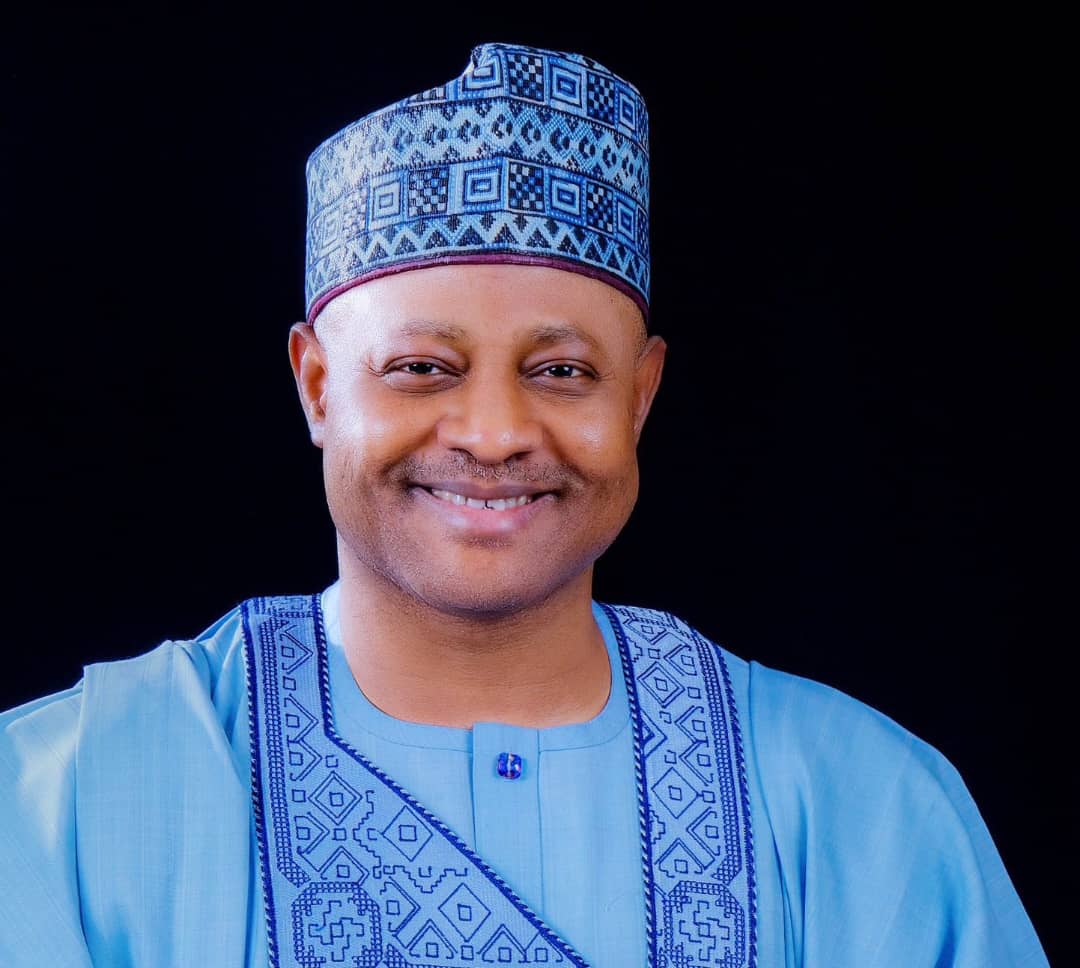
A Kaduna based political advocacy group, Capacity Movement, has criticised Senator Lawal Adamu Usman, popularly known as Mr. LA, over recent remarks perceived as attacks on the Kaduna State Governor, Senator Uba Sani.
In a statement issued to journalists in Kaduna, the group’s convener, Shehu Sani Sado, described the senator’s comments as “cheap political distractions” and accused him of attempting to divert attention from what it called his underwhelming performance at the National Assembly.
“The public is not even aware of any tangible contribution Senator Lawal Adamu has made since assuming office. His recent outbursts are simply aimed at gaining cheap popularity,” the statement read.
The group further alleged that Senator Adamu, who was elected on the platform of the Peoples Democratic Party (PDP), is making moves to defect back to the All Progressives Congress (APC) ahead of the next election cycle.
“After riding on the back of the PDP to get to the Senate, he is now plotting a return to the APC. Instead of focusing on delivering on his legislative mandate, he has resorted to constant and baseless attacks on Governor Uba Sani,” the group said.
The Capacity Movement called on the senator to refrain from what it termed politically motivated criticisms, and urged him to focus on his responsibilities in the Senate.
“Governor Uba Sani is committed to the development of Kaduna State and should not be distracted by a lawmaker who has yet to prove his worth. The people deserve focused leadership, not political theatrics,” the statement concluded.
ENDS
NSCF Warns APC Against Re-Admitting Senator Lawal Adamu, Labels Him Politically Inconsistent
By Olikita Afio
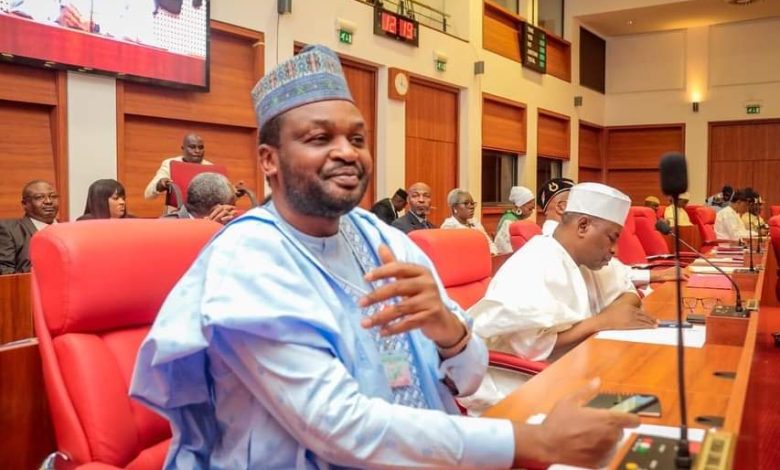
The Northern Stakeholders Consultative Forum (NSCF) has cautioned the All Progressives Congress (APC) against entertaining any attempts by Senator Lawal Usman Adamu, popularly known as Mr. LA, to return to the party, describing the move as a desperate attempt to salvage his dwindling political relevance.
In a statement issued on Thursday and signed by its spokesperson, Comrade Danjuma Paul, the NSCF accused the senator, who currently represents Kaduna Central Senatorial District, of political inconsistency and a lack of genuine commitment to the welfare of his constituents.
“Senator LA’s recent political trajectory has been nothing short of opportunistic. From defecting from the APC to the Peoples Democratic Party (PDP), and now allegedly exploring ties with the African Democratic Congress (ADC), his political manoeuvres reveal a pattern of survivalist politics rather than public service,” the statement read.
The forum said such frequent political realignments raise questions about the senator’s ideological convictions and loyalty to the platforms that brought him to office.
NSCF described Senator LA’s tenure as being devoid of legislative achievements or impactful constituency projects, accusing him of engaging in “belly politics” and filing frivolous petitions rather than addressing the pressing needs of the people he represents.
“His record is marked by an absence of significant legislation or developmental initiatives. Instead of returning to his constituency with innovative solutions, he has chosen to deploy political theatrics that have done little to improve the lives of his constituents,” the group stated.
The forum urged APC stakeholders at both the state and national levels to reject any overtures from the senator, warning that his return to the party would be a setback for efforts to uphold integrity, accountability, and performance-based politics.
“At a time when political parties should be prioritising competence and genuine representation, it would be unwise to welcome an individual whose political career has been defined by inconsistency and underperformance,” the statement added.
The group reaffirmed its commitment to supporting candidates with a clear track record of service and urged party leaders to remain focused on strengthening the APC with credible and committed individuals.
ENDS
—
Group Blast Senator Adamu Over ‘Misguided’ ICC Petition on Kaduna By-Election
By Adi Ogundioe
The Northern Awareness Network (NAN) has condemned Senator Lawal Usman Adamu’s petition to the International Criminal Court (ICC) over a recent by-election in Kaduna State, describing the move as “misguided” and a distortion of the ICC’s core mandate.
In a statement signed by its chairman, Salihu Sulaiman, and made available to journalists on Thursday, the group said invoking the ICC in the context of a local electoral dispute trivialises the global institution’s mission and undermines serious international justice mechanisms.
“The ICC was established to prosecute the gravest crimes — war crimes, crimes against humanity, and genocide. To liken a by-election dispute in Kaduna to the genocides in Rwanda or the atrocities in Darfur is both irresponsible and offensive to victims of such heinous crimes,” the statement read.
NAN described the senator’s petition as a “theatrical display” aimed at garnering attention rather than addressing the developmental challenges faced by constituents of Kaduna Central Senatorial District.
“The people expect their senator to address issues such as poverty, insecurity, education, and basic infrastructure. Instead, what we are witnessing is a disturbing trend of political posturing and legal drama that has no bearing on the immediate needs of the electorate,” NAN said.
The group further stated that Senator Adamu’s actions have brought ridicule to both his office and the democratic institutions he represents, warning that such political gimmicks erode public trust in the democratic process.
“Democracy thrives on accountability and sincere engagement with the people. Resorting to international legal bodies over domestic political disagreements only signals a lack of serious legislative focus and contributes to voter apathy,” the forum noted.
NAN also criticised the senator’s perceived lack of legislative achievements, stating that his tenure has not been marked by meaningful bills, motions, or constituency projects.
“Rather than delivering development, he has become fixated on personal political survival, ignoring the very people he was elected to serve. This fixation undermines both his credibility and the expectations of the electorate,” the statement added.
The group called on Senator Adamu to reconsider his political approach and re-engage meaningfully with issues affecting his constituents.
“The people of Kaduna Central deserve better. They need representation grounded in vision, service, and substance—not international distractions or political theatrics
Kaduna Central Women Forum to Lawan: “Your Senate Years Were Wasted”
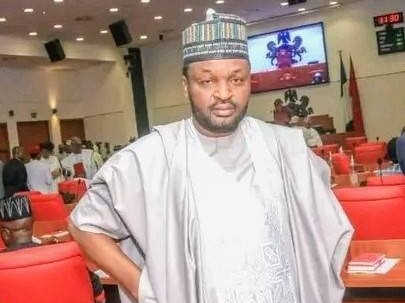
By Sunday Illona
The Kaduna Central Women Forum (KACEWOF) has delivered a damning verdict on the political career of former Senate President, Senator Ahmad Lawan, declaring that his long years in the Senate were “wasted” with little or no impact on the lives of Nigerians.
The group’s criticism comes in the wake of reports that Senator Lawal Adamu of the Peoples Democratic Party (PDP) filed a petition at the International Criminal Court (ICC). The petition accused the Economic and Financial Crimes Commission (EFCC) of unlawfully arresting and detaining the PDP candidate in the August 16 by-election, allegedly on the orders of Kaduna State Governor, Senator Uba Sani.
In a statement issued Tuesday and signed by its Coordinator, Hajiya Binta Garba, KACEWOF described as “unfortunate” Lawan’s attempt to undermine what it called a “free, fair, and credible” election.
The group accused Lawan of squandering opportunities to transform governance, saying that despite holding the highest legislative position in Nigeria, his leadership failed to produce meaningful reforms.
“Senator Ahmad Lawan’s years in the Senate amount to wasted opportunities. He failed to champion people-oriented legislation, neglected his responsibilities, and spent more time on political survival than on the welfare of Nigerians,” the statement read.
KACEWOF said Nigerians must begin to demand accountability and reject politicians who, in its words, “stay long in office but leave no legacy.”
“Our democracy must move beyond recycled leaders who waste opportunities. Performance and tangible results must be the standard for public service, not the length of stay in office,” the group declared.
The forum further urged voters in Kaduna and across the country to remain vigilant against politicians who, it claimed, thrive on “empty rhetoric” rather than results.
AREWA YOUTHS HAIL ZULUM, REJECT ADEYANJU’S ‘BASELESS’ ATTACK
By Hauwa Ibrahim
Maiduguri
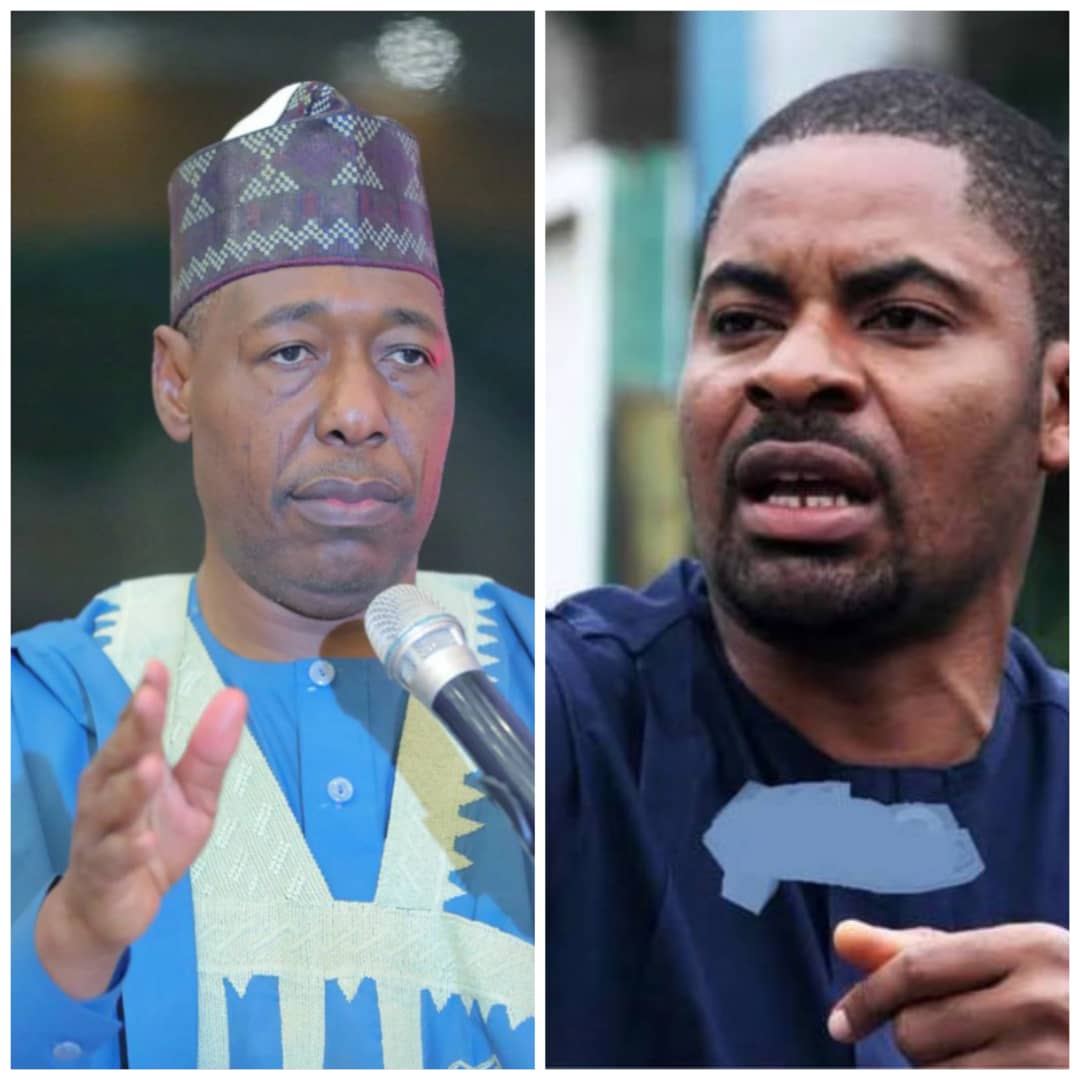
A northern youth group under the umbrella of Arewa Youth for Progress and Development (AYPD) has taken a swipe at Abuja-based political activist, Deji Adeyanju, over his recent criticism of Borno State Governor, Professor Babagana Umara Zulum.
Adeyanju had in a Facebook post accused the governor of deceiving Nigerians at the onset of his administration with “fake propaganda,” describing him as “a complete disaster as governor” and alleging that he has “a love for tyranny and jailing critics.” He further suggested that Zulum might attempt to “repackage himself after 2027 and try to become another Nigerian messiah.”
Reacting in a statement signed by Abubakar made available to journalists in Maiduguri, the AYPD described Adeyanju’s comments as “reckless, baseless, and a direct insult to the people of Borno State.”
“To call a performing governor, widely respected across the North as a symbol of people-centered leadership, a disaster is nothing but the highest form of insult to our people. It is unacceptable and will not be tolerated,” the group declared.
The group highlighted what it described as Zulum’s “unmatched achievements” in governance, citing his efforts in rebuilding communities ravaged by insurgency, expanding access to quality education, healthcare delivery, infrastructural development, and programs targeted at poverty alleviation.
According to AYPD, since assuming office in 2019, Zulum has supervised the construction of schools, hospitals, housing units, and roads across both urban and rural areas of Borno State, often leading from the front by personally monitoring projects and humanitarian interventions.
“Governor Zulum has never fooled anyone or paraded himself as a messiah. We know him as a leader who has deep passion for the emancipation of his people from poverty, insecurity, and underdevelopment. His style of leadership is humility, service, and sacrifice,” the statement noted.
The youths warned Adeyanju against what they called “cheap political blackmail” and issued him a seven-day ultimatum to retract his comments and tender a public apology to Governor Zulum and the people of Borno State.
“Failure to do so will attract massive resistance from northern youths, as we cannot allow baseless attacks on leaders who are genuinely working for the progress of our people,” AYPD warned.
They urged Nigerians to “see through the antics of professional critics” and focus on encouraging leaders who are working under difficult circumstances, particularly in states like Borno that have faced years of insurgency.
Faruk Enabo’s Masterstroke: Behind Kebbi’s Seamless Pilgrimage

By Ihuma Abun
The Northwest Progressives Forum (NPF) has declared Kebbi State a national model in Hajj administration, praising Governor Nasir Idris and Alhaji Faruk Enabo, Chairman of the State Pilgrims Welfare Agency, for their transformative leadership and commitment to pilgrims’ welfare.
Following Kebbi’s exceptional performance during the 2024 and 2025 Hajj exercises—where the state earned eight awards from Saudi authorities—the NPF described the operations as “a masterclass in religious service delivery.” These accolades recognized Kebbi’s outstanding arrangements in areas such as sacrificial animal logistics (Hadaya), feeding, accommodation, transportation, and airport screening.
Leadership Rooted in Empathy and Action
Governor Idris’s personal involvement in the pilgrimage and his financial support to all 3,871 pilgrims in the 2025 Hajj exercise, just as in the previous year, drew admiration from the Forum. Speaking recently, the governor pledged:
> “We will continue to render the needed support to our Pilgrims Welfare Agency and NAHCON in this direction and we will never relent.”
Operational Excellence Under Alhaji Faruk Enabo
Alhaji Faruk Enabo, Chairman of the Pilgrims Welfare Agency, was credited with orchestrating Kebbi’s seamless Hajj logistics. He emphasized that Governor Idris’s unwavering backing was the cornerstone of their success:
> “The unwavering support of Gov. Idris to the agency had culminated not only in the tremendous success of the Hajj operations in the state but the state stood tall amongst its peers.”
NPF’s Endorsement
In its official statement, the Northwest Progressives Forum declared:
> “Kebbi State has set a new benchmark for Hajj administration in Nigeria. Governor Nasir Idris and Alhaji Faruk Enabo have demonstrated that with vision, empathy, and accountability, even the most complex religious operations can be executed with excellence.”
A Blueprint for the Nation
The Forum urged other states to emulate Kebbi’s model, especially in areas of early planning, financial transparency, and direct engagement with pilgrims. With the 2025 Hajj season on the horizon, Kebbi’s example stands as a beacon of what’s possible when leadership meets purpose.
Kyari’s Reforms vs. Probes: OLTRASOL Calls for Balanced Perspective
In a strong show of support, the Oil Industry Transparency Solidarity League (OLTRASOL) has voiced its satisfaction with the sweeping reforms initiated by Malam Mele Kyari, the former Group Chief Executive Officer of the Nigerian National Petroleum Company (NNPC). The group described Kyari’s tenure as “transformational and courageous,” emphasizing that his legacy should not be overshadowed by current probes or political shifts. The group called Kyari’s leadership “a rare blend of courage, vision, and integrity,” urging Nigerians not to forget the strides made under his watch.
OLTRASOL highlighted several landmark achievements under Kyari’s leadership:
Subsidy Reform: Kyari took bold steps to dismantle entrenched subsidy cartels, a move that OLTRASOL says saved Nigeria billions and restored fiscal discipline.
Exploration Expansion: He spearheaded oil exploration in previously untapped regions, signaling a new era of energy diversification.
Pipeline Diplomacy: As the architect of the AKK pipeline and a key facilitator of the Algerian and Moroccan gas pipelines, Kyari positioned Nigeria as a strategic energy supplier to Europe.
NNPC Overhaul: Under his watch, the NNPC underwent a historic transformation aligned with the Petroleum Industry Act, transitioning into a commercially driven entity.
Transparent Recruitment: OLTRASOL praised the merit-based recruitment process introduced during his tenure, calling it “a rare moment of integrity in public sector hiring.”
Fuel Availability: The group credited Kyari with ending the long-standing fuel queues that plagued Nigerian cities, citing improved logistics and supply chain management.
Production Boost: Nigeria’s oil production capacity saw a notable rise, reflecting operational efficiencies and strategic investments.
While acknowledging that Kyari did not succeed in fully reviving Nigeria’s refineries—now under investigation—OLTRASOL urged the public and policymakers to adopt a balanced view. “Leadership is not about perfection; it’s about progress,” the group stated. “Kyari made tough decisions in a tough environment. His efforts deserve recognition, not revisionism.”
OLTRASOL warned against the tendency to vilify public servants post-tenure, especially those who dared to challenge entrenched interests. “We must not allow political winds to erase the strides made. Mele Kyari’s reforms laid the groundwork for a more transparent and accountable oil sector.” Referencing a recent public post by Senator Shehu Sani, OLTRASOL echoed the sentiment that Kyari’s legacy should be preserved:
> “Mele Kyari was never a perfect man, but he did a number of good things that shouldn’t be easily forgotten,” Sani wrote. “He also did something good that is worthy of being appreciated.”
As Nigeria navigates its energy future, OLTRASOL concluded by urging Nigerians to resist the urge to vilify reformers once they leave office.
> “We must not allow political winds to erase the strides made. Mele Kyari’s reforms laid the groundwork for a more transparent and accountable oil sector. History will be kinder than headlines.”
 News Facts Daily